







For decades, the fundamental act of investing has remained remarkably static for the average person. Whether an individual is building a retirement nest egg or a short-term growth fund, the process typically involves two choices: manually selecting a basket of stocks, bonds, and mutual funds, or delegating the heavy lifting to a professional asset manager who oversees a curated portfolio. However, a quiet revolution is underway that threatens to blur the distinction between these two approaches, potentially transforming how capital is allocated, rebalanced, and managed on a global scale.
BlackRock, the world’s largest asset manager, recently provided a compelling glimpse into this future through a collaboration with Ondo Finance. The initiative, titled "Intelligent Portfolios," represents a significant pivot in the narrative surrounding blockchain-based finance. Rather than merely tokenizing individual securities—a practice that has dominated the headlines for the past few years—this effort focuses on packaging professionally constructed, multi-asset investment strategies into individual, tradeable tokens on the blockchain.
The core of the offering consists of three distinct portfolios designed by BlackRock specifically for the Ondo ecosystem: high-income, diversified growth, and high-growth strategies. For the investor, the experience is simplified to a single digital asset. Instead of navigating the complexities of purchasing, monitoring, and rebalancing dozens of underlying assets, an investor can hold one token that encapsulates the entire strategy. While this may seem like a marginal evolution—given that mutual funds and ETFs have bundled assets for decades—the shift to an on-chain structure introduces capabilities that traditional financial architecture simply cannot replicate.
The Shift from Single Securities to On-Chain Strategies
To understand the magnitude of this shift, one must look at the trajectory of the tokenization movement. The initial wave of the "tokenization boom" was heavily focused on the low-hanging fruit: putting Treasury funds, private credit, and individual equities onto the blockchain. This was the "proof of concept" phase, demonstrating that traditional assets could live on distributed ledgers.
The collaboration between BlackRock and Ondo signals that the industry is graduating to the next layer of the stack. As noted in a recent report by the crypto investment firm Pantera Capital, the industry is transitioning from "single securities to on-chain portfolios." This shift is not just technical; it is functional. By placing the portfolio itself on-chain, the strategy becomes a programmable entity. It can move seamlessly between digital wallets and decentralized finance (DeFi) platforms, remain transparent to auditors and stakeholders, and potentially serve as collateral for lending protocols or integrate directly into complex, automated financial ecosystems.
This development taps into a massive, well-established market. According to data from Broadridge, model portfolios—the pre-packaged combinations of funds used by financial advisors to manage client assets—held approximately $9.8 trillion in assets as of June 2026. If tokenization can provide a more efficient, transparent, and programmable vehicle for distributing these strategies, it could fundamentally alter the economics of wealth management.
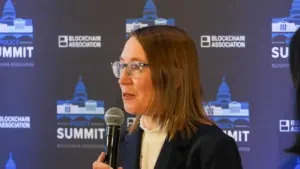
Lisa O’Connor, BlackRock’s global head of model portfolio solutions, underscored the strategic nature of this partnership during the announcement. "Tokenization creates new ways for portfolio strategies to be delivered through digital infrastructure," she stated. This suggests that for asset managers, the blockchain is becoming less of a fringe experiment and more of a core distribution rail for their intellectual property.
Other industry players are racing to stake their claims in this new territory. In August, the digital asset manager Bitwise introduced "Automated Token Portfolios" in collaboration with Coinbase and the venture-backed firm Glider. This platform allows non-U.S. investors to gain exposure to Bitwise-designed portfolios of tokenized stocks while maintaining custody of the individual assets within their own wallets. The software handles the rebalancing, ensuring that the holdings remain aligned with the target weights set by the firm.
While the mechanical approach of Bitwise differs from the "single-token wrap" utilized by Ondo, both paths lead toward the same inevitable destination: the automation of portfolio management via software that operates directly on blockchain-native assets.
Democratizing Access Through Digital Rails
The broader implications of these developments extend far beyond mere convenience. Tom Staudt, president and chief operating officer of ARK Invest, suggests that tokenization is poised to redefine the very composition of an investment portfolio.
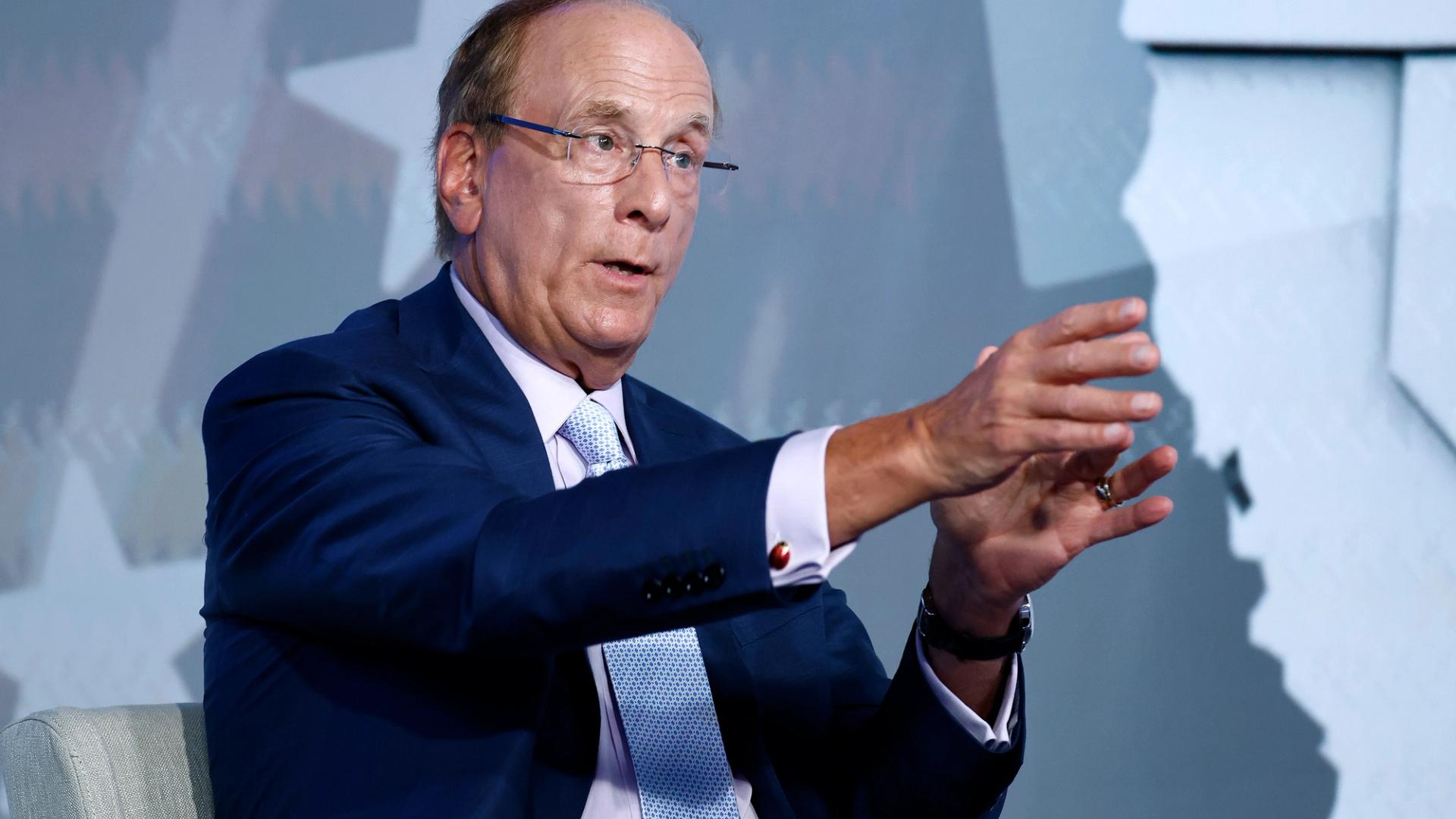
In a recent interview, Staudt explained that traditional portfolio models were constructed in an era when the average investor’s access was severely constrained. For decades, the "menu" of available assets was limited to basic stocks and bonds. Private equity, private credit, and high-end digital assets were largely the domain of institutional players or ultra-high-net-worth individuals. International markets were often cumbersome to access, and the overall universe of investable funds was narrow.
Tokenization acts as a bridge, making these previously sequestered asset classes accessible through a unified digital interface. When this access is coupled with the growing sophistication of artificial intelligence, the potential for personalization becomes immense. Theoretically, AI-driven software could construct a portfolio tailored to an individual’s specific financial goals, risk tolerance, and even their unique tax circumstances, while the tokenization layer ensures that the assets themselves are liquid and tradeable.
"It’s all great to have AI tell you what a perfect portfolio is, but if you can’t access the assets, it doesn’t really matter," Staudt noted. "Blockchain and tokenization is clearly going to open up funds, strategies, asset classes, and jurisdictions that are not currently available for everyone."
By expanding the "building blocks" available to the average investor, firms are effectively taking the concept of financial democratization to a new level. For asset managers, this environment fosters a more competitive landscape where products from different firms can be easily combined into a single, cohesive portfolio, forcing a shift in how they design and market their offerings.
Toward a Real-Time Investment Future
John Hoffman, who took the helm of portfolio products at Ondo earlier this year, has long argued that tokenization is mirroring the explosive growth of the ETF industry, albeit at an accelerated pace. His vision for the future involves autonomous software that continuously monitors global market conditions, executing rebalancing trades in real-time.
"Our end state will be portfolios that are professionally managed, real-time, and adjusting to market circumstances and data changes," Hoffman said in a June interview. Achieving this vision, however, requires the industry to build out more than just tokenized versions of existing products. It necessitates a more robust "on-chain" universe of assets, a sophisticated prime-brokerage infrastructure, and the development of asset-management strategies that can be executed natively on blockchain networks without reliance on legacy intermediaries.
Dan Romero, chief business officer at the blockchain firm Tempo, contextualizes this growth by comparing it to the rise of specialized neobanks. When the underlying banking infrastructure became digitized and accessible, it enabled a surge of innovation, allowing companies to build products tailored to niche customer segments rather than simply recreating traditional banking models.
"All of that same infrastructure is now going to be available with tokenized assets and stablecoins that people are going to be able to build really interesting new financial experiences," Romero explained.
The current experiments by BlackRock and its peers represent the foundational layer of this new architecture. If the first stage of tokenization was about the migration of individual assets to the blockchain, the next stage is clearly about the synthesis of those assets. We are entering an era where portfolios are not static collections of static assets, but dynamic, intelligent, and highly mobile instruments that can be moved, managed, and tailored with a level of precision previously impossible in traditional finance. As this infrastructure matures, the distance between the investor and the professional-grade strategy will continue to close, promising a future where the portfolio is as fluid as the markets it represents.