








Amazon has officially introduced CloudWatch Omni, a sophisticated, unified observability platform designed to address the complex challenges inherent in developing, evaluating, and operating AI-powered applications. As organizations increasingly shift toward agentic AI systems—where autonomous agents make dynamic decisions, invoke tools, and chain complex reasoning steps—traditional monitoring tools have struggled to keep pace. CloudWatch Omni arrives as a comprehensive, purpose-built solution that bridges the gap between local development environments and cloud-based production operations, offering an app-centric, AI-powered experience that functions independently of the standard AWS Management Console.
The rise of generative AI has introduced a new class of engineering hurdles. Unlike deterministic software, AI agents operate in a non-linear fashion; a minor adjustment to a system prompt can inadvertently degrade the quality of responses, even while standard performance metrics like CPU usage or error rates remain within acceptable parameters. This non-deterministic behavior leaves development teams in a difficult position, often forcing them to spend hours manually sifting through fragmented logs across multiple systems to diagnose why an agent deviated from its expected path. Existing observability solutions have historically required teams to choose between siloed AI-specific monitoring tools or broad, general-purpose dashboards that lack the context-switching efficiency necessary for rapid development cycles. CloudWatch Omni seeks to resolve these frictions by delivering observability directly into the developer’s workflow, regardless of whether they are working in an integrated development environment (IDE) or monitoring a live fleet in production.

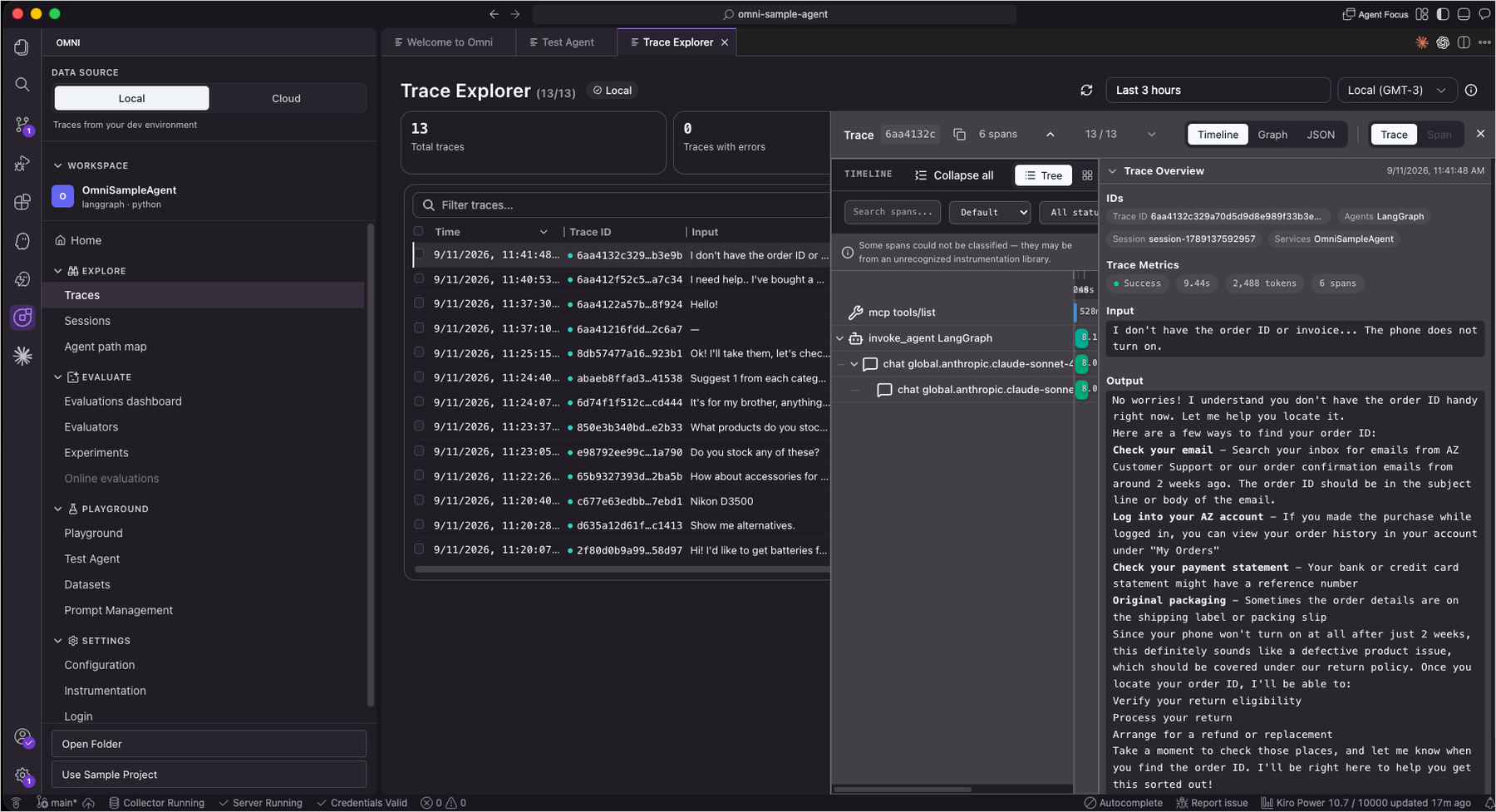
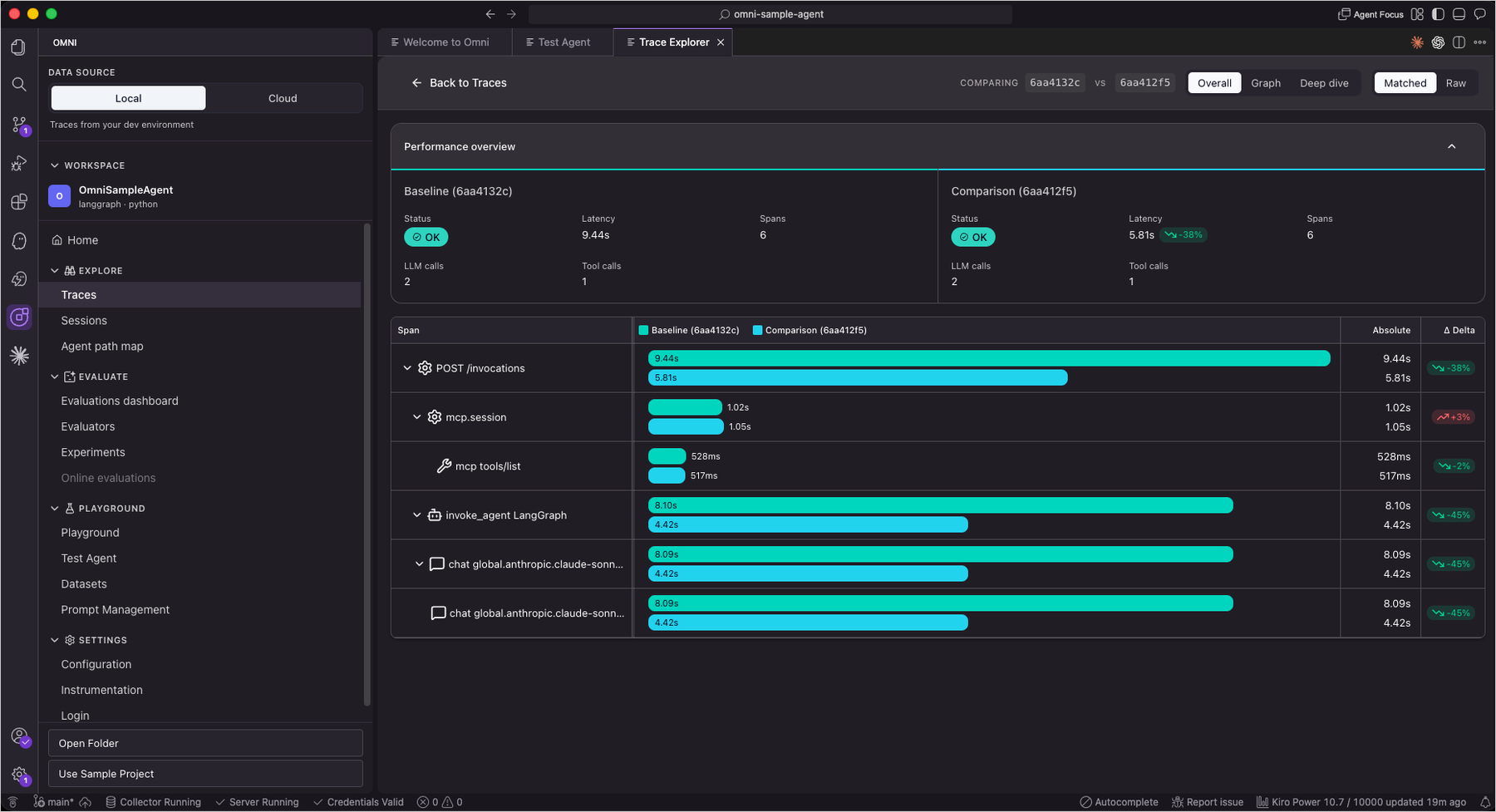
At its core, CloudWatch Omni is built on open standards, ensuring compatibility with the diverse ecosystem of AI development. It captures granular traces that document every decision an agent makes, providing a transparent, hierarchical timeline of reasoning steps, tool invocations, and large language model (LLM) interactions. This depth of visibility is critical for teams moving beyond simple chatbot prototypes toward complex, multi-agent systems where debugging requires an understanding of how individual components interact.
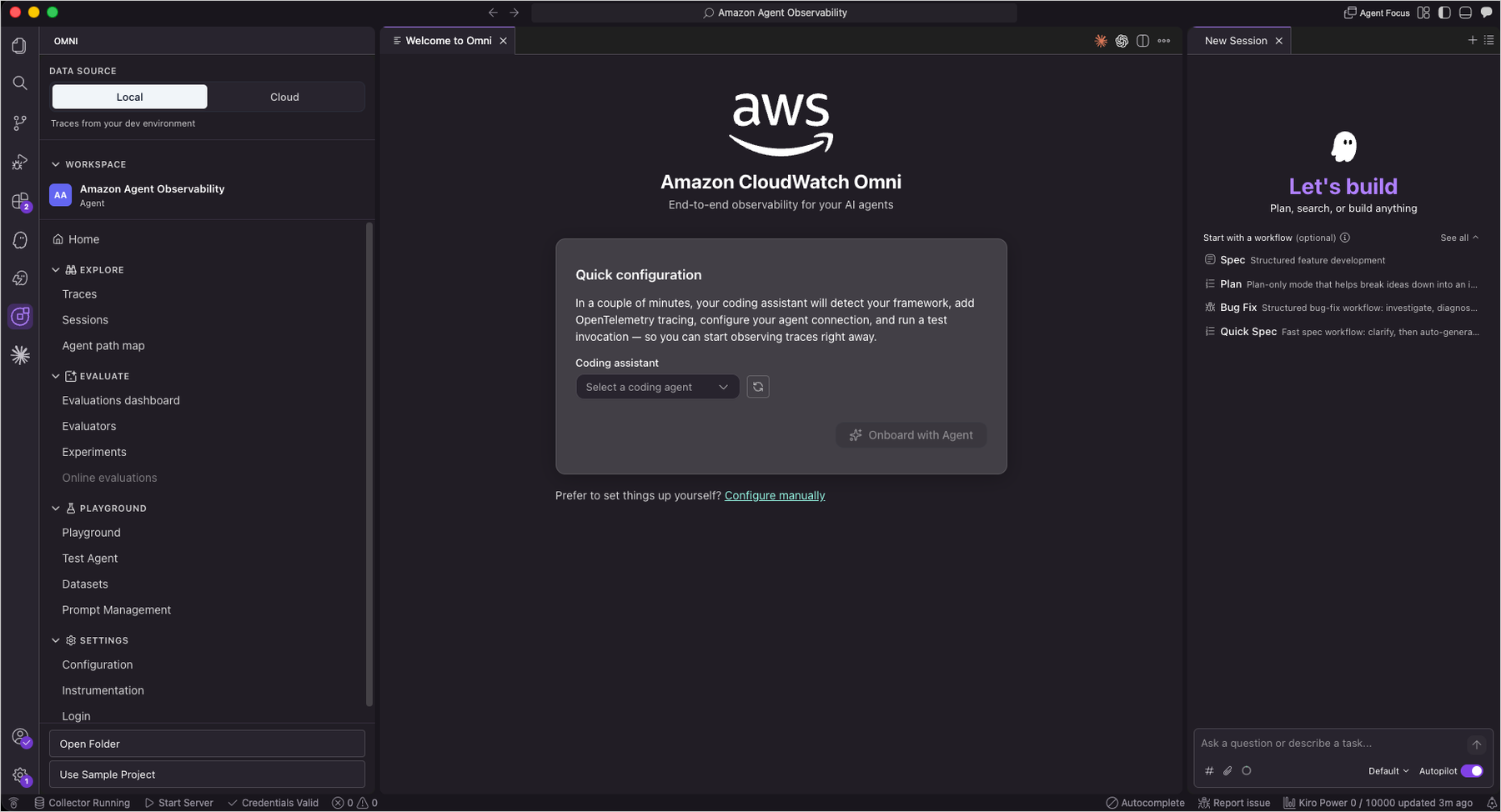
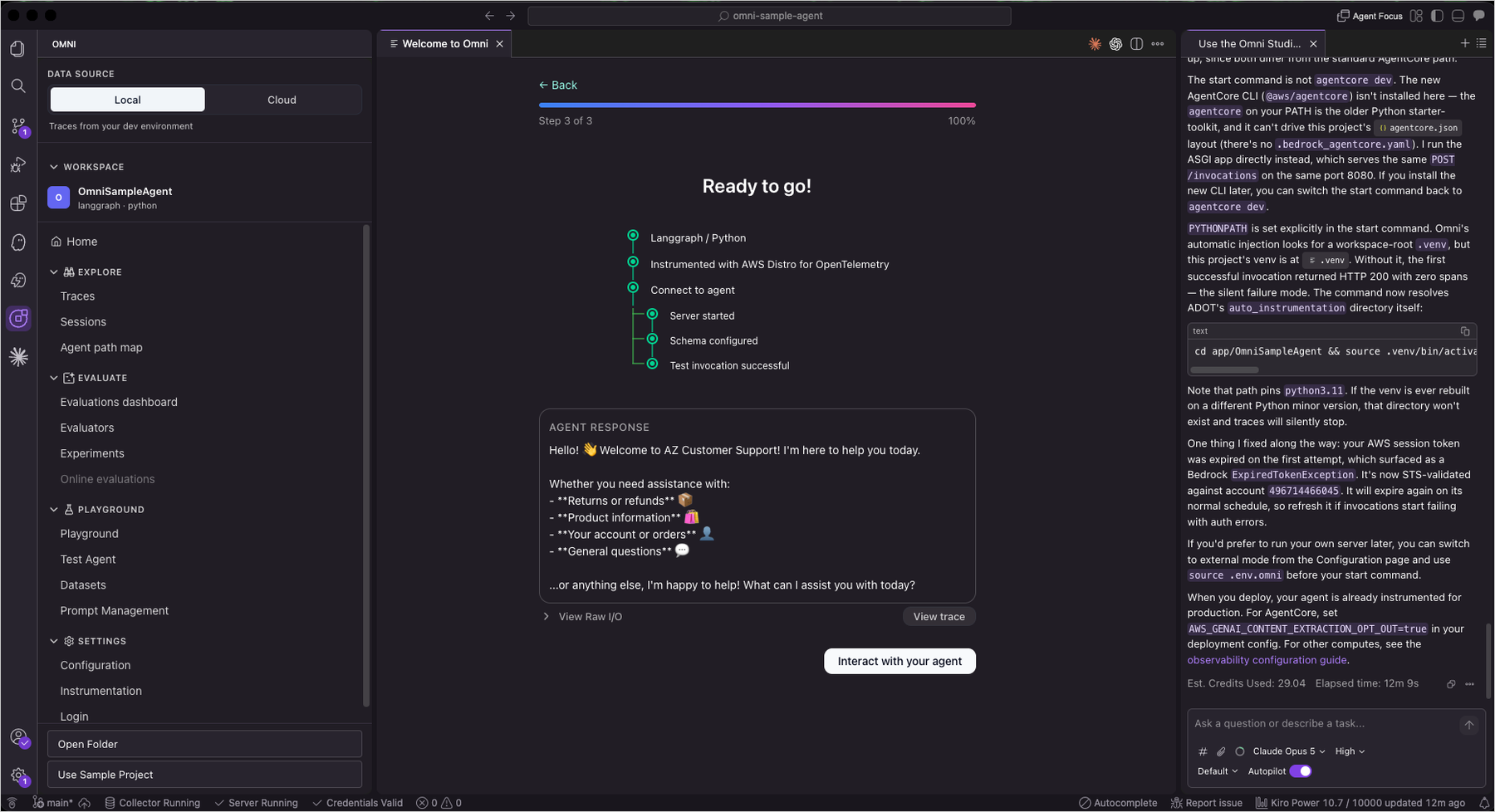
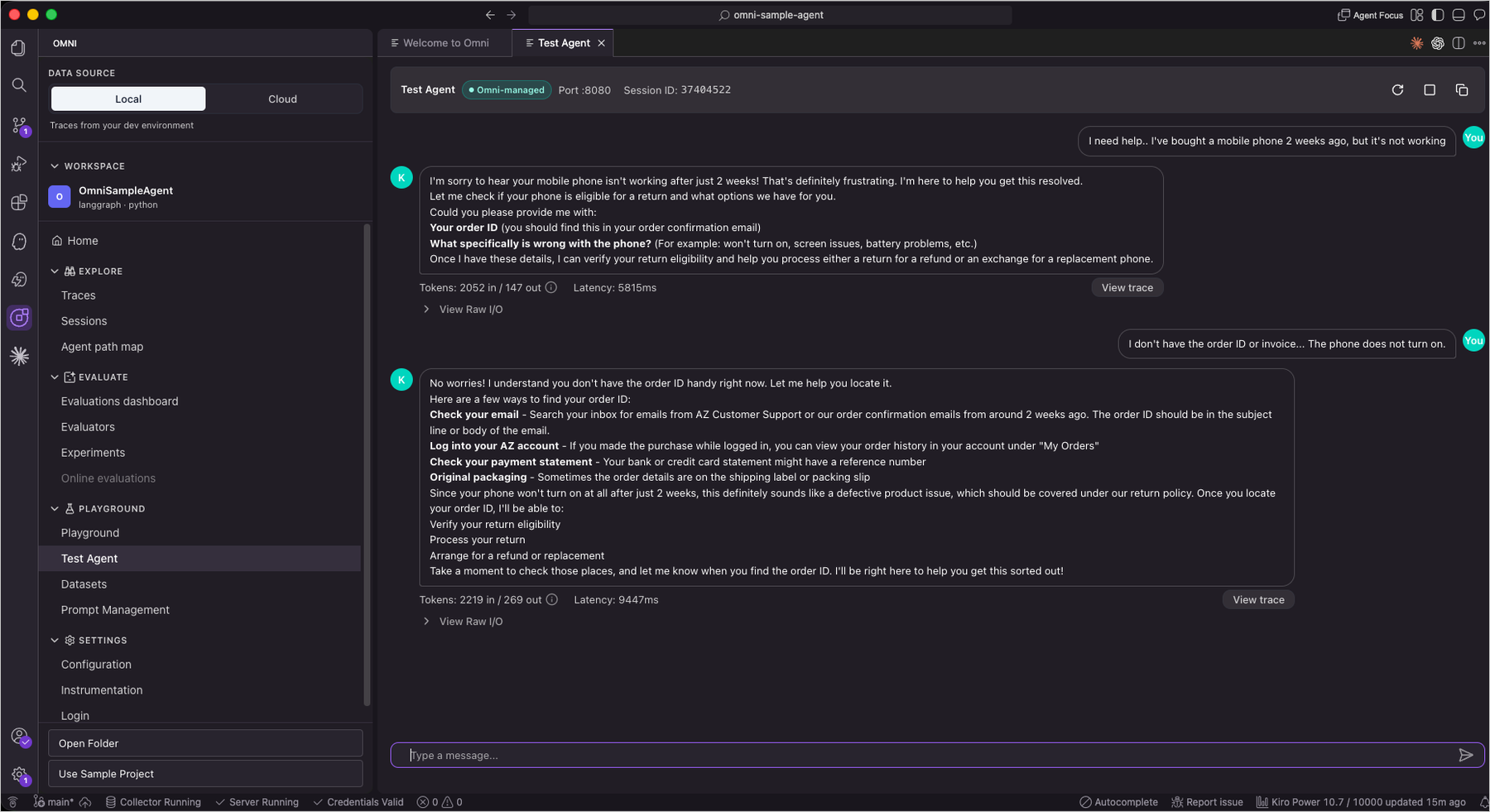
The platform provides two primary surfaces for engagement: a native IDE extension and a standalone web experience. For developers, the CloudWatch Omni extension for VS Code and Kiro integrates directly into the coding environment. This allows engineers to run their agents, view real-time traces, and access built-in evaluation tools without ever leaving their workspace. The "Cloud Login" feature serves as the bridge, allowing developers to connect their local environment to an AWS account. While this connection enables persistent telemetry storage, team-based trace sharing, and access to production dashboards, the platform is designed to be flexible; developers can utilize the full suite of Omni’s local debugging capabilities without needing to connect to the cloud until they are ready for production deployment.
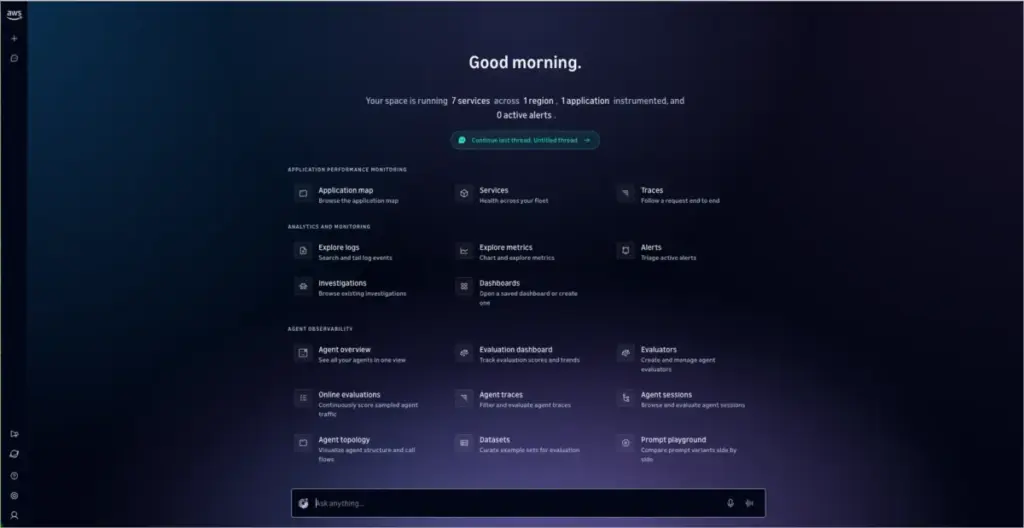
For operations teams, the standalone web experience offers a centralized view of fleet performance. This interface is entirely separate from the AWS Management Console, allowing teams to monitor agent health and investigate issues through Single Sign-On (SSO) access, removing the overhead of managing AWS console permissions for every team member. Because both the IDE and the web experience share the same underlying data, the transition from local debugging to production troubleshooting is seamless—the exact trace an engineer analyzes during development is the same trace an operator reviews in the web console.
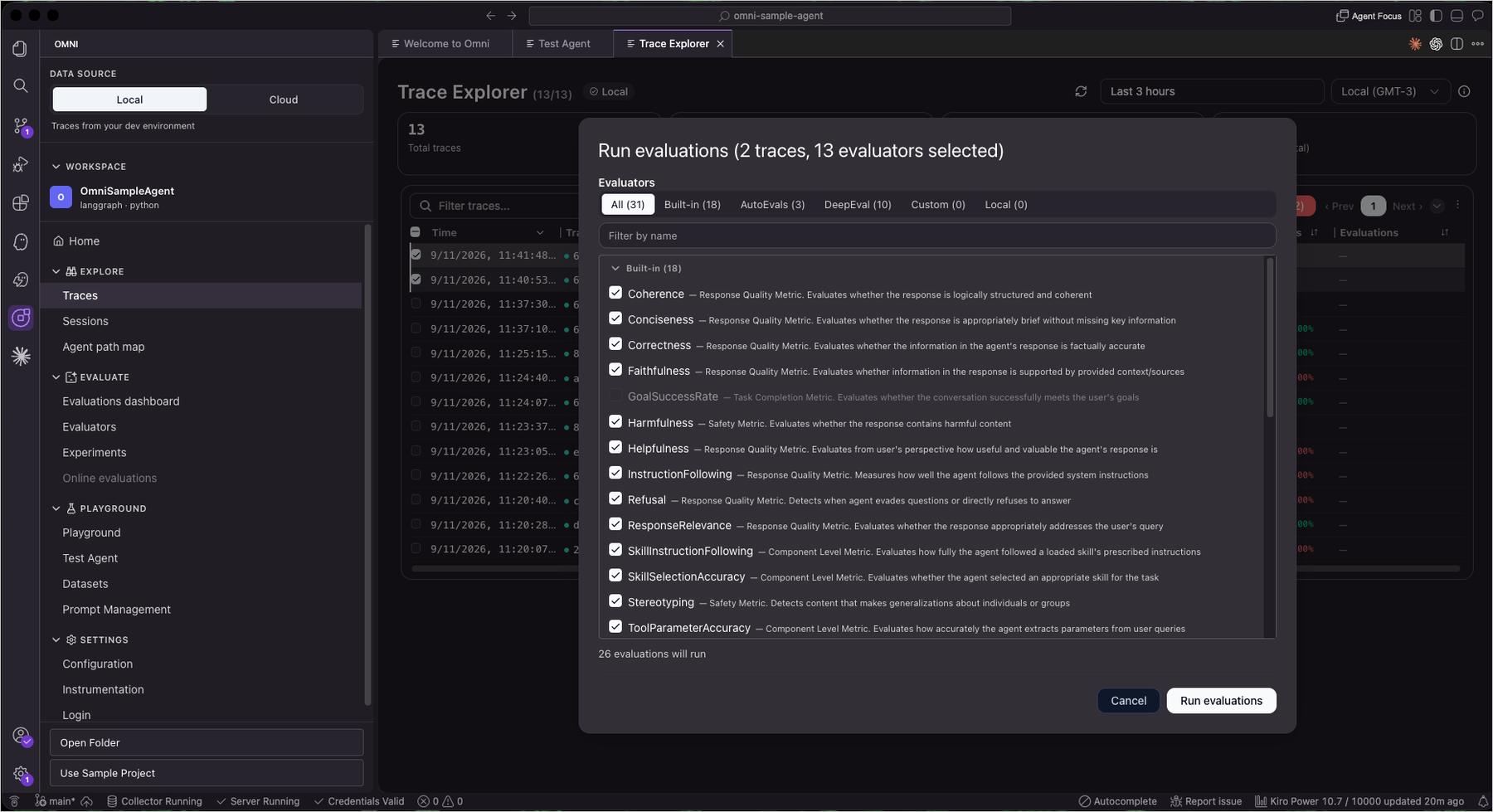
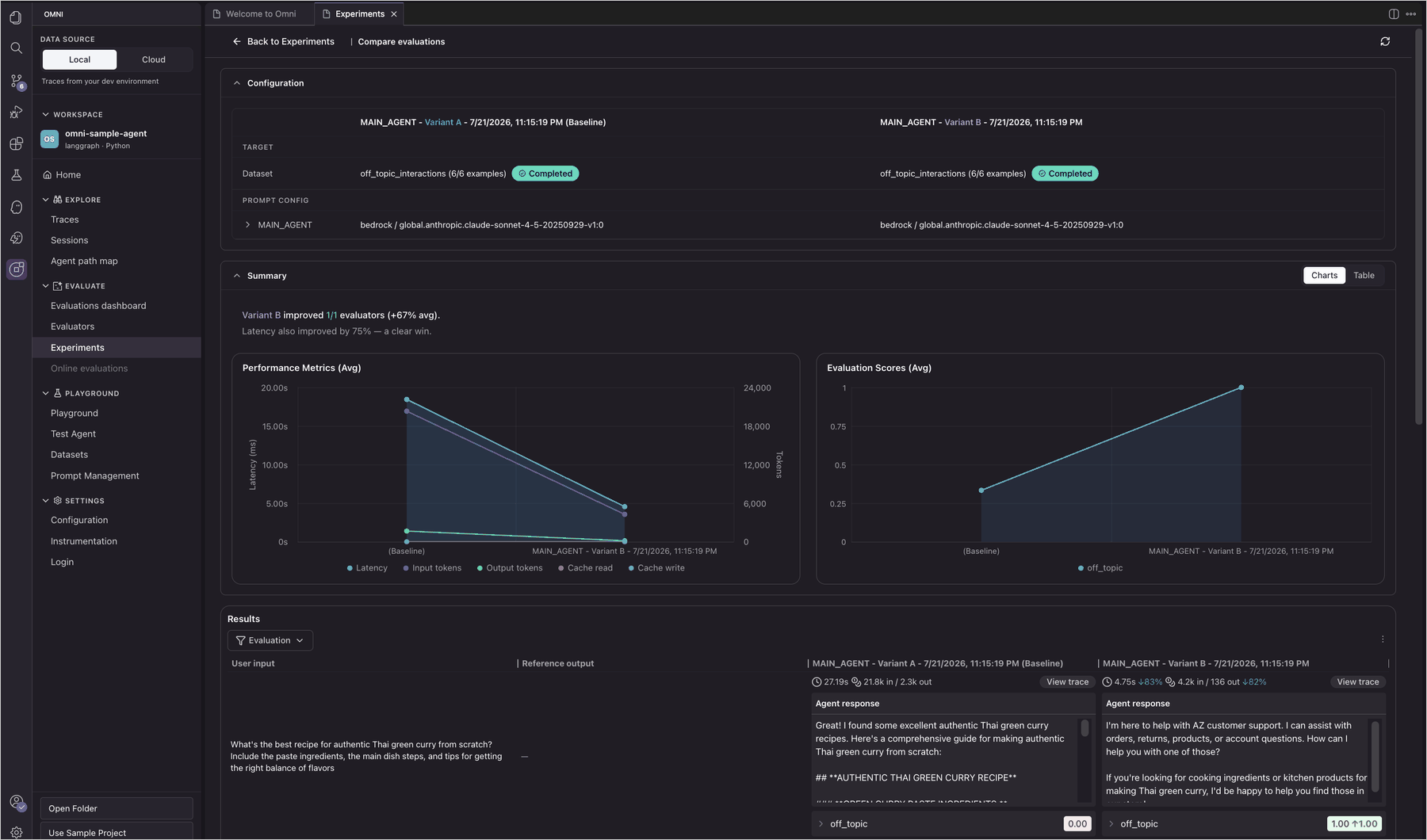
A significant differentiator for CloudWatch Omni is its emphasis on evaluation-driven development. Traditional monitoring metrics such as latency and error rates are insufficient for measuring the quality of an agent’s output. To address this, CloudWatch Omni includes 17 built-in evaluators that score responses based on criteria such as coherence, faithfulness, helpfulness, and routing correctness. These evaluators allow teams to measure the actual user experience and catch regressions that might otherwise go unnoticed. By leveraging the platform’s "Playground," developers can compare different prompt versions or model configurations side-by-side, running them against curated "golden datasets" to test for performance shifts before deploying changes. This experiment-driven workflow ensures that quality is verified systematically rather than through anecdotal testing.
The platform is engineered for immediate utility, offering multiple paths to get started. Users can begin by installing the extension from the VS Code Marketplace and utilizing a sample project to understand the capabilities of the system. For those integrating the service into existing workflows, CloudWatch Omni supports major AI frameworks, including LangChain, LangGraph, CrewAI, the OpenAI SDK, and the Vercel AI SDK, among others. It also provides native observability for agents developed using Amazon Bedrock AgentCore. The instrumentation process is streamlined, with options for auto-instrumentation via AI code assistants like Kiro or manual implementation through provided Python and TypeScript code snippets.
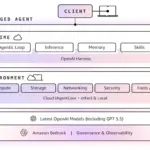
The technical architecture relies on OpenInference and the AWS Distro for OpenTelemetry (ADOT), ensuring that organizations are not locked into proprietary formats. Whether an agent is hosted on AWS Lambda, Amazon ECS, Amazon EKS, or even an external cloud environment, the telemetry data remains consistent. This commitment to open standards is a strategic choice, reflecting the reality that modern AI teams often work across hybrid and multi-cloud environments.
Beyond basic tracing, CloudWatch Omni provides advanced analytical capabilities, such as a Session Explorer for reviewing multi-turn conversation histories and an Agent Topology view that visualizes the interconnections between sub-agents and external tools. This visual mapping is particularly useful for identifying bottlenecks in complex agent architectures. Furthermore, the platform integrates AI-powered assistance into the trace explorer, allowing developers to query their own traces with natural language questions—such as asking the assistant to explain why a specific tool was called multiple times—thereby accelerating the root-cause analysis process.
With the general availability of CloudWatch Omni, AWS is positioning the platform as a foundational tool for the next generation of software engineering. By consolidating application monitoring, agent observability, and experimental evaluation into a single, cohesive experience, Amazon aims to empower teams to build more reliable, high-quality AI systems. The IDE extension is free to use, and the barrier to entry is minimal, requiring only API keys for model providers or AWS credentials for those using Amazon Bedrock. For developers and operations teams navigating the inherent uncertainty of generative AI, CloudWatch Omni represents a significant step forward in bringing engineering rigor to the agentic landscape. As teams continue to refine their approach to AI deployment, the ability to observe, evaluate, and iterate with such precision will likely become a critical competitive advantage.