









Until recently, building a technical writing portfolio could be as simple as putting together a basic website, adding a list of articles, describing past writing experience, and dropping links to various social profiles. Today, industry professionals argue that approach is no longer enough to secure roles in a rapidly evolving technological landscape.
The widespread adoption of artificial intelligence has fundamentally altered the baseline requirements for technical communicators. Modern developers can simply ask an AI assistant to generate an explanation of an API, summarize dense documentation, produce a tutorial outline, or even output a working first version of a coding article in seconds. This shift has changed what a technical writer actually brings to the table, moving the core value far beyond the simple production of grammatically correct sentences.
Industry observers note that the most valuable skill is no longer stringing together accurate technical terms. Instead, it involves understanding the technology well enough to know what should be written, testing whether instructions actually work in practice, identifying precisely where developers are likely to get stuck, and turning that complex knowledge into documentation that a team can reliably implement.
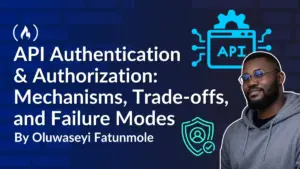
This philosophy recently drove developer educator Casmir Onyekani to completely rethink his online presence, building a portfolio website that functions as more than a digital resume. Designed to actively demonstrate an approach to developer education, the project highlights the intersection of software engineering and technical writing in an era where AI tools are readily available.
What Changed About Technical Writing?
To understand why traditional portfolios fall short, one must examine why a contemporary technical writer needs a firm grasp of software development in the first place. Put simply, the audience has fundamentally changed. A developer reading an API guide does not merely need someone who can translate code into plain English; they need someone who understands how a specific endpoint fits into the broader architecture of an application.
Consider a standard API instruction, such as a simple POST request to create a new user. A beginner writer might summarize the endpoint by stating that it creates a new user. While that sentence may be technically correct, a working developer immediately encounters a cascade of practical questions regarding authentication tokens, required payload fields, rate limits, handling validation errors, and expected response codes.
Good developer documentation anticipates and answers those questions. Doing so requires far more than surface-level writing ability; it demands rigorous technical investigation. Consequently, many industry professionals believe the role is shifting away from traditional technical writing and toward developer educator. A developer educator does not merely explain technology in a vacuum; they actively help other engineers successfully implement it.
Why AI Hasn’t Made Technical Writers Obsolete
While artificial intelligence has profoundly impacted how content is created, it has not rendered technical writers obsolete. Rather, it has changed how professionals should approach the writing process. AI excels at managing repetitive tasks, such as generating initial drafts, translating error logs, or brainstorming outlines. However, a vital distinction remains: artificial intelligence can accelerate human thinking without ever replacing human responsibility for correctness.
When an AI assistant generates a Node.js example, a reliable technical writer must run that code. If it explains an API, that explanation must be cross-referenced against the actual implementation or official documentation. If it suggests a command, that command must be executed. If it generates a tutorial, the writer should follow it from the very beginning as if they were a novice reader.
This workflow transforms the relationship with artificial intelligence. Instead of treating AI as a tool to write an entire article from scratch, professionals are learning to use it to investigate, test, challenge, and improve their material. That creates a much more robust and reliable collaborative loop.
The Standard of Technical Independence
A primary lesson for anyone entering the developer-focused technical writing space is that a writer should be able to build what they teach. This does not necessarily mean one needs to work as a senior software engineer before documenting code, but it does require fluency in working with development environments.
A modern technical writer should understand the development workflow well enough to investigate a repository, install dependencies, run an application, read error traces, modify code, and verify examples. Whether documenting a React component, a REST API, a GitHub Actions workflow, or a Python package, the overarching goal is not to memorize every syntax rule. Rather, the goal is to be technically independent enough to verify every assertion made on the page.
Onyekani’s portfolio reflects this standard through its explicit positioning as both a software engineering and technical writing project. Rather than forcing potential clients or employers to guess at a professional background, the site immediately communicates a clear identity at the intersection of code and communication, demonstrating actual working processes rather than relying on abstract claims.
Rethinking Portfolio Content for the Modern Era
For those looking to build or update a portfolio today, the starting point should not be aesthetics or web design choices. Instead, the focus should center on the tangible evidence a potential client needs before trusting a writer with complex documentation.
A modern portfolio should first establish a clear technical identity, moving away from generic titles like blogger or content creator toward specialized positioning such as API documentation creator or software engineer and technical writer. Furthermore, static lists of published articles are increasingly being replaced by working examples. If a writer claims to handle SDK documentation or deployment guides, the portfolio should provide reproducible code or direct links to functioning implementations that prove technical depth.
Projects within a portfolio should bridge the gap between engineering and writing by detailing the technologies used, the problems solved, and the practical implementation details. Finally, a portfolio should guide visitors toward a clear next action, such as offering to review an existing repository or flag documentation gaps, providing an immediate, actionable way for potential clients to engage.
Navigating the Modern Developer Stack
When examining the underlying technology of modern technical portfolios or the codebases writers are expected to document, familiarity with contemporary development tools is essential. Frameworks like React, build tools like Vite, utility-first CSS frameworks like Tailwind, and static typing through TypeScript frequently appear in modern web repositories.
Understanding these tools does not mean a technical writer must master every frontend framework on the market. Instead, it reflects an understanding of how modern applications are assembled. Knowing the difference between development environments and production builds, recognizing the purpose of configuration files like package.json, and understanding how assets are managed prevent writers from publishing instructions that break outside of a local machine.
Ultimately, the future of technical writing belongs to those who view documentation as an implementation-driven discipline. As AI continues to flood the digital landscape with generated text, the true differentiator will be the writer who can test code, verify assumptions, and guide a developer smoothly from confusion to implementation.