







Meta’s ambitious personal AI agent, Muse—a digital assistant designed to handle complex, multi-step tasks like travel booking, administrative form-filling, and e-commerce shopping on a user’s behalf—has quickly ascended from a promising experiment to a widely adopted utility. Following its rapid rollout and impressive user engagement metrics, which have reportedly outpaced the early mobile adoption rates of competitors like ChatGPT, Meta is now looking to deepen the platform’s roots by inviting the developer and hobbyist communities into the fold. On Friday, the company announced "Muse Gadgets," an open-source initiative that provides the necessary infrastructure for third-party developers to build custom hardware that interfaces directly with the Muse AI ecosystem.
This move marks a strategic pivot for Meta, signaling that the company envisions Muse not merely as a software-bound chatbot living on a smartphone or desktop browser, but as a ubiquitous intelligence that can be physically manifested in various form factors. By releasing open-source firmware, a robust Linux-based software development kit (SDK), and a suite of conceptual starting points, Meta is effectively turning the keys of its AI engine over to tinkerers, makers, and professional hardware engineers alike.
Bridging the Digital and Physical Worlds
The core of the Muse Gadgets project is a commitment to flexibility and low-barrier entry. Rather than restricting development to high-end, expensive proprietary devices, Meta has designed the toolkit to be compatible with affordable, accessible hobbyist hardware. According to documentation released by the company, developers can integrate Muse with common platforms such as the Raspberry Pi or the ubiquitous ESP32 microcontroller boards.

This hardware-agnostic approach allows the AI to extend its reach into a vast array of peripherals. Meta has suggested several compelling use cases to spark the imagination of the community: equipping Muse with a low-power, high-contrast color e-ink display for a minimalist desk companion, or developing a compact "stick" device that plugs into a standard television’s HDMI port to transform a living room screen into an interactive AI hub. The limitations, according to Meta, are effectively set only by the developer’s creativity. By allowing the AI to connect to physical buttons, environmental sensors, actuators, and custom displays, Meta is essentially inviting the community to build the next generation of ambient computing devices.
To foster this new ecosystem, Meta has established a dedicated Discord channel, creating a space for collaboration, troubleshooting, and the sharing of experimental builds. This community-driven support structure is intended to lower the friction for those who might be new to hardware development but are keen to see their AI agents manifest in physical, tangible objects.
The Prototype: Muse Home Link
Meta has not simply asked the community to explore this potential; it has demonstrated the viability of the concept through its own internal projects. Nat Friedman, the head of product at Meta’s Superintelligence Labs, showcased one of the first fruits of this initiative: the "Muse Home Link."
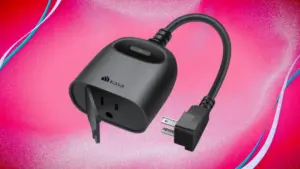
The Home Link is a compact, USB-C-powered device designed to act as a bridge between the cloud-based Muse AI and a user’s local area network. By integrating this hardware into a home environment, the AI gains the ability to communicate directly with other smart home infrastructure. This allows for seamless interaction with devices such as smart televisions, connected speakers, and other IoT-enabled home components, creating a more integrated, responsive living environment.
The reception to this internal prototype highlights the appetite for such hardware. Meta produced a limited run of 5,000 Home Link units, which it offered for free to existing Muse subscribers. Following a post by Friedman on the social platform X—which garnered nearly 30,000 views within hours—it is highly probable that the initial inventory was exhausted almost immediately. While these units are currently in production and expected to ship within the coming weeks, the speed at which they were claimed serves as a powerful indicator of the user base’s desire for deeper, hardware-integrated AI experiences.
A Multi-Pronged Strategy for Ubiquity
The launch of Muse Gadgets, while niche in its immediate appeal to hardware hobbyists, is a critical component of Meta’s broader, "all-in" strategy to cement Muse as a central pillar of the modern digital experience. Meta is clearly not satisfied with Muse remaining a standalone, screen-centric chatbot. Instead, the company is positioning the agent to be an omnipresent assistant, capable of acting as an intermediary between the user and the disparate tools they rely on daily.
This strategy is being pursued on several fronts simultaneously. While the Muse Gadgets initiative caters to the creative and technical community, Meta is concurrently aggressive in its pursuit of corporate and enterprise adoption. Earlier this week, the company unveiled "Muse for Small Business," a tailored offering that provides a free-tier version of the AI with specific usage limits, specifically optimized to integrate with essential business software suites. By allowing Muse to connect directly to platforms like Shopify, Dropbox, and Slack, Meta is aiming to automate the tedious, repetitive administrative tasks that often bog down small business owners, thereby increasing the value proposition of the Muse platform beyond the consumer segment.
Furthermore, the introduction of a new business unit, the "Meta Enterprise Platform," demonstrates that the company is looking to scale its AI offerings for larger, more complex corporate environments. By building out this infrastructure, Meta is attempting to position Muse as an essential business tool that can navigate the intricate software ecosystems of modern enterprise, from supply chain management to internal communications.
The Long-Term Vision
The convergence of these efforts—the hobbyist-friendly hardware kits, the small business integrations, and the enterprise-grade platforms—paints a clear picture of Meta’s end goal. The company is seeking to build a vertical integration that spans from the silicon on a hobbyist’s desk to the cloud-based workflows of a multinational corporation.
By decentralizing the hardware aspect through the open-source Muse Gadgets project, Meta is essentially crowdsourcing the exploration of what an AI agent "looks like" in the real world. Rather than guessing which form factor will succeed, the company is allowing the market and the developer community to iterate on different ideas, potentially revealing unexpected use cases that internal development teams might have overlooked.
As Muse continues to evolve, the distinction between "software" and "hardware" is becoming increasingly blurred. The success of this strategy will likely depend on Meta’s ability to maintain a consistent, reliable experience across these various touchpoints. While the current focus is on building the community and providing the tools, the long-term success of the Muse ecosystem will depend on how effectively these various gadgets and integrations can work in harmony to provide genuine, time-saving value to the end user.
For now, the focus remains on the "tinkerers and hackers" who are eager to push the boundaries of what is possible. With the firmware, SDK, and community support in place, the next few months will likely see an influx of creative hardware projects that push Muse into physical spaces, confirming Meta’s commitment to making its AI agent a ubiquitous, versatile, and deeply integrated part of everyday life. Whether through a simple HDMI dongle or a more complex custom-built controller, the goal is clear: to ensure that when a user needs something done, Muse is ready, no matter where—or how—the user chooses to interact with it.