







The phrase “artificial intelligence” is met with a mixture of awe and apprehension across the technology sector. But for professionals working in creative fields like digital art, branding, and user interface design, the rapid rise of artificial intelligence has often sparked deeper concerns than excitement.
In recent years, AI-generated art, video, and imagery have flooded the internet, igniting intense industry debates. Many creators worry whether corporations will increasingly turn to generative tools like OpenAI’s Dall-E, Midjourney, and Leonardo.ai rather than employing human artists. Furthermore, the reality that these machine learning models are routinely trained on the copyrighted work of real artists without their consent or compensation leaves many creative professionals feeling cornered, as if they have little choice but to assimilate AI into their workflows and daily lives.
In a digital landscape increasingly dominated by faceless AI chatbots, automated agents, and detached background features, it is remarkably easy to feel overwhelmed by the relentless pace of technological advancement. There is no denying that AI will play a massive role in reshaping industries, including the broad realm of design. Yet, according to industry practitioners like Oleksii Hrzhehorzhevskyi of MacPaw, the principles of humanization, deep empathy, and keeping a human safely at the wheel have never been more critical.
Rather than viewing artificial intelligence purely as a destructive force meant to replace human creativity, the team at MacPaw recognized an opportunity. They sought to explore how artificial intelligence could be made to feel significantly more personal and accessible, ensuring that human beings remained firmly at the center of the user experience. That overarching mission led the team to fundamentally rethink how software developers and designers approach the creation of AI assistants.
The Concept Of A New AI Assistant
Traditional artificial intelligence assistants—such as market leaders Claude and ChatGPT—typically manifest as a straightforward conversational text box or a minimalist web page. This format has dominated the sector simply because it represents how users have historically interacted with software on their devices. It is comfortable, utilitarian, and deeply familiar. While these text-driven interfaces are exceptionally useful for a vast array of productivity tasks, interacting with them can frequently feel transactional, cold, and overtly technical.
Relying on the exact same text box format across virtually every modern AI assistant does provide a certain level of interface consistency. However, the designers at MacPaw wanted to forge a fresh, highly differentiated experience for users that felt much warmer and more personal. The central design challenge was determining which format would be best suited for this goal. Even if an innovative tool drastically alters how an AI looks and feels on screen, it must still remain fundamentally useful and intuitive to navigate.

As human beings, we are hardwired to more easily understand, empathize with, and connect with things that resemble us or possess recognizable living traits. This psychological reality explains why people are naturally drawn to animals and dynamic characters—they display traits that we recognize within ourselves. Armed with this understanding, MacPaw’s designers identified a unique opportunity to harmonize two essential values: pure utility and engaging personality.
The Importance Of Character In Design
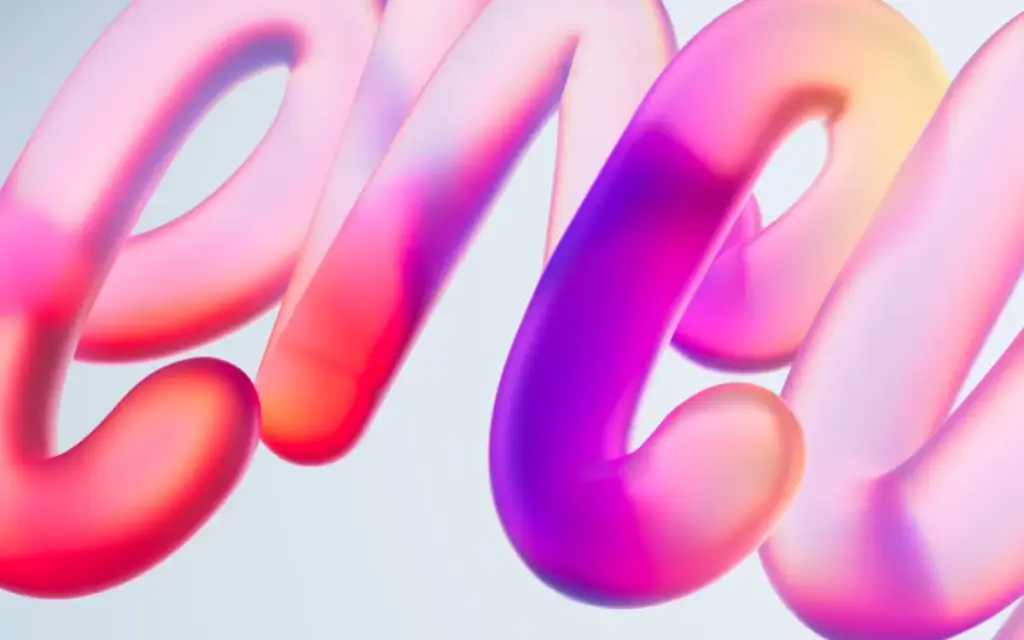
This philosophy birthed Eney, a new proactive AI assistant developed by MacPaw. The company did not want Eney to function merely as another isolated AI tool that users had to deliberately seek out and query. Instead, the vision was to create an intelligent helper that could proactively and seamlessly assist users directly within their daily workflows.
To help users form a natural connection with Eney far quicker than they might with a traditional text-based interface, the team decided to design a distinct character that users could visually interact with. The goal was to make Eney expressive, friendly, and capable of displaying human-like emotions. However, achieving this required striking a delicate balance: the character needed to be cheerful without crossing the line into being overly goofy, distracting, or childish.

Human animation and intentional design intervention played a critical role in hitting this mark. While the animation process was technically challenging, it was vital because an overloaded character interface can easily alienate users and make software navigation frustrating. To prevent cognitive overload, the design team deliberately curated a concise, select set of emotions and gestures for Eney to express. Every movement was designed to convey genuinely useful contextual information. For instance, when the assistant is actively processing a complex task in the background, Eney’s physical figure smoothly morphs to resemble a subtle loading icon. To achieve this without irritating the user, the design team carefully minimized Eney’s on-screen movement, ensuring it remained non-intrusive and graceful.
After exploring a variety of geometric shapes and physical styles, the design team ultimately settled on a circular figure. Circles naturally felt the most approachable, simple, and friendly. This soft geometry helped foster the psychological sensation of a calm, floating digital companion rather than just another rigid, rectangular interface element cluttering a user’s desktop environment. Furthermore, Eney’s minimal face design plays an essential role in user connection. The character’s eyes were specifically treated as the primary emotional connector—a crucial design feature that allows the assistant to communicate subtle shifts in emotion without descending into cartoonish exaggeration.
Color theory also played a pivotal role in the design process. Many mainstream AI assistants and tech companies predominantly utilize blue across their branding and interfaces, as the color is traditionally associated with intelligence and reliability. While blue is a reliable choice, the creators wanted Eney to stand out visually in a crowded market. They sought a color palette that retained a warm, inviting atmosphere while offering a higher degree of visual stimulation. This exploration led them to select pink. Amidst dozens of competitive AI products utilizing a predictable blue aesthetic, Eney was purposefully crafted to catch a user’s eye and leave a memorable impression both on screen and in the user’s mind.

Ultimately, the objective was to build a digital character that remains present yet never attention-seeking—a warm, supportive digital helper designed to genuinely enhance a user’s workflow rather than disrupt it. Eney’s distinct character successfully infuses personality into processes that are typically invisible to the end user.
Artists In The AI Era
While observers outside the design profession might casually assume that little thought went into the creation of a simple character like Eney, that assumption is entirely detached from reality. Much like any sophisticated software product, every single element—including the overall style, emotional range, physical dimensions, and even the name itself—was chosen with rigorous intentionality by human designers, not algorithms.
Even though artificial intelligence has streamlined various aspects of the modern design pipeline, particularly by accelerating production speeds, there remain fundamental elements that technology simply cannot execute well on its own. Throughout the development of Eney, while technology certainly supported certain mechanical phases of production, human designers maintained absolute control over every crucial decision and creative pivot.

As designers navigate this shifting landscape, industry professionals emphasize that good judgment, artistic direction, professional integrity, and emotional sensitivity are more vital than ever. Technologies like artificial intelligence can undoubtedly help creators work faster, but they can never authentically replace the deep-seated human values that inspire and shape meaningful work. Furthermore, while anyone can effortlessly generate a passable image by typing a prompt into an automated tool, there remains an undeniable beauty, skill, and irreplaceable talent in the deliberate, manual crafting of a design.
Professionals in the creative industries are encouraged not to shy away from emerging technologies, but rather to understand them and evaluate how they can legitimately assist within creative workflows. For many, tools like Perplexity and ChatGPT serve useful research functions during the early stages of a project. Yet, they must be recognized strictly for what they are: tools. Ultimately, artificial intelligence cannot and should not replace human artistry. Instead, its proper role is to help creators express their unique visions rather than supplanting human creators entirely.
Curiosity remains a powerful engine for building refined taste over time, and in the era of artificial intelligence, human taste is becoming more valuable—not less.