








Stephen King adaptations occupy a unique space in the cultural consciousness. They often take on a life of their own, frequently eclipsing the source material that spawned them. While films like The Shawshank Redemption and The Green Mile solidified director Frank Darabont’s reputation as the preeminent translator of King’s prose to the silver screen, other projects have become foundational pillars of the horror genre, even when they stray significantly from the page. From the psychological unraveling in Misery to the iconic, if contentious, changes in Stanley Kubrick’s The Shining, the history of King on film is defined by creative departures. Yet, among these varied interpretations, no cinematic pivot has proven more devastating, more controversial, or more enduring than the final, harrowing moments of the 2007 adaptation of The Mist.
Based on King’s 1980 novella, The Mist initially presents itself as a conventional creature feature, blending the claustrophobic dread of a survival thriller with the otherworldly, Lovecraftian horror found in games like Silent Hill. However, beneath its monster-movie veneer lies a profound, deeply cynical psychological study that distinguishes it from almost every other King adaptation to date.
The narrative begins with a violent, atmospheric storm that wreaks havoc on the home of David Drayton, played by Thomas Jane. Seeking to restock essential supplies in the aftermath, David takes his young son, Billy, and their neighbor, Brent Norton, into town. They arrive at a local supermarket, which is already swarming with residents scrambling to prepare for the recovery effort. Almost immediately after they step inside, an unnatural, thick white fog rolls over the town, engulfing the landscape and cutting the survivors off from the rest of the world.

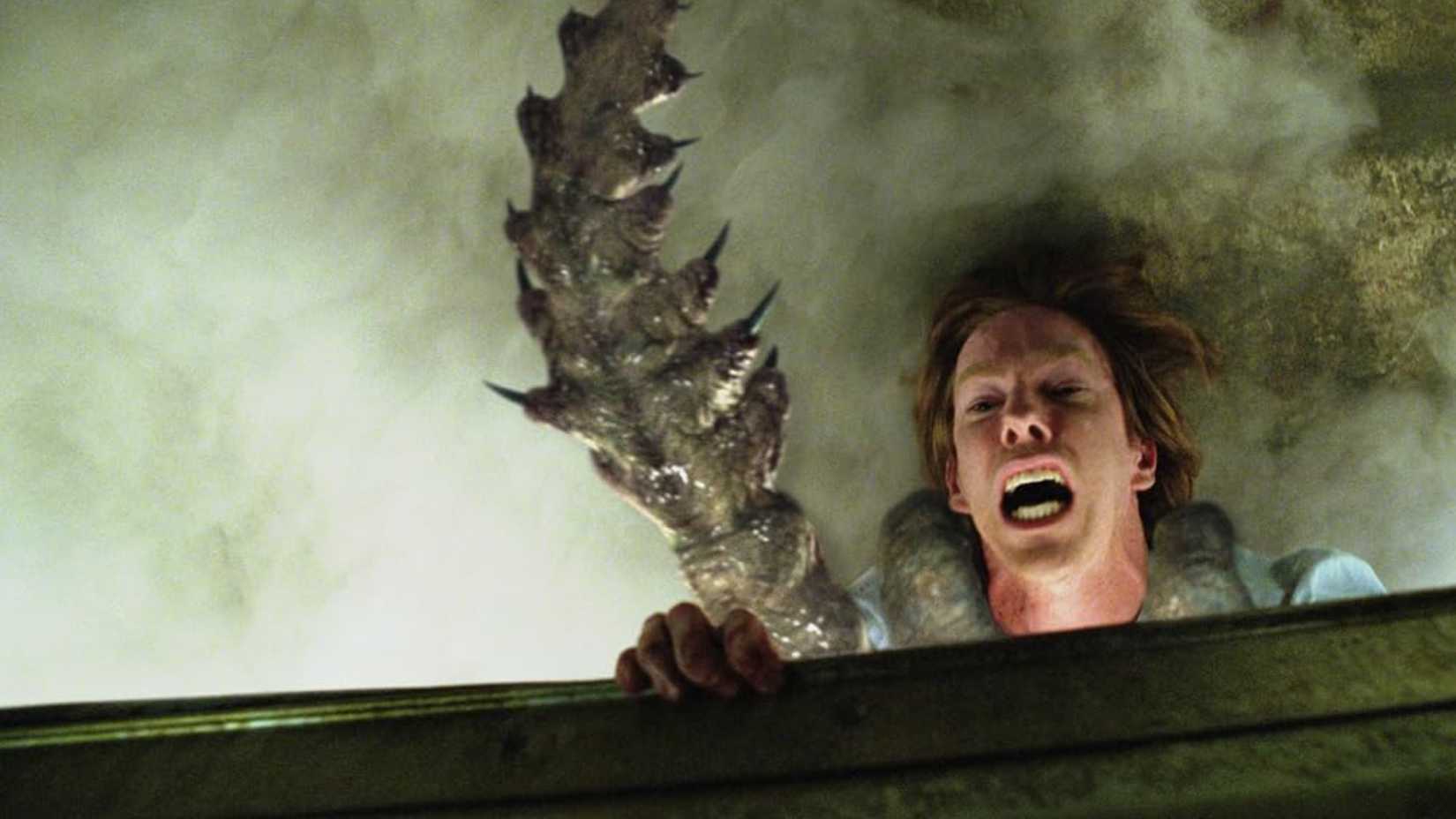
The film wastes little time establishing the stakes. The mist is not merely a weather phenomenon; it is a shroud for entities that defy conventional biological understanding. One of the most visceral sequences occurs early on, when David and a group of men venture to the supermarket’s loading dock. They are met with a nightmare: enormous, tentacled appendages breaching the loading bay doors. The death of Norm, a young store clerk, is particularly brutal. The creature’s tentacles, lined with razor-sharp, blade-like protrusions, slice through him with terrifying ease. As the men desperately attempt to pull him to safety, the sheer power of the unseen entity proves insurmountable. Norm is dragged into the fog, his screams punctuating the silence of the loading dock, leaving the survivors to witness the casual cruelty of their new reality.
This sequence serves as a masterclass in tension, highlighting Darabont’s directorial approach. Throughout the film, the audience is rarely given a clear, uninterrupted look at the monsters lurking in the mist. Instead, the horror is sustained through frantic camera work, the visceral reactions of the cast, and the terrifying implication of what lies within the white void. By keeping the creatures largely obscured, Darabont forces the audience to project their own fears onto the mist, effectively transforming the supermarket from a place of refuge into a gilded cage. As the glass storefront remains the only barrier between the survivors and the unknown, the psychological pressure begins to mount.
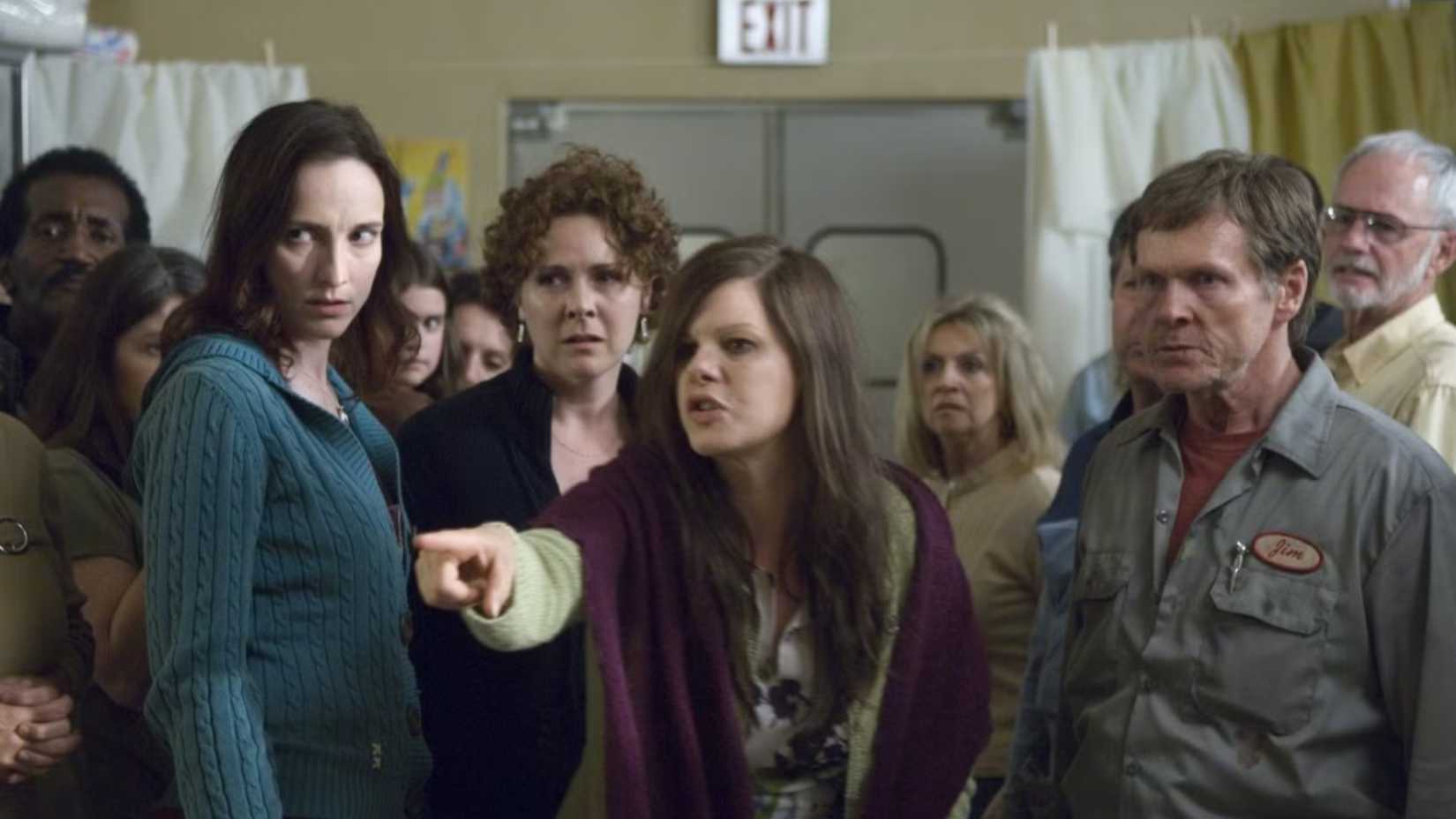
What makes The Mist truly compelling, however, is not the monsters themselves, but the way the survivors’ humanity disintegrates under the weight of existential terror. The film explores the collapse of societal norms when the thin veneer of civilization is stripped away. As time passes within the confines of the store, the initial sense of community dissolves. In its place rises a volatile environment where fear serves as the primary currency.

Leading this descent is Mrs. Carmody, portrayed with chilling intensity by Marcia Gay Harden. As the crisis deepens, Carmody retreats into a fanatical, warped religious fervor. She interprets the appearance of the creatures as a divine apocalypse, positioning herself as a prophet of the end times. While David and the more rational survivors struggle to reconcile the scientific reality of their predicament, Carmody weaponizes the fear of the masses, successfully convincing many that the chaos is a form of divine punishment.
The film’s marketing tagline, "Fear changes everything," acts as its thematic heartbeat. While this sentiment is not explicitly stated within King’s original text, it serves as the essential thesis for Darabont’s vision. Watching the characters argue over the validity of the threat is unsettling, but witnessing Carmody manipulate that fear to incite violence and fanaticism is truly devastating. It underscores the film’s darkest assertion: that humanity’s desperate, primal need to find meaning in a senseless catastrophe can lead to actions far more monstrous than any entity lurking in the fog.
Technical limitations, specifically the visual effects, serve as a curious backdrop to the human drama. Produced on a modest budget of between $13 million and $18 million, the film’s CGI often shows its age. The digital tentacles that claim Norm, for instance, lack the weight and texture required to feel fully integrated into the physical space of the loading dock. The lighting is frequently mismatched, and the creatures often appear to float within the frame. While these effects were considered a point of critique upon the film’s 2007 release, they have since taken on a strange, enduring quality.
Darabont has noted in interviews that the production was defined by a need for "guerilla warfare" tactics, with limited resources forcing creative compromises. Rather than detracting from the experience, this "B-movie" aesthetic actually serves to ground the film. The lack of polished, high-end effects keeps the focus squarely on the performances of Thomas Jane, Marcia Gay Harden, and Toby Jones. Their powerhouse acting bridges the gap, allowing the audience to overlook the dated visuals in favor of the raw, emotional terror at the center of the story.
The most significant divergence from the source material remains the film’s final act. While Darabont adheres closely to the events of the novella for the vast majority of the runtime—retaining the supermarket setting, the religious fanaticism, and the desperate struggle for survival—he opted for a conclusion that provides a definitive, crushing sense of closure. King’s original ending was far more ambiguous, leaving the characters’ fates to the reader’s imagination. Darabont, however, had long envisioned a more final resolution, one that he fought to maintain during the production process.
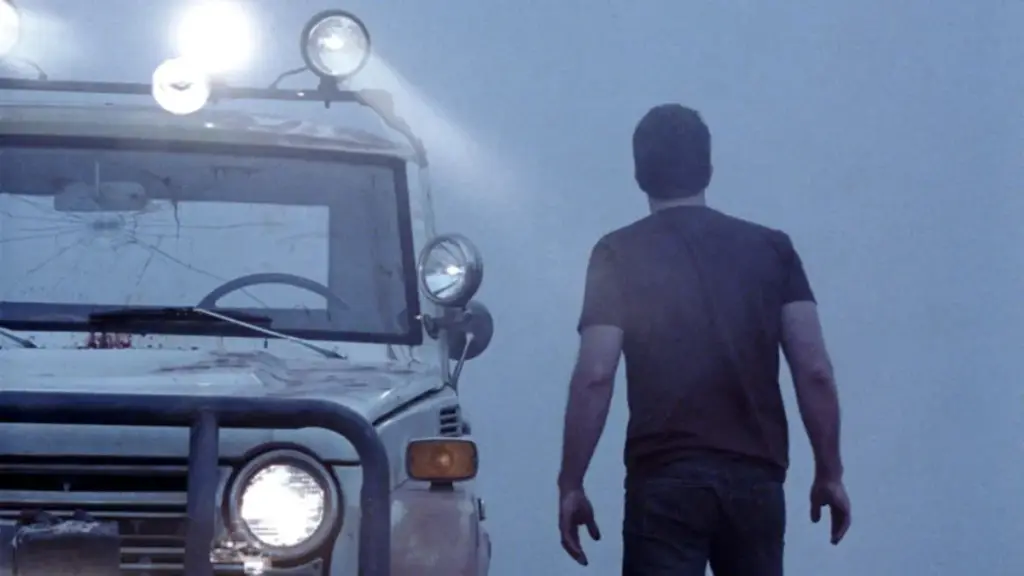
The ending remains infamous. After escaping the supermarket, David and a small group of survivors drive until their vehicle runs out of fuel, leaving them stranded in the middle of the mist. With their situation appearing hopeless and no end to the fog in sight, David makes a horrific, irreversible choice. With only four bullets left for the remaining survivors, he kills them all to spare them from a more gruesome fate, including his own young son.
The scene is agonizing. David, having spent the entire film acting as a protector, becomes the instrument of his son’s destruction. In the immediate aftermath, a broken David exits the car, prepared to surrender to the creatures. Instead, he is met with a massive military convoy. The mist begins to clear, revealing that the military had successfully contained the threat just moments after David surrendered to despair. The realization that salvation was only minutes away—and that his actions were entirely unnecessary—strikes the audience with the force of a physical blow.
These final moments are why The Mist remains a subject of intense discussion nearly two decades later. While the creatures themselves may look like relics of early 2000s digital art, the emotional weight of the ending is timeless. By transforming a story about monster-infested fog into a meditation on the cost of giving up hope, Darabont created a piece of horror cinema that persists in the mind long after the credits roll. It is a bleak, uncompromising look at the human condition, proving that the most terrifying thing in the world is not a monster from another dimension, but the speed with which a person can lose their grip on reality.
The Mist is currently available to stream on The Roku Channel.