







Google is set to implement a significant overhaul of its Gemini artificial intelligence ecosystem, marking a strategic shift in how users access its most advanced models. Following the initial transition to compute-based usage limits that began in May, the tech giant has announced a new tiered access structure that will redefine which Gemini models are available to free users and various tiers of paid subscribers. This shift, detailed in a recently updated support document, signals a clearer segmentation of Google’s AI offerings as the company balances the massive resource demands of its large language models with the needs of a growing user base.
The most notable change affects those who utilize the Gemini app without a paid Google AI subscription. Beginning October 9, these users will be restricted exclusively to the 3.5 Flash-Lite model. This adjustment effectively removes access to the more capable 3.6 Flash and 3.1 Pro models for free-tier users. By funneling non-paying users toward the lightweight Flash-Lite architecture, Google is clearly optimizing its server-side resources while maintaining a functional entry point for casual users.
For those currently subscribed to the AI Plus tier—priced at $4.99 per month—the landscape is also changing. These subscribers will see their access curtailed, as they will be limited to the Flash-Lite and Flash models, with the 3.1 Pro model being removed from their available options. Google has indicated that affected AI Plus subscribers will receive direct communication via email detailing exactly when these changes will take effect for their specific accounts. This tiered approach suggests that Google is moving toward a more granular model of service delivery, ensuring that the most compute-intensive models remain exclusive to higher-paying tiers.

Importantly, the company is maintaining stability for its higher-end subscribers. There are no regressions in service for those on the AI Pro and AI Ultra plans. In a move to add value for these premium users, those on the $19.99 per month AI Pro plan will now gain access to the "Deep Think" feature. Previously restricted to the enterprise-grade $99.99 and $199.99 monthly plans, this capability is designed for "maximum parallel reasoning." By bringing this high-level problem-solving tool to the $19.99 tier, Google is clearly attempting to incentivize mid-to-high-tier users to stick with their subscriptions while providing more robust value for the price.
The logic behind these changes rests on the increasing complexity of modern AI models. As models like 3.1 Pro and the anticipated future iterations require significantly more "compute" or processing power to generate responses, the cost to host these interactions grows. By categorizing users based on their subscription level and matching them with specific model classes—Flash-Lite for entry-level, Flash for mid-tier, and Pro/Ultra for premium—Google is attempting to manage its infrastructure load more predictably. This also creates a clearer "upgrade path" for users who find that their current model is no longer meeting their requirements for speed, reasoning depth, or complexity.
Alongside these model-access restrictions, the Gemini app is set to introduce a new system for managing output quality and resource consumption. In October, Google plans to roll out "low," "medium," and "high" effort levels for each available model. This feature is intended to give users more control over how their AI interactions are processed.
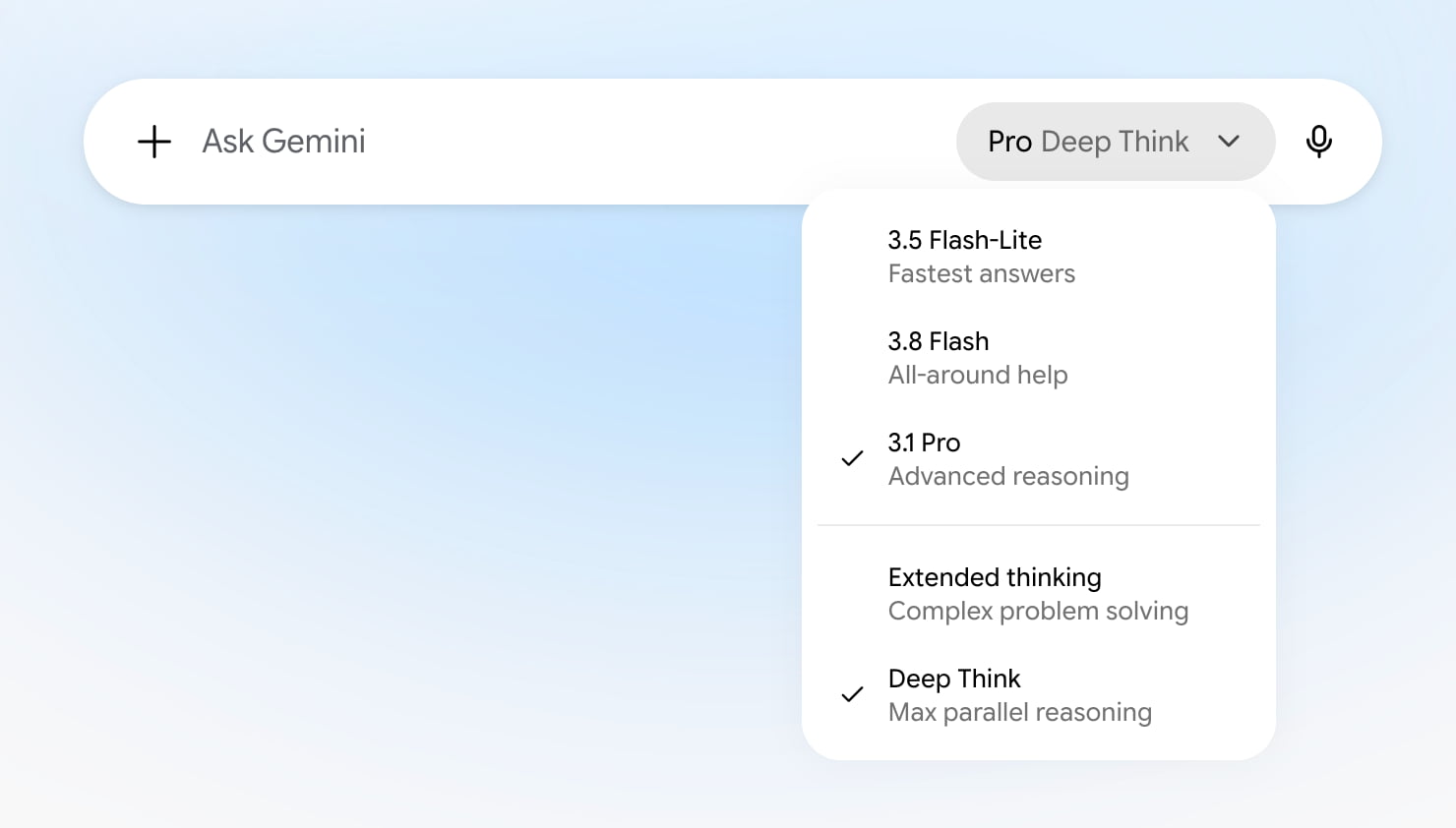
The mechanism behind these effort levels is tied directly to the concept of "thinking" time. Currently, users have access to an "Extended thinking: Complex problem solving" toggle. The new three-tiered system will formalize this, allowing users to choose the intensity of the AI’s reasoning process. According to internal documentation, selecting a higher effort level will increase the model’s ability to tackle difficult tasks and provide more thorough, nuanced answers. However, there is a trade-off: these higher-effort requests will consume more of the user’s allotted compute limits. This mirrors the capabilities currently found in Google AI Studio and the internal "Antigravity" platform, bringing professional-grade control over AI output to the general consumer-facing Gemini app.
This shift toward effort-based levels suggests that Google is moving away from a "one-size-fits-all" approach to AI interaction. By allowing the user to dictate whether they need a quick, concise answer or a deep, analytical response, the platform becomes more efficient. A user asking for a simple recipe, for example, can opt for a "low" effort setting, while someone debugging complex code or drafting a technical report might choose "high" to leverage the full reasoning capabilities of the model. This system effectively turns the model’s "thinking" process into a finite resource that the user can manage according to the importance of the task at hand.
The roadmap for future models, however, remains slightly opaque. Specifically, the placement of the highly anticipated "Gemini 4 Argon" within this hierarchy is still under deliberation by the product teams. Earlier this week, Google confirmed that Argon would first be made available to AI Ultra subscribers, but the company has not yet clarified whether Argon will be classified as a standard Pro-level model or if it will be positioned as the flagship of a new, even higher tier of service. Given the rapid pace of development in the field, this ambiguity is likely intentional, allowing Google to adjust its strategy as the performance capabilities of Argon become fully realized in production environments.

For the average user, these changes represent a period of transition in the accessibility of generative AI. The era where the most powerful models were available to all users regardless of subscription status is giving way to a more rigid, resource-conscious environment. As the models themselves become more intelligent and capable of solving increasingly complex problems, the infrastructure required to power them has become a critical constraint for companies like Google.
The decision to provide "Deep Think" capabilities to AI Pro subscribers, while simultaneously restricting model access for lower tiers, reflects a broader industry trend toward monetization of compute-heavy features. As AI integration becomes standard across productivity suites, search engines, and creative tools, companies are finding that they must balance the goal of universal access with the stark reality of the hardware and energy costs associated with maintaining cutting-edge AI technology.
Ultimately, these updates to the Gemini ecosystem will redefine the user experience starting this October. While some users may be disappointed by the loss of access to specific models like 3.1 Pro on the free or $4.99 tiers, the introduction of effort-based controls and the expansion of the "Deep Think" feature for premium users indicate that Google is focused on refining the utility of its tools. Whether these changes will push more users toward the higher-cost tiers or encourage a more surgical use of the available AI resources remains to be seen. As Google continues to iterate on its Gemini platform, the focus appears to be on creating a more sustainable, tiered service that can scale alongside the rapid evolution of artificial intelligence technology.