












Amazon Prime Day 2026, held from June 23 through June 26, served as a massive test of global digital infrastructure. As millions of Prime members across the globe engaged with deals spanning more than 35 product categories, the underlying architecture—powered by Amazon Web Services (AWS)—was subjected to record-breaking traffic volumes. The four-day event demonstrated not only the resilience of cloud-native systems but also the sheer scale at which modern e-commerce operates when supported by highly distributed, serverless, and optimized compute environments.
For nearly a decade, the annual tradition of Prime Day has served as a benchmark for AWS performance. By analyzing the data from this year’s event, engineers can look back at the steady progression of scale witnessed since 2016. The metrics from Prime Day 2026 indicate that the reliance on sophisticated, managed services has reached a new zenith, with several systems processing trillions of requests and operations that would have been unimaginable just a few years ago.
The Compute and Storage Engine
At the heart of the Prime Day ecosystem is the compute layer, primarily governed by Amazon Elastic Compute Cloud (Amazon EC2). This year, the shift toward efficiency was marked by the performance of AWS Graviton processors. During the event, these specialized, energy-efficient chips powered up to 49 percent of the Amazon EC2 compute capacity utilized by Amazon.com. This represents a significant milestone in the company’s ongoing transition to custom silicon, aimed at balancing high-performance requirements with sustainable power consumption.

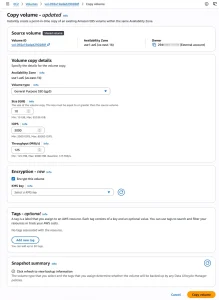
Supporting these compute clusters, Amazon Elastic Block Store (Amazon EBS) acted as the critical high-performance block storage backbone. As data needs surged alongside user activity, the service handled massive throughput, peaking at over 24.8 trillion I/O operations and managing the movement of more than an exabyte of data on a daily basis. The ability to maintain such low-latency storage access while simultaneously processing exabytes of data highlights the importance of the underlying storage fabric in preventing bottlenecks during peak shopping windows.
Scaling Serverless and Containerized Architectures
The shift toward serverless and containerized workloads continues to be the dominant trend in modern software architecture, and Prime Day 2026 provided the ultimate proof of concept. AWS Lambda, the company’s serverless compute service, saw an extraordinary surge in activity, handling over 2.3 trillion invocations per day. By abstracting away the management of underlying servers, Lambda allowed the Amazon engineering teams to focus on scaling the application logic to meet the sudden, erratic spikes in user traffic that characterize the first few hours of a major sale.
Simultaneously, Amazon Elastic Container Service (ECS) and AWS Fargate demonstrated significant growth in their deployment capacity. Fargate, which allows users to run containers without managing servers, launched an average of 158.3 million tasks per day throughout the four-day event. This figure represents a 47.7 percent increase compared to the average daily task launch rate during Prime Day 2025. This rapid growth in containerized task execution illustrates how Amazon’s internal systems have pivoted toward more modular, container-based architectures to improve deployment velocity and system reliability.

To ensure that this content reached users across the globe without latency, Amazon CloudFront served as the delivery mechanism. The content delivery network (CDN) managed over 2.1 trillion HTTP requests during the week of Prime Day 2026. Despite the massive scale, the system demonstrated a 5 percent increase in total request volume over the previous year, proving that even as the scale grows, the CDN’s distributed edge architecture remains highly effective at absorbing global traffic surges.
Data Management at Global Scale
Perhaps the most impressive feats occurred within the database layers. Amazon DynamoDB, a fully managed NoSQL database, proved essential for maintaining the performance of critical systems such as Alexa, the Amazon.com storefronts, and the global network of fulfillment centers. Throughout the event, DynamoDB processed over 59 trillion requests. Even at these astronomical levels of activity, the service maintained single-digit millisecond latency while peaking at an incredible 192 million requests per second.
Complementing this, Amazon Aurora—the company’s relational database management system designed for high performance—managed massive transaction loads. Aurora processed hundreds of billions of transactions, providing the necessary relational data integrity for complex operations. During the event, it stored 5,491 terabytes of data and facilitated the transfer of 1,194 terabytes, showcasing its utility as a primary database for high-traffic, mission-critical applications.
Caching also played a vital role in keeping the user experience responsive. Amazon ElastiCache handled a staggering load, peaking at over 2.3 quadrillion daily requests, with a minute-by-minute peak of 2.1 trillion requests. This level of caching efficiency is what allows shoppers to browse millions of items with near-instantaneous page loads, even when the underlying databases are under immense pressure.
Messaging, Streaming, and Governance
Beyond the immediate storefront interactions, the background infrastructure for message queuing and data streaming remained exceptionally robust. Amazon Kinesis Data Streams processed a peak of 988 million records per second, enabling real-time analytics and data processing across the platform. For inter-service communication, Amazon Simple Queue Service (SQS) received a peak of 213 million messages per second, providing the reliable asynchronous communication necessary for microservices to operate in concert.
The scale of communication was equally impressive on the notification front. Amazon Simple Notification Service (SNS) delivered 5 trillion messages in a single day, covering everything from order updates to personalized promotional alerts. These messaging systems are the connective tissue of the Amazon ecosystem, ensuring that disparate services can communicate reliably under extreme load.

Operational visibility and security were maintained through a suite of management tools. AWS CloudTrail, which logs every API call made within the environment, tracked 3.6 trillion events over the four-day period—a 44 percent increase from 2025. Similarly, Amazon CloudWatch processed over 2.15 quadrillion metric observations per day, providing the real-time observability required to catch potential performance degradation before it reached the customer.
Security monitoring also reached new heights. Amazon GuardDuty, the intelligent threat detection service, monitored an average of 14.08 trillion log events per hour. This 59 percent increase over the previous year reflects the heightened vigilance required to protect such a high-profile event from malicious actors. To ensure that these systems were not just scalable but also resilient to failure, the AWS Fault Injection Service (FIS) was used to run over 44,000 experiments. By intentionally injecting faults into the architecture, engineers could test the self-healing capabilities of the system, running more than six times the number of experiments compared to 2025.
Preparing for Future Peaks
The results from Prime Day 2026 reinforce the necessity of rigorous preparation for large-scale digital events. For businesses and organizations navigating their own periods of high demand—whether they be retail peaks, major sporting events, or critical government enrollment windows—the lessons learned from this year’s Prime Day highlight the importance of proactive capacity planning and stress testing.
AWS Countdown Premium, the service used to help manage these complex infrastructure requirements, has become a standard tool for entities aiming to deliver a flawless user experience during high-stakes moments. By working alongside expert teams to scale infrastructure, optimize costs, and bolster security, organizations can navigate traffic spikes with the same confidence seen during Prime Day. As the digital landscape continues to expand and the volume of global transactions increases, the focus remains on building resilient, intelligent, and highly scalable systems capable of meeting the demands of the future. The milestones set during this year’s Prime Day are not just records to be celebrated, but a roadmap for what is possible in the years to come.