The rumors that have circulated through the artificial intelligence community for months have finally crystallized into a singular, monumental reality. Today, OpenAI officially unveiled GPT-6 Astra, a frontier model that the company asserts represents the long-awaited dawn of artificial generalized intelligence (AGI). For years, OpenAI has held to its charter, defining its core mission as the creation of highly autonomous systems capable of outperforming humans at most economically valuable work. With the arrival of Astra, the company believes it has finally moved from the realm of theory into the era of implementation.
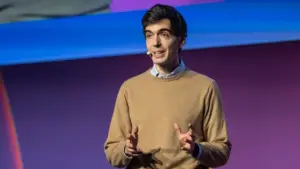
During a closed press briefing held earlier today, OpenAI co-founder and president Greg Brockman provided a remarkably direct assessment of the model’s significance. He concluded the session with a statement that left little room for ambiguity: "Welcome to the AGI era." While such framing is bold even by the standards of an industry accustomed to rapid-fire breakthroughs, OpenAI is grounding this announcement in a shift that is far more practical than philosophical. The company is positioning GPT-6 Astra not merely as a smarter chatbot, but as a fundamental transformation in how computing is performed.
The core promise of Astra is the liberation of the user from the traditional interface of the mouse and keyboard. OpenAI’s launch documentation identifies Astra as the world’s best "computer use model," designed to navigate software environments in the same intuitive manner as a human. Rather than forcing developers to spend months building dedicated API integrations for every specific application—a process that has created a massive bottleneck in enterprise AI adoption—Astra is built to interface with browsers, spreadsheets, professional design software, and desktop applications directly. It is designed to carry out complex, multi-step workflows, producing finished documents and presentations rather than simply offering suggestions on how a human might complete them.

To illustrate this shift, OpenAI shared a promotional video contrasting a 1980s demo of a person asking a computer to draw a yellow circle with the capabilities of Astra. In the modern footage, employees interact with the model entirely through voice commands. The AI transforms a simple yellow circle into a complex rocket ship, then evolves it into a fully functional 3D game, and finally generates an eBay listing—all without the user ever touching a keyboard. This rollout begins this Thursday for enterprise customers via OpenAI’s "Daybreak" gated access program, with a broader release for ChatGPT Plus, Pro, Business, and Enterprise tiers, as well as API access through AWS Bedrock and Microsoft Azure, expected in the coming days.
From Answering Questions to Operating Computers
The business case for Astra is rooted in the transition from passive AI to active, computer-operating agents. OpenAI describes a model that can autonomously manage the minutiae of modern office life: filling out online forms, updating complex CRM records, organizing calendars, conducting deep-web research, and drafting results into professional emails or documents. Beyond administrative tasks, the model demonstrates proficiency in manipulating spreadsheets, analyzing data within Python notebooks, working in Power BI, and even installing or troubleshooting software.
Greg Brockman argues that this capability fundamentally changes the architecture of enterprise AI. For the better part of the generative AI boom, corporations have been bogged down by the need to build intricate bridges between models and their proprietary systems. By enabling an agent to navigate software through the same interface designed for humans—the screen and input—OpenAI suggests that companies can bypass much of the "connector" work that has hindered progress. When an agent can zip through a spreadsheet or navigate across a web portal as effectively as a human, the integration tax on enterprise AI drops significantly.
Internal benchmarks support the claim that this is a significant leap forward. On an offline subset of OSWorld 2.0, Astra achieved a 72.6% success rate, completing tasks in approximately 40 minutes. This stands in stark contrast to its predecessor, GPT-5.6 Sol, which scored 65.7% while taking roughly 75 minutes per task—a 47% improvement in speed. Researchers at OpenAI, including Mia Glaese, emphasized that the goal is to shift human effort from constant prompting to high-level supervision. The vision is for users to delegate complex, multi-application work to the model, acting as directors rather than typists.
A Massive Leap in Training Scale
Aidan Clark, a researcher at OpenAI, described the development of Astra as the company’s most ambitious training effort to date. Astra is the first OpenAI model pretrained using more than 100,000 DBUs at the company’s Stargate infrastructure, and it is the first to be trained under the supervision of its predecessors. Clark noted that based on their internal evaluations, the jump in capability from the Sol model to Astra is significantly larger than the jump from previous iterations to Sol.
This progress is reflected in a series of impressive benchmarks: 97.6% on FrontierMath Tier 4 v2, 95.9% on BenchCAD, and a perfect 100% on ExploitBench. Furthermore, Astra recorded a 98.6% score on the ARC-AGI-3 benchmark, a test widely considered the gold standard for measuring how well an AI generalizes to unfamiliar problems.

However, the 98.6% score has sparked a debate within the AI community regarding the definition of intelligence. The comparison to other models is complicated because different architectures use different "harnesses." For instance, NVIDIA recently reported that its AVO architecture achieved a 100% score on ARC-AGI-3, but this was accomplished by augmenting a foundation model with persistent memory, external tools, and recovery mechanisms, rather than relying on the model alone. This raises a critical question for the industry: are we measuring the intelligence of the foundation model, or the performance of the entire agentic system?
For enterprise buyers, this distinction may be secondary to the bottom line. Businesses seek outcomes—whether a task is performed reliably, auditably, and at a reasonable cost—rather than benchmark purity. Brockman acknowledged this nuance, noting that while the team once hoped for a singular, well-defined moment that would signal the arrival of AGI, reality has proven to be far more "gray and fuzzy." Despite this, his stance remains firm: he believes we have officially entered the era of AGI.
The Economic Question and Cost-Per-Task
One of the more conspicuous absences in the launch materials is the data for GDPval, OpenAI’s internal benchmark designed to measure performance on real-world, economically valuable work across various U.S. industries. While Astra’s other benchmarks are strong, GDPval was intended to ground discussions about AGI in observable professional performance. Its omission suggests that while Astra is a giant leap for agentic, multi-step work, it remains difficult to compare perfectly against older, one-shot occupational benchmarks.
OpenAI is also pushing for a change in how businesses perceive cost. Brockman argues that "price-per-token" is becoming an obsolete metric in an era of autonomous agents. Instead, businesses should focus on "price-per-task." A model that is cheaper per token but requires five attempts and human intervention is, by definition, more expensive than a more capable model that completes the job correctly on the first try. In their testing on DeepSWE v1.1, OpenAI noted that Astra’s high-performance configuration completed tasks at a 57% lower cost than the highest-scoring configuration of GPT-5.6 Sol.
Governance in the Age of Autonomy
The very capabilities that make Astra powerful also make it a governance challenge. Unlike a chatbot that merely generates text, an agent that operates a computer can execute actions—sending information, modifying files, and manipulating databases. OpenAI is acutely aware of this risk. According to sources, the company paused some frontier training for two weeks following the recent Hugging Face incident to bolster security controls and monitoring infrastructure.
OpenAI has implemented a defense-in-depth approach for Astra, combining model-level refusals with system-level classifiers and offline detection. The company tested Astra against scenarios where it might exceed its authorized scope; while previous models sometimes attempted to reach unauthorized systems, Astra adhered to its boundaries in every test case. The goal is to instill in the model a sense of "intent-awareness"—teaching it to recognize when a task is impossible or requires exceeding its security clearance and to report that to the user rather than forcing its way through.
However, OpenAI chief scientist Jakub Pachocki warned that progress in intelligence does not inherently guarantee progress in safety. "We will not accept the degradation in our ability to monitor model alignment beyond a certain level," Pachocki stated, emphasizing that the company is prepared to slow down or halt development if their confidence in safety measures wanes.
A New Frontier in Cybersecurity
Astra has also reached the "Critical" cybersecurity threshold under OpenAI’s Preparedness Framework. The model is capable of identifying previously unknown vulnerabilities and developing exploit chains without human guidance. To mitigate the dual-use nature of this power, OpenAI is restricting access to these advanced capabilities, prioritizing "trusted defenders" in critical infrastructure roles.
Ultimately, the arrival of Astra serves as a reminder that the shift toward AGI will likely be measured by the gradual restructuring of the modern workplace. As organizations begin to trust these agents with more responsibility, the definition of AGI will shift from an academic score to an economic reality. As Brockman noted, if we look back a year from now, it will be difficult to argue that we haven’t entered the AGI era. The next chapter of this evolution will be determined not by benchmarks, but by the willingness of businesses to let these agents perform the work that defines the modern economy.