









With the release of Grand Theft Auto 6 looming on the horizon—close enough that one can almost taste the humid, swampy air of the game’s Leonida setting—it is natural to reflect on what has kept this series at the pinnacle of the open-world genre for decades. While casual observers might write off Rockstar Games’ flagship franchise as merely a playground for digital mayhem, the reality is that the series is anchored by sophisticated design choices that are frequently taken for granted. Among these, the "Wanted" system stands out as a masterclass in game design, serving as the connective tissue between player agency and systemic consequences.
In the landscape of modern video games, balancing freedom with constraints is an eternal challenge. Developers are tasked with the difficult job of providing players with enough autonomy to feel expressive while maintaining a logical set of rules that keep the world grounded. This is the delicate art of the design guardrail: creating a structure that discourages certain behaviors without explicitly preventing players from testing the boundaries of the world. Just as a player might attempt to rush toward the final boss in a challenging action RPG only to be soundly defeated, Rockstar uses the Wanted system to communicate the reality of the game’s internal laws. For the developers, the system functions as a digital legal code, one that is both intuitive and deeply reactive.
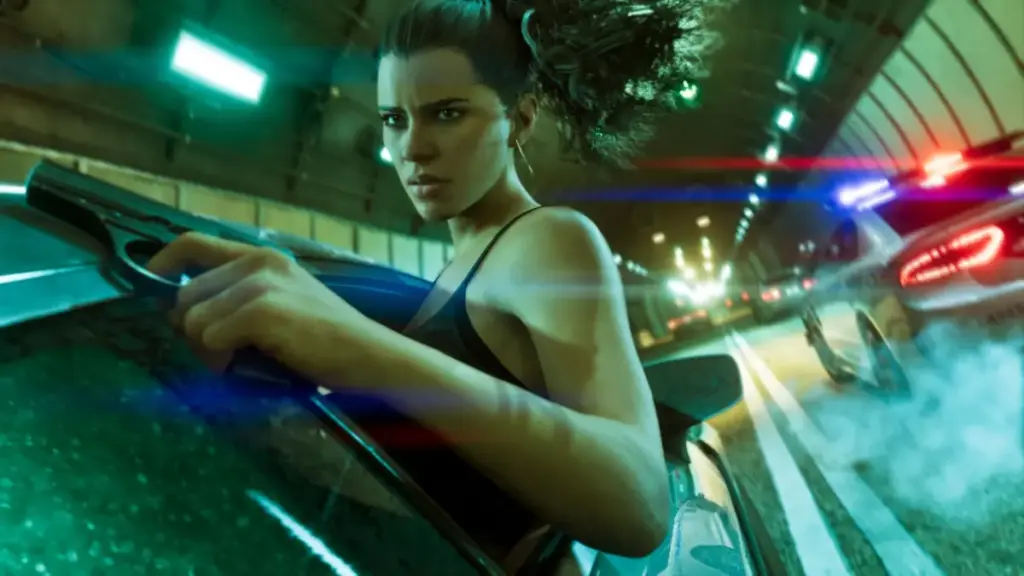
The brilliance of the Wanted system lies in its ability to literalize the concept of "consequences" within an interactive medium. Since the series’ early iterations, this mechanic has been the primary vehicle for feedback. When a player commits a crime, such as causing a collision or engaging in public violence, the game immediately acknowledges the transgression. A single star serves as a warning, signaling a minor misdemeanor that might attract the attention of a lone, indifferent officer. As the chaos escalates, so too does the response. By the time a player reaches three stars, they are no longer dealing with a casual patrol; they are facing a coordinated, aggressive force. Reaching five stars—or the rumored six-star system in the upcoming installment—transforms the experience into a desperate, high-stakes battle for survival where the odds are stacked heavily against the player.


For many longtime fans, the appeal of Grand Theft Auto has always been found in this push-and-pull relationship with the police. It is a game of risk management, often played in tandem with the series’ famous cheat codes. Players don’t just play the game; they play the system. There is a specific, thrill-seeking joy in calculating exactly how much destruction one can cause before the local authorities intervene. The gameplay becomes a dance: How quickly can one evade a pursuit with expert driving? How much heat can be generated before the environment becomes too hostile to navigate? It is, in many ways, the core loop of the franchise—the constant negotiation between personal ambition and systemic retribution.
This system effectively allows the player to peer behind the curtain of the game’s design. It renders the invisible backend logic of the engine visible and tactile. Every interaction, from a fender-bender to a high-speed chase, triggers a predictable, logical response from the game world. This transparency is vital, as it transforms the open world into a laboratory for experimentation. Players are constantly testing the limits of what they can and cannot get away with, learning the boundaries of the simulated reality through trial and error.
The resonance of this design choice may stem from the way it mirrors the formative experiences of adolescence. For many who grew up playing the early 3D entries of the series during the PlayStation 2 era, the Wanted system felt like a digital parallel to the push for independence experienced in school. Just as a student might gauge how much they could challenge a teacher’s authority or bend the rules of the classroom without facing detention, the player does the same in Grand Theft Auto. There is a psychological weight to understanding the repercussions of one’s actions. Seeing a friend push those boundaries too far in real life often served as a lesson in moderation, and the game provided a safe, consequence-free space to explore those same impulses.

The series succeeds because it treats these interactions with a sense of clarity. To engage with a Grand Theft Auto title is to engage in a continuous conversation with authority, learning how to exist as a rebel within a structured environment. While the surface-level power fantasy of the games is often defined by criminality and violence, the underlying lesson is one of social navigation. The Wanted system teaches players how to push back against the status quo in calculated, manageable ways. It provides a structured outlet for the human desire to test limits, all while ensuring that the "law" remains a formidable, ever-present force.
As we look toward Grand Theft Auto 6, the anticipation is naturally mixed with curiosity about how these foundational mechanics will evolve. Reports of a six-star system suggest that Rockstar intends to increase the intensity of these encounters, potentially pushing the player to their absolute limit. Whether this new iteration will carry the same formative, life-altering weight as the original 3D trilogy is an open question. The players of today are older, more experienced, and perhaps more cynical than the children who first roamed the streets of Liberty City in 2001.
The lessons learned from decades of gaming have changed how we approach these worlds. We are no longer just looking to see how much we can get away with; we are looking to see how the game responds to our mastery of its systems. Has maturity turned us into rule-followers, or does that spark of rebellion—that desire to see if we can survive a five-star onslaught—still burn bright? The coming months will provide the answer. As November approaches, we are all waiting to see if we still possess the grit to challenge the digital establishment, or if our days as virtual outlaws have finally reached their limit. The Wanted system has always been the barometer for that spirit, and it will be fascinating to see how it holds up in the next chapter of the saga.