ARLINGTON, Va. — As the legal battle over the future of American prediction markets intensifies, Kalshi CEO Tarek Mansour has signaled a defiant optimism regarding his company’s prospects. Speaking at the DC Fintech Week event in Arlington on Wednesday, Mansour addressed the ongoing regulatory tug-of-war, suggesting that the industry’s survival in the United States depends not on a choice between state and federal oversight, but on whether these innovative platforms remain within the country’s borders or are forced to migrate to offshore jurisdictions.
The remarks come at a critical juncture for Kalshi and the broader prediction market sector, which has seen explosive growth alongside intense scrutiny from regulators and sports leagues alike. For Mansour, the core of the debate is existential. He frames the current legal impasse—which has already drawn the attention of the U.S. Supreme Court—as a binary outcome for the industry: either the United States establishes a clear, federal regulatory pathway for event contracts, or the market will inevitably flee to less transparent, foreign environments where U.S. consumer protections are non-existent.
"We feel pretty good about where we stand overall," Mansour stated during his appearance. His confidence rests on a firm belief that the platform’s business model is not only compliant with existing federal law but serves as a natural evolution of traditional commodity trading.

The Economic Case for Prediction Markets
A significant portion of the tension surrounding Kalshi and its peers stems from the integration of sports betting-like elements into event-contract markets. Critics, including various state regulators, have argued that these markets are effectively masquerading as sports wagering platforms, thereby falling under the purview of state-level gambling authorities. Mansour, however, vehemently rejects this characterization.
He specifically pushed back against the narrative that events like sports outcomes lack sufficient economic consequence to be treated as financial contracts. "The notion that sports does not have economic consequence is ludicrous," Mansour told the audience. By treating these events as tradable commodities, Kalshi aims to allow participants to hedge against various risks—or speculate on outcomes—in a manner that mirrors the way investors trade futures on oil, gold, or agricultural products.
Mansour’s defense is rooted in his interpretation of the Commodity Exchange Act, which he describes as a "truly beautiful statute." According to the CEO, the law was designed with enough flexibility to allow the financial system to pivot from physical commodities to more intangible financial products, such as swaps. In his view, prediction markets are simply the next step in this historical trajectory of financial innovation. He argues that Kalshi has meticulously structured its regulatory relationship since its inception to ensure it fits within these federal definitions, making the intervention of state-level gambling regulators an unnecessary and disruptive intrusion.
A Fragmented Legal Landscape
The conflict between federal and state authority has created a complex web of litigation. Currently, the dispute has reached the federal appellate level, where the judicial landscape has become notably divided. One major ruling has favored Kalshi’s position, supporting the role of the Commodity Futures Trading Commission (CFTC) as the sole federal watchdog for these markets. Conversely, two other rulings have aligned with the states’ perspective, arguing that state regulators maintain the right to oversee wagering activities that occur within their borders.
This lack of judicial consensus has propelled the issue toward the U.S. Supreme Court. New Jersey, a state at the forefront of the challenge against Kalshi, has formally requested that the high court intervene to resolve the jurisdictional impasse. The stakes have drawn in powerful external stakeholders, including the National Football League (NFL), which has joined the pushback against the expansion of these markets, citing concerns over the integrity of sports and the potential for unauthorized wagering.
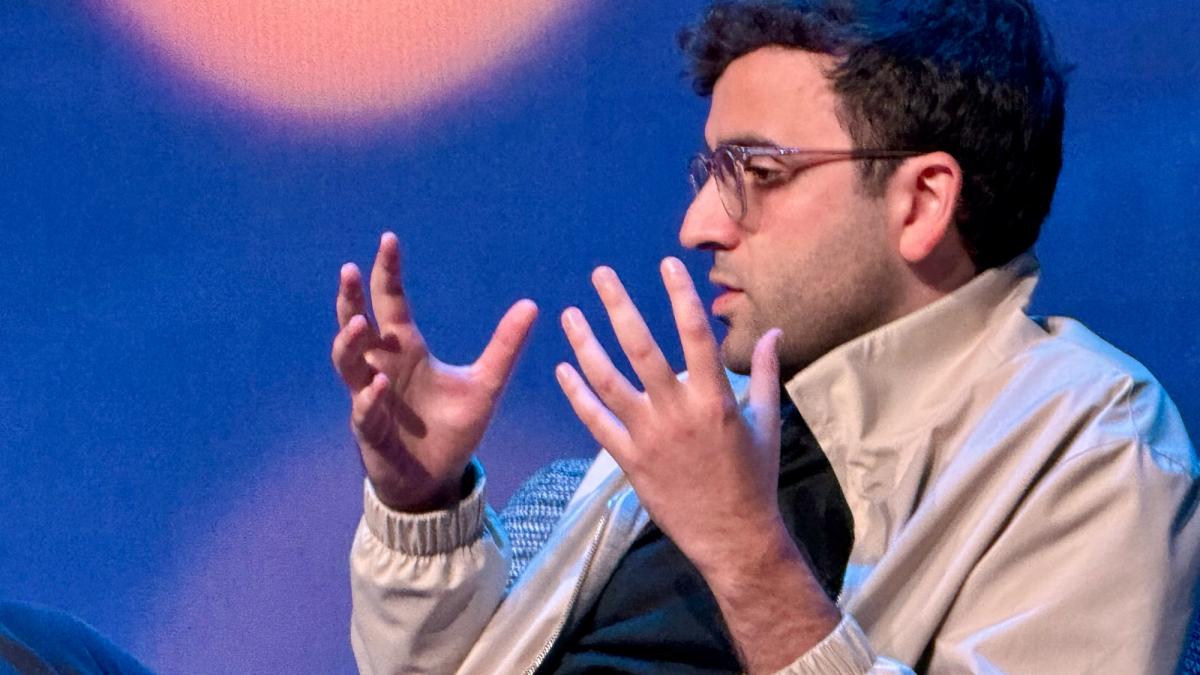
For Mansour, the intervention of the Supreme Court is the final hurdle in determining the industry’s trajectory. He insists that the industry is not attempting to bypass regulation, but rather seeking a singular, coherent federal framework. "It’s not a choice of state versus federal market," he emphasized. "It’s a choice of whether prediction markets exist in the U.S. or whether they go offshore."
The implication of his argument is that if the court rules in favor of a patchwork of state-level regulations, it would create an impossible compliance burden for firms like Kalshi. In such a scenario, the most viable path for survival would be for companies to exit the U.S. market entirely, effectively offshoring the industry and stripping the U.S. government of its ability to monitor or tax the activity.
Addressing Concerns Over Market Volume
Beyond the legal battle, Mansour also used the platform at DC Fintech Week to address operational questions that have been raised regarding the company’s trading data. Recently, there has been speculation on social media and in financial reporting concerning the nature of volume on Kalshi’s platform, particularly regarding bitcoin and ether perpetual-futures markets.
Critics and market observers have pointed to data showing that large, repetitive, and fixed-size orders have dominated a significant portion of the platform’s trading volume. These patterns have led some to question whether the activity reflects genuine market interest or if it is the result of artificial inflation.
Mansour was quick to dismiss these concerns, characterizing the chatter as "a lot of crazy" circulating on social media platforms like X. He attributed the recurring, fixed-size trade patterns to the routine operations of professional market makers. According to Mansour, these entities are simply providing the necessary liquidity to keep the markets functional, and their automated, consistent order sizes are a standard feature of modern electronic trading rather than an indication of malfeasance.
The CEO’s willingness to address both the high-level legal challenges and the granular operational questions reflects the pressure currently facing Kalshi as it attempts to normalize prediction markets as a legitimate asset class.
As the Supreme Court considers whether to hear the case, the industry remains in a state of suspended animation. The outcome will likely serve as a landmark decision for the intersection of fintech, commodities, and gambling law. For now, Mansour remains focused on the federal pathway, maintaining that the Commodity Exchange Act provides the necessary, stable foundation for the future of the platform. Whether the courts ultimately agree that these markets are a matter of federal commodity regulation or local gambling oversight remains the defining question for the company’s future in the United States.
The developments in Washington and the ongoing proceedings in the nation’s highest courts ensure that the debate over the regulation of prediction markets will remain at the forefront of the financial and legal news cycle for the foreseeable future. With the NFL and other major institutional players now involved in the legal arguments, the case has moved well beyond a simple disagreement over licensing, evolving into a fundamental test of how the U.S. regulatory system handles the rapid evolution of digital financial products.