Every software engineering team that ships code eventually builds a staging environment, and every team that builds a staging environment eventually confronts the same systemic bottleneck. Shared staging is inherently chaotic. When a single environment accommodates multiple pull requests, developers find themselves stepping on each other’s toes. One engineer deploys a half-finished feature for testing, another deploys over it, and a third runs a database migration. By Thursday afternoon, nobody can reliably identify which version of a branch is actually running, and the phrase "it works on staging" ceases to carry any useful information.

To cope with this friction, teams have traditionally relied on familiar workarounds. They create dedicated Slack channels where colleagues claim staging like a conference room, establish rotating deployment schedules, or provision secondary and tertiary staging environments that inevitably drift further and further from actual production configurations. However, modern platform engineering teams at companies like Vercel, Netlify, and Shopify have established a superior pattern: giving every individual pull request its own isolated environment.
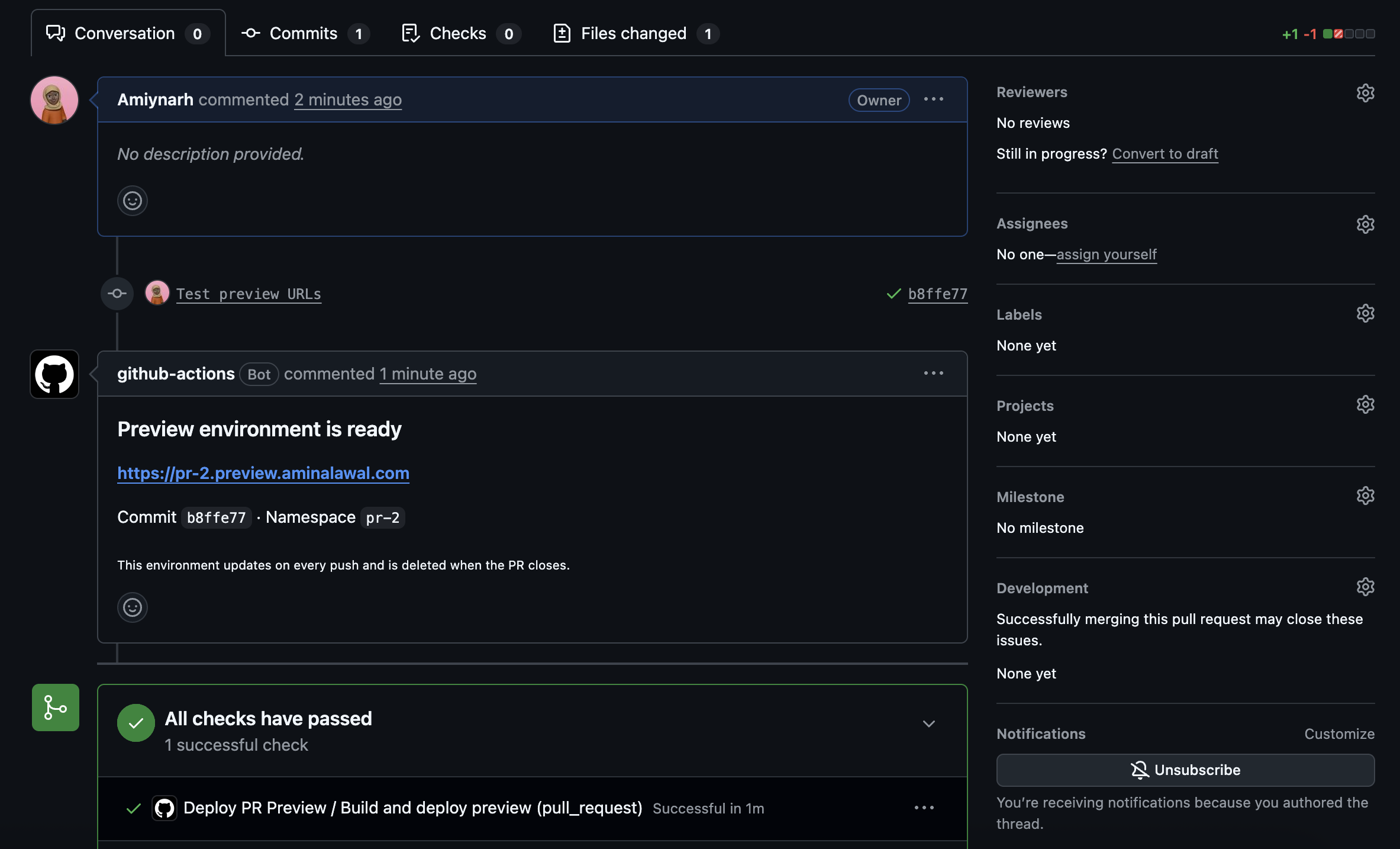
Under this model, opening a pull request automatically triggers the deployment of a fresh, isolated copy of the application. Pushing subsequent commits updates that environment in real time, while merging or closing the pull request instantly deletes the entire setup. This eliminates queues, manual coordination, cleanup overhead, and environment drift. Reviewers receive an automated bot comment containing a live, working HTTPS URL alongside commit metadata, allowing stakeholders to review changes effortlessly.

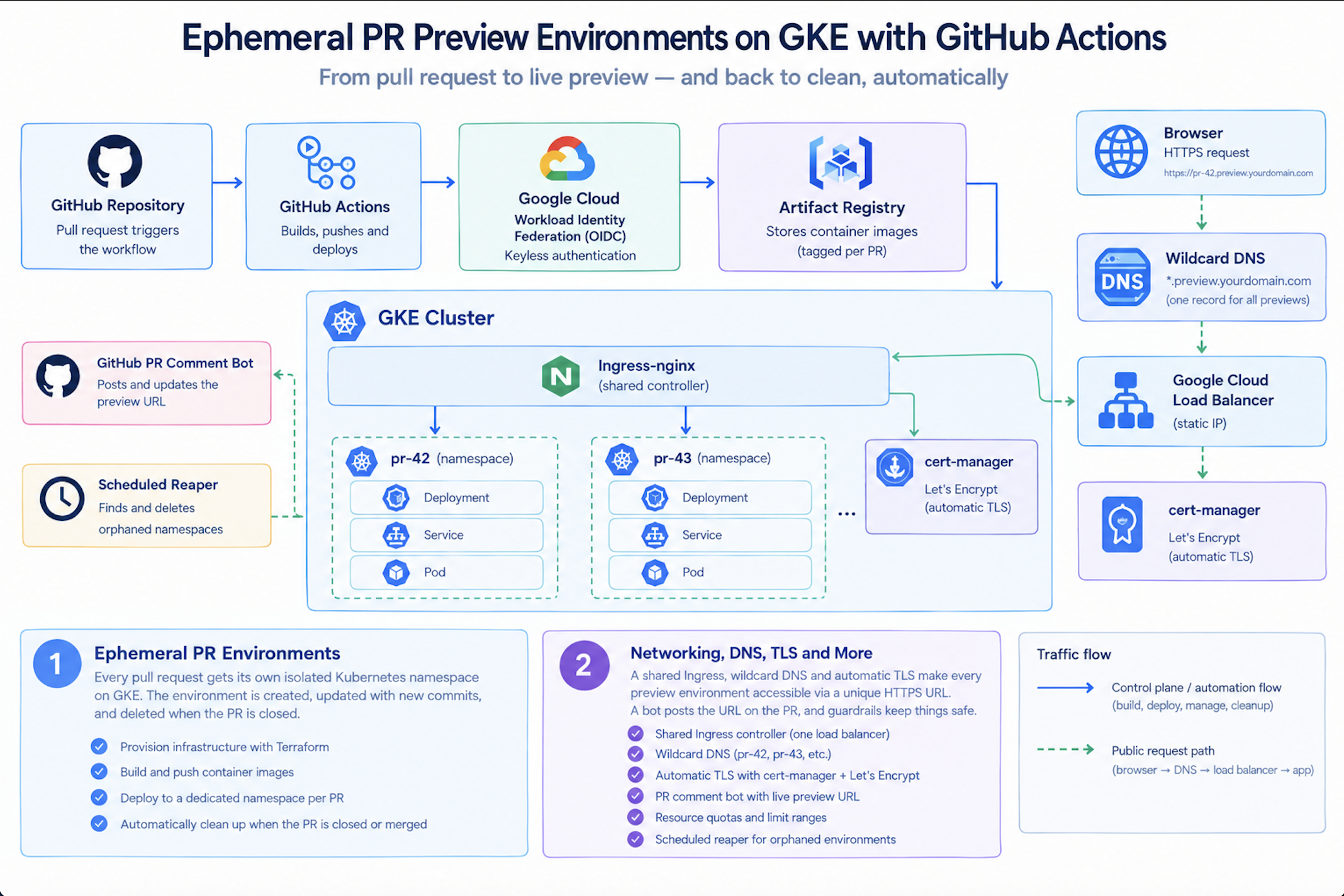
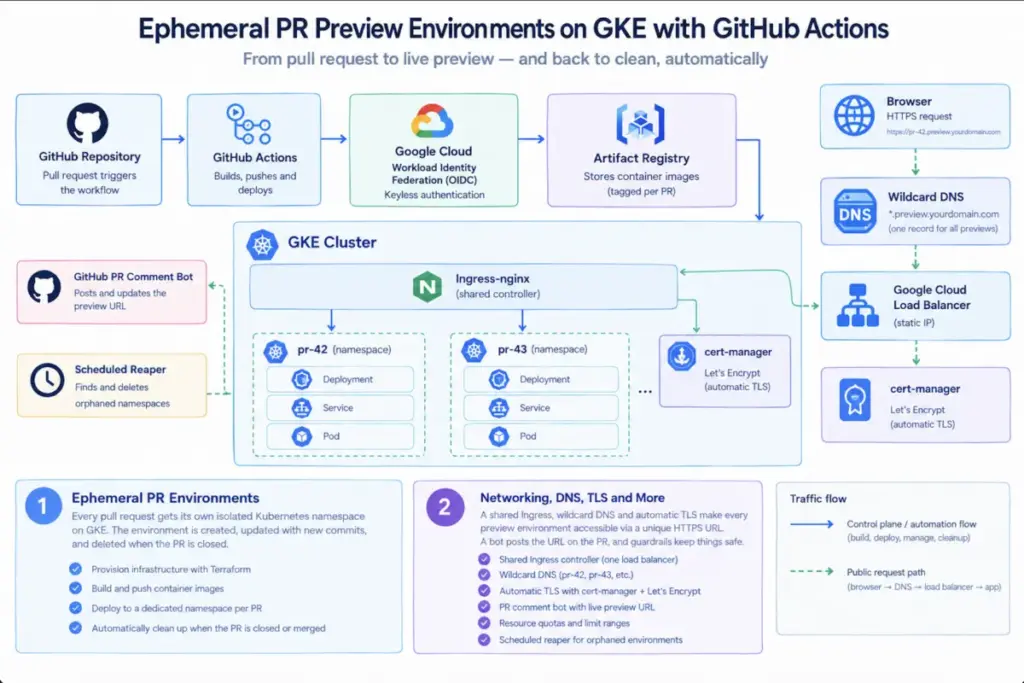
The underlying infrastructure relies on a cohesive architecture that prevents resource bloat. Automated workflows driven by GitHub Actions authenticate through Workload Identity Federation, push container images to an Artifact Registry, and deploy workloads into dedicated namespaces within a Google Kubernetes Engine (GKE) cluster. Each namespace, such as pr-42 or pr-43, remains completely isolated. Meanwhile, public traffic flows through a streamlined pathway: a single wildcard DNS record directs requests to a shared Google Cloud load balancer, which hands off traffic to an NGINX Ingress controller. This controller inspects the incoming Host header and routes the request to the correct namespace, while cert-manager automates the acquisition of valid TLS certificates from Let’s Encrypt. Crucially, the resource footprint does not multiply with the number of open pull requests, as a single load balancer, DNS record, and Ingress controller service every environment regardless of scale.
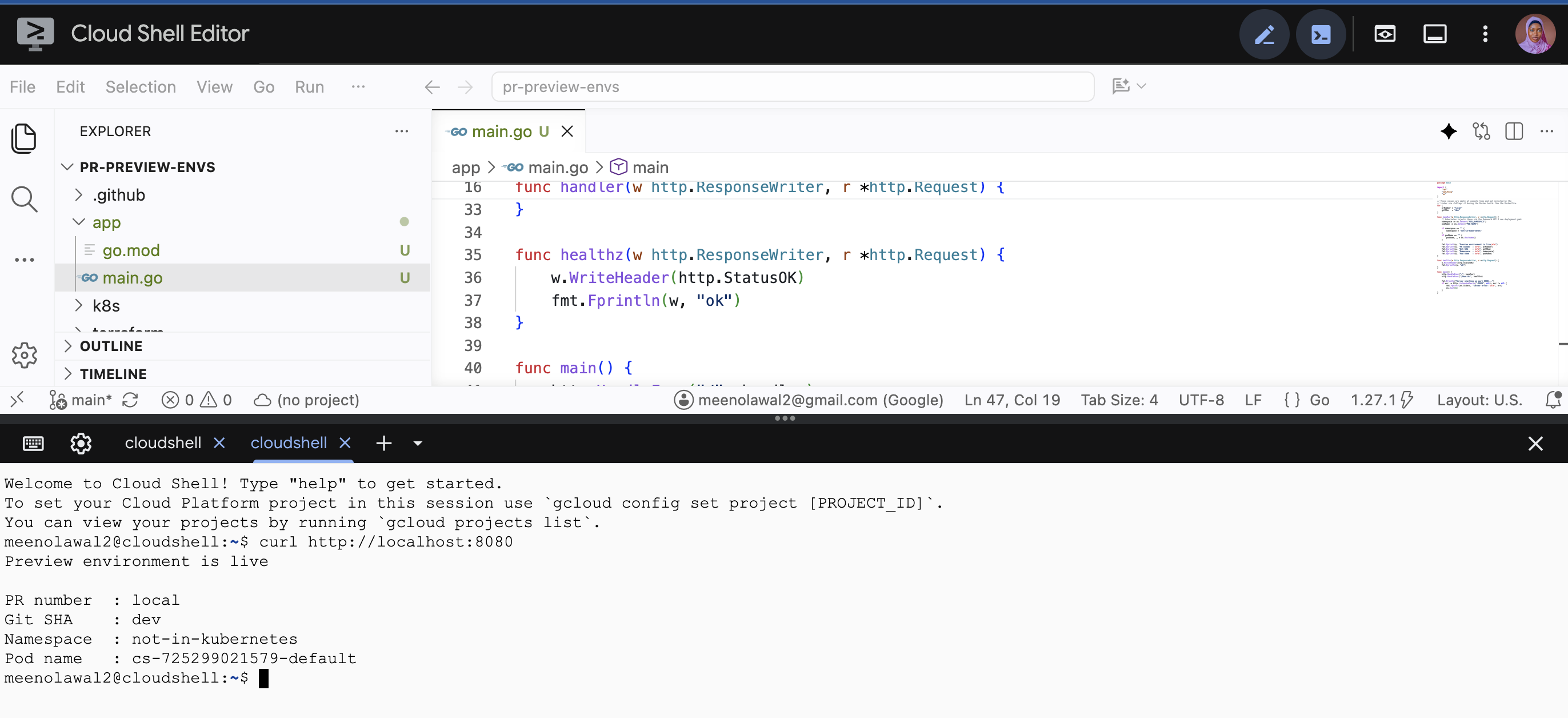
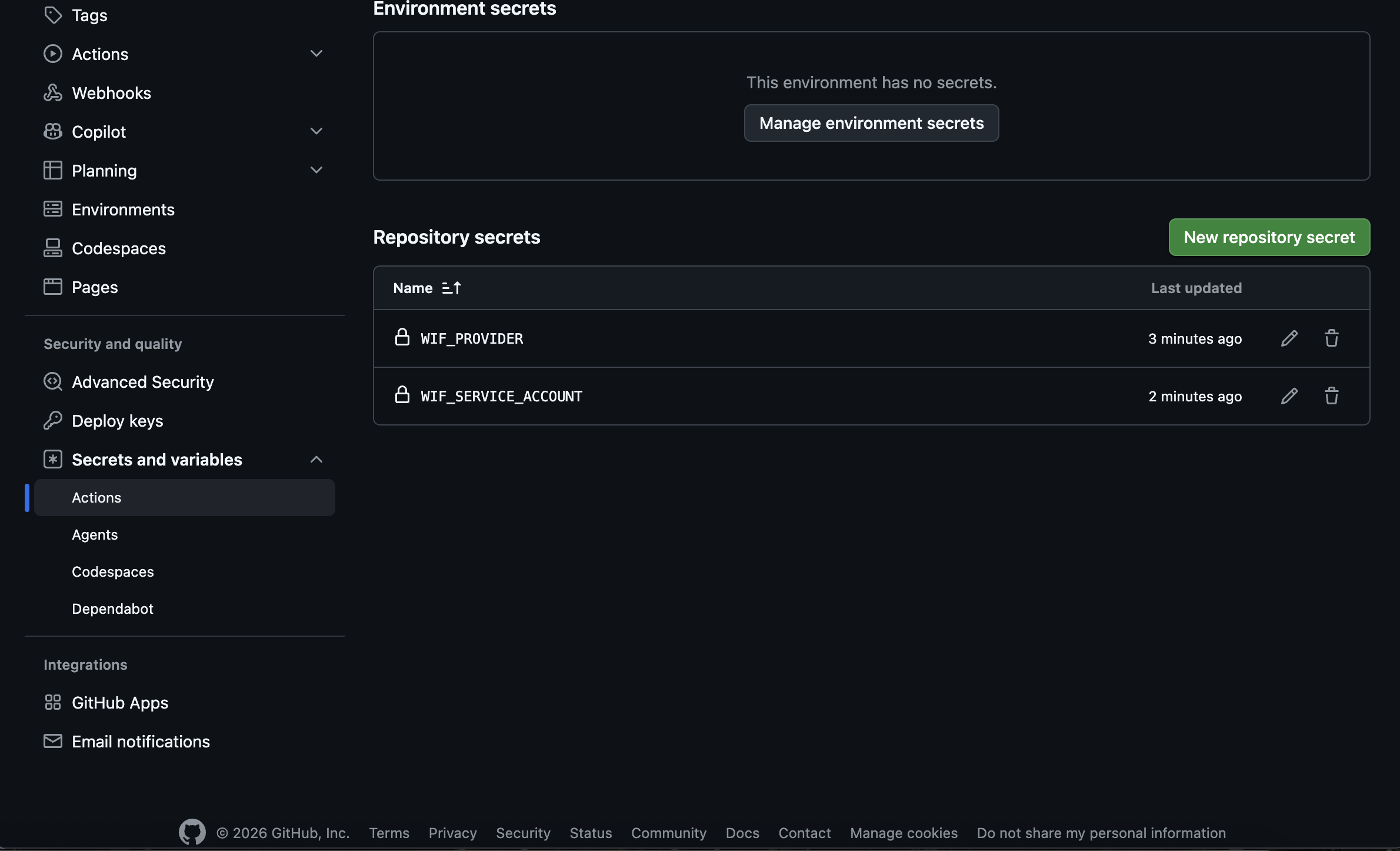
Transitioning to this architecture requires careful consideration of security, particularly regarding authentication. Traditional deployments often rely on long-lived service account JSON keys to grant CI pipelines permissions to push images and manage clusters. These keys pose significant security risks because they rarely expire, act as unmonitored bearer tokens, and vastly expand the blast radius if compromised. Modern implementations replace these static secrets with Workload Identity Federation. By utilizing OpenID Connect (OIDC), GitHub Actions requests short-lived tokens directly from GitHub, which Google Cloud validates against strict attribute conditions ensuring that only the designated repository can assume the deployment role.
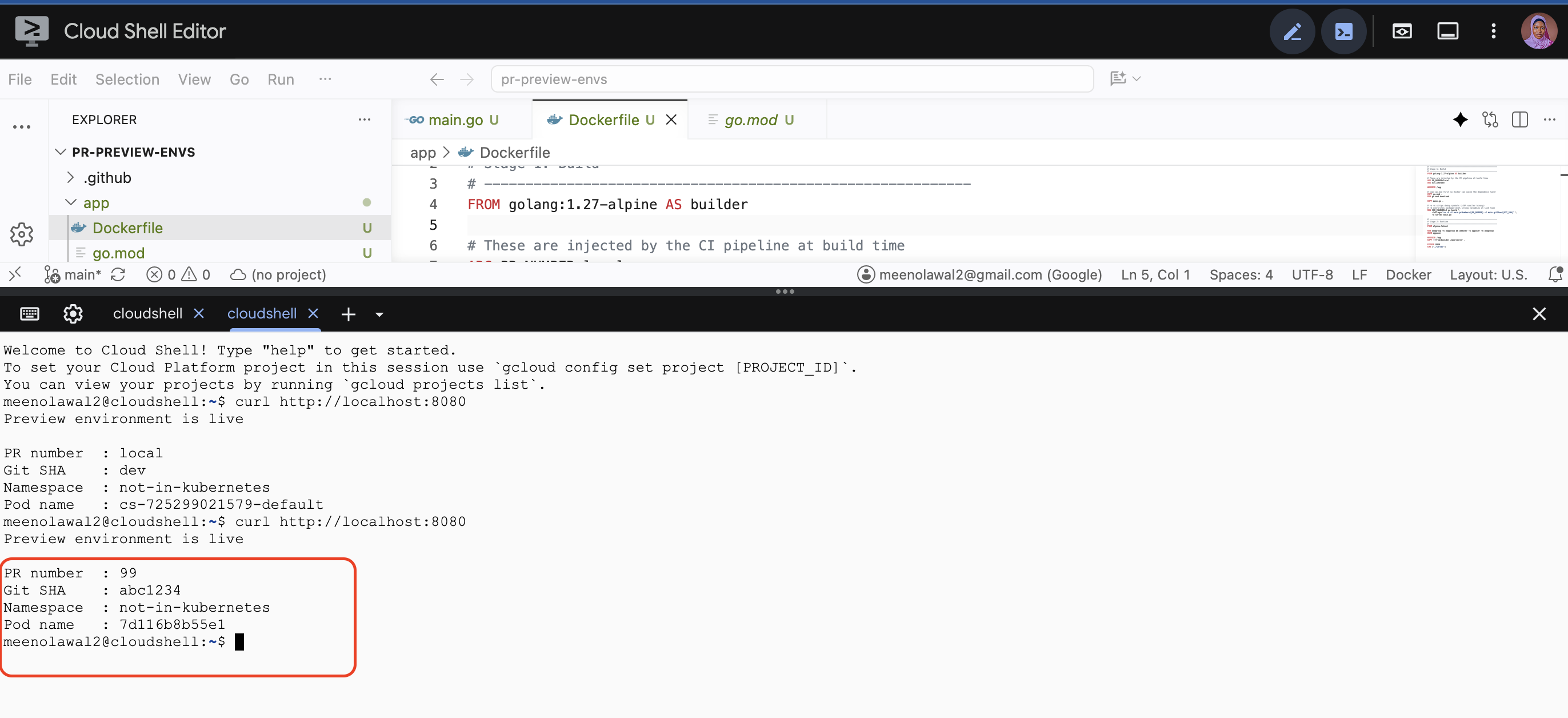
Building the application itself with Go provides specific advantages tailored to containerized ephemeral environments. Go compiles into a single statically linked binary with no external runtime dependencies, resulting in minimal container image sizes that drastically accelerate build, push, and pull times. Furthermore, Go linker flags allow engineering pipelines to inject build metadata directly into the binary at compile time. Baking the pull request number and Git commit SHA straight into the application ensures that the running instance can accurately report its exact provenance, eliminating guesswork during debugging.
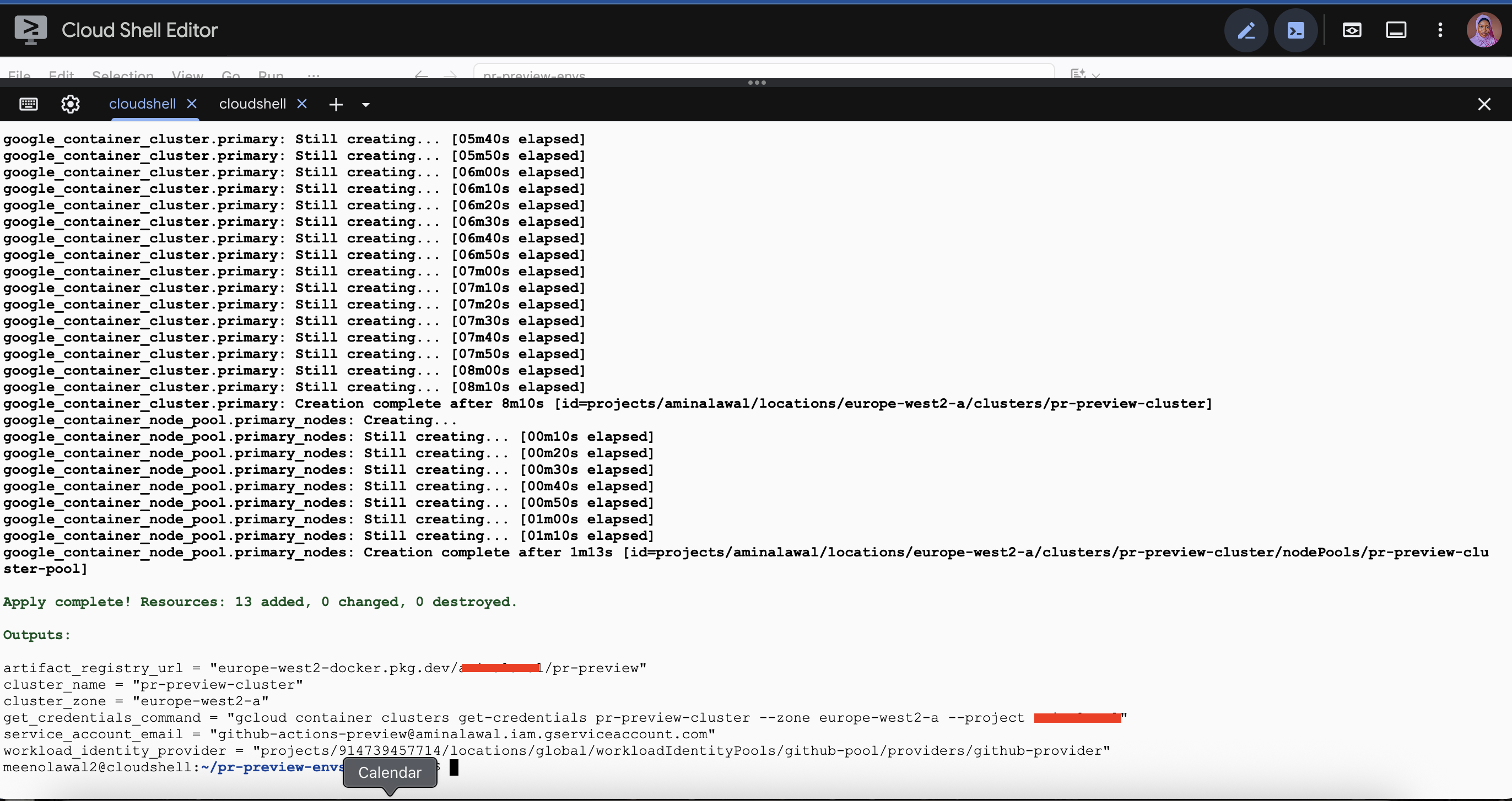
To manage the cloud infrastructure efficiently, engineering teams utilize Terraform. Rather than relying on imperative command scripts, Infrastructure as Code ensures that resources can be provisioned consistently and destroyed completely without leaving orphaned components behind that continue to accrue cloud costs. Provisioning a zonal GKE cluster alongside an Artifact Registry and reserved static external IPs establishes a predictable foundation. Reserving a static IP address for the Ingress controller is vital, as it ensures that the load balancer’s public endpoint remains constant even if underlying services are recreated, preventing wildcard DNS records from breaking unexpectedly.

The deployment and teardown lifecycles are entirely automated through continuous integration workflows. When a pull request is opened, synchronized, or reopened, the pipeline authenticates securely, builds the container image with embedded metadata, dynamically generates Kustomize overlays, and applies the manifests to a dedicated namespace. Concurrency controls ensure that rapid successive commits do not trigger race conditions where older builds overwrite newer ones. Namespace guardrails, including ResourceQuotas and LimitRanges, protect the cluster by capping CPU and memory consumption per namespace and explicitly disabling the provisioning of expensive per-environment load balancers.
To ensure long-term hygiene, automated reapers handle orphaned environments that escape standard teardown procedures. Scheduled workflows periodically audit running namespaces against the list of active pull requests and maximum age thresholds, systematically removing stale environments that lack valid management labels. This multi-layered approach ensures that preview environments remain secure, cost-effective, and fully automated throughout their lifecycle, transforming code review into a seamless experience for engineers, designers, and product managers alike.