The United Kingdom has officially imposed sweeping economic sanctions against Cryptomus, a notorious and chameleonic cryptocurrency payment processor that security researchers have long identified as a primary pipeline for illicit financial activity. The move represents a significant escalation in the international effort to dismantle the digital infrastructure supporting the Russian state and its associated criminal syndicates.
According to the official sanctions notice issued on October 8, 2026, the U.K. government has moved to freeze all assets linked to Cryptomus within British financial institutions. Furthermore, the directive strictly prohibits any U.K.-based entities from engaging in business with the platform, effectively cutting it off from the British market. The sanctions package also extends to several other virtual payment entities deemed complicit in facilitating financial crimes, including VexPay, TokenSpot, and the Tsunami Payments service.
A History of Evasion and Illicit Facilitation
Cryptomus has gained notoriety among blockchain analysts and law enforcement agencies for its ability to rapidly rebrand and evade regulatory scrutiny. Previously known as Certa Payments and Xeltox Enterprises, the platform has functioned as a central nervous system for a vast array of illegal activities. Experts tracking the firm report that it serves as a critical conduit for payments tied to ransomware extortion, narcotics trafficking, darknet market transactions, and various cybercrime services. Crucially, these operations have provided a vital lifeline for the Russian government, allowing it to circumvent stringent international financial restrictions imposed in the wake of its ongoing geopolitical conflicts.

The platform’s history is a case study in corporate obfuscation. Since emerging in 2022, it has cycled through multiple names and operational structures. Most recently, the platform pivoted to the name "Heleket" following a historic 176 million Canadian dollar fine levied by Canadian authorities in 2025. Despite the severity of that penalty—which addressed egregious anti-money laundering violations—the platform continued to function with apparent impunity, simply shifting its operations to the new banner to distance itself from the legal fallout.
Blockchain intelligence firm Chainalysis noted that the U.K. sanctions represent a strategic strike against the broader architecture sustaining Russia’s wartime economy. In a blog post published the day the sanctions were announced, Chainalysis underscored the scale of the threat, noting that Cryptomus and its alias, Heleket, had evolved into major hubs for global illicit finance. The data indicates that, at their peak, these services were processing a higher volume of illicit funds than traditional mixers, with the number of illicit counterparties utilizing the network surging to more than 900 in a single month during late 2025.
The Limits of Fines vs. The Power of Sanctions
The decision by the U.K. to move beyond simple fines and impose full-scale sanctions reflects a growing consensus among international regulators that monetary penalties are often insufficient to deter platforms designed specifically to facilitate crime. Richard Sanders, a dedicated blockchain investigator who has spent months mapping the infrastructure of Cryptomus, emphasized the strategic importance of this development.

"A fine doesn’t stop a cryptocurrency payment processor from processing payments," Sanders remarked in a recent LinkedIn analysis. "Sanctions kill the operation. The distinction matters."
Sanders’ work has been instrumental in exposing the facade behind which Cryptomus operates. As noted in a December 2024 investigation, the firm had long shared a Vancouver-based address with a multitude of other foreign currency dealers and money transfer businesses—none of which appeared to have a genuine physical presence at the location. When Canadian authorities finally attempted to hold the firm accountable with the record-breaking fine, Cryptomus responded with a two-pronged strategy: it formally appealed the penalty while simultaneously launching the "Heleket" service to continue its no-KYC (Know Your Customer) payment processing operations, effectively rendering the initial Canadian enforcement action unenforceable.
Furthermore, this move is being viewed by analysts as a landmark moment in international cooperation. It marks the first known instance of a "Five Eyes" nation—the intelligence alliance comprising Australia, Canada, New Zealand, the U.K., and the U.S.—sanctioning a cryptocurrency operation that was originally incorporated within another Five Eyes jurisdiction.
The Shadowy Roots of Financial "Authority"
The question of how such a platform derives the apparent legitimacy to provide international financial services points to a disturbing trend in the shadow economy: the creation of fake financial institutions overseen by fabricated regulatory bodies.
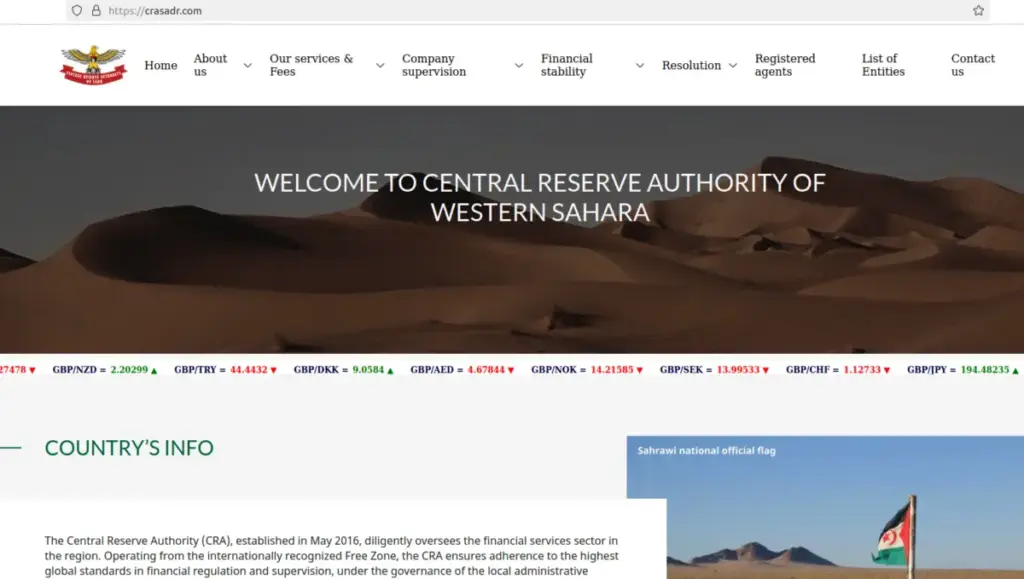
Investigations into the parent company of Cryptomus, Certa Payments, have revealed a complex web of deception. The sole shareholder of the parent entity was identified as a 25-year-old Ukrainian national who simultaneously headed several other firms, including the "WS Management and Advisory Corporation." This entity positioned itself as a global regulatory body, claiming the exclusive right to issue licenses for cryptocurrency, foreign exchange, and online gaming businesses incorporated in the Western Sahara, a disputed region in northwest Africa.
The regulatory website, crasadr.com, marketed its services to entities seeking to bypass standard international banking compliance, offering assistance with bank setup, formation, and licensing. The deceptive nature of this operation was further highlighted by the discovery that one of Certa Payments’ previous domains, certa.website, shared a server with over a dozen other sites, including one for the "Central Reserve Authority of the Western Sahara." By creating a proprietary, fraudulent regulatory environment, the operators of Cryptomus were able to provide a veneer of institutional respectability to businesses that were fundamentally designed to operate outside the reach of legitimate global financial oversight.

A System in Flux
The impact of the U.K. sanctions was nearly instantaneous. On October 8, the same day the sanctions were announced, users of the Cryptomus support bot on the messaging app Telegram were met with automated messages stating that the platform was suddenly unable to process transactions.
This development follows an April 2026 report from blockchain intelligence firm TRM Labs, which estimated that Cryptomus had processed more than $7 billion in transactions since its inception in 2022. The volume of illicit activity flowing through the platform included transactions associated with severe criminal enterprises, such as the trade of child sexual abuse material, terrorist financing networks, and large-scale human trafficking operations.
TRM Labs observed that while the platform’s transaction volume initially dipped after it was forced to implement new KYC rules, the subsequent launch of the Heleket parallel service allowed the operators to circumvent these requirements, providing a continued, illicit off-ramp for funds. As global authorities continue to tighten the net around these virtual payment hubs, the collapse of Cryptomus and Heleket serves as a warning to the broader cryptocurrency sector regarding the dangers of hosting entities that trade on anonymity to fuel global crime.
For now, the focus remains on the efficacy of these new measures. As the U.K. sanctions take hold, the hope among international regulators is that the "chameleonic" nature of these platforms—their ability to shift names and jurisdictions—will finally be countered by a unified, global approach that targets the underlying operational and financial infrastructure rather than relying on administrative fines that have, in the past, been easily ignored.