The way most organizations are currently rolling out artificial intelligence feels less like a calculated business strategy and more like an elaborate corporate farce. If contemporary AI implementation plans were adapted into a feature film, movie reviewers would likely dismiss the plot as entirely unbelievable, arguing that no real corporate leadership team could be that short-sighted. Yet, businesses worldwide find themselves trapped in this exact cycle. What makes the current situation all the more frustrating for industry veterans and observers is that corporate leadership has walked this exact path before.
Back in 2014, digital strategist and author Paul Boag published a book for Smashing Magazine titled Digital Adaptation, which examined the systemic mistakes organizations were making in their approach to early digital transformation and outlined what they should have been doing instead. Today, the operational and cultural similarities between the digital transformation era and the modern artificial intelligence boom are nothing short of striking. Revisiting those foundational lessons reveals how organizations can navigate the immense challenges of AI adoption by looking backward rather than blindly rushing forward.
The single biggest mistake companies made during the digital transformation wave—and the one they are repeating with artificial intelligence today—is approaching a profound organizational shift purely as a technological challenge.
It’s About People, Not Technology
Of course, both digital transformation and artificial intelligence represent major technological leaps forward, and achieving success requires a certain level of technical implementation. However, buying and deploying software is merely the tip of a very large iceberg.
During the peak of the digital transformation era, internal IT departments busily rolled out content management systems, customer relationship management platforms, and corporate intranets. Concurrently, customer-facing divisions pushed out brand-new websites, mobile applications, and early personalization features. Yet, despite the massive capital expenditure, these organizations poured almost zero emphasis into understanding how human beings were actually going to interact with and use these new systems. Internal software solutions proved notoriously difficult to operate, while external customers either remained entirely indifferent to what was being built or actively wanted something completely different.
A strikingly similar phenomenon is playing out across the corporate landscape with artificial intelligence. Senior management teams have eagerly bought into the broader technological hype, leading internal IT departments to purchase and distribute software licenses organization-wide before immediately considering the job finished. While companies may offer a brief, generic, and mandatory training session for all employees, that is usually where the formal support ends.
Consequently, everyday staff members are left scratching their heads, wondering what they are supposed to do with these powerful new systems, while simultaneously feeling mounting pressure from above to utilize them immediately and deliver measurable business results.
Organizations desperately need to recognize that artificial intelligence represents a massive cultural shift just as much as it is a technological one. Because this shift carries profound implications for the daily reality of staff members, the psychological weight cannot be ignored. This time around, the stakes feel even higher for employees because they are openly fearing for their jobs. Staff have read the exact same alarming headlines about automation as executive leadership, and no amount of casual, unbacked promises from senior management will make them feel secure.
Why Would Staff Want To Adopt AI?
Examining the situation from the perspective of an ordinary staff member reveals a sobering reality. Artificial intelligence offers very little direct personal benefit to the average worker, especially when employees suspect that management’s underlying intention is to use the technology to downsize or replace human labor entirely.
The primary driver behind executive excitement over artificial intelligence is increased organizational productivity—the promise that people can accomplish more tasks in significantly less time. However, this corporate efficiency does not translate into a direct benefit for the employee. Staff members are still expected to report for duty for the exact same eight-hour workday, but they are suddenly held to an inflated standard of output within that same window. They do not get extra time back in their schedules, nor do they see higher compensation for their accelerated output. Naturally, employees question why they should embrace a tool that only intensifies their workload.
Before demanding that staff enthusiastically adopt artificial intelligence, organizations must first determine how they intend to genuinely motivate them to do so. One viable strategy involves helping workers identify the most tedious, frustrating parts of their daily jobs and demonstrating how AI can help them complete those specific tasks more quickly and with less friction. People are inherently much more receptive to operational change when it is presented as a tangible opportunity to improve their own working lives rather than merely a corporate efficiency metric.
Beyond that baseline, progressive organizations may need to consider offering explicit incentives for AI adoption, ranging from professional career progression opportunities and financial compensation adjustments to shorter working hours for teams that successfully optimize their workflows.
Staff Need Time And Support To Adopt AI
Furthermore, integrating artificial intelligence into a daily routine is far from a simple task. It requires challenging and fundamentally rewriting almost every operational working practice an employee has spent years, or even decades, building. All of that accumulated procedural knowledge must be unlearned and rebuilt from scratch. Asking employees to undergo such a massive psychological and professional shift is a tall order under the absolute best of circumstances—and the vast majority of modern employees are not operating under ideal conditions.
Most workers are already severely overworked, constantly firefighting, and struggling simply to stay on top of daily to-do lists. They simply do not possess the spare time required to sit down, patiently learn an entirely unfamiliar software tool, and figure out how it organically fits into their existing operational workflow.

Achieving meaningful adoption requires much more than a quick software tutorial; it demands dedicated time for deep consideration and uninhibited experimentation. Merely sending an employee on a standard corporate training course and expecting them to utilize artificial intelligence to its absolute full potential is bound to fail.
At a bare minimum, staff require role-specific training tailored to their distinct departmental responsibilities. Organizations must develop sophisticated, continuous learning programs that help employees from disparate departments understand the practical applications of AI within their specific domains. They require ongoing institutional support and, crucially, protected time away from regular tasks to experiment safely with AI tools to discover the best use cases.
However, formal training classes can only take a workforce so far. In practice, the most effective support consistently comes from immediate peers and colleagues. Rather than focusing initial efforts on trying to win over the most stubborn skeptics or resisters, organizations should turn their attention toward internal enthusiasts. Every company has a small handful of eager individuals who are already experimenting with artificial intelligence on their own initiative, often without formal direction. Bringing these tech-forward individuals together, giving them the protected time and physical space to share what is genuinely working for them, and letting their organic enthusiasm spread naturally to the rest of the team proves remarkably effective.
This dynamic was clearly visible during the digital transformation era as well. Internal conferences and show-and-tell sessions where staff proudly demonstrated what they had built for their colleagues did far more to drive genuine tool adoption than any formal memo issued from the executive suite ever could. People are infinitely more likely to try a new approach when they witness a peer in a similar role using it successfully, rather than when they are simply ordered to do so from the top down.
Unfortunately, genuine experimentation inherently comes with a significant downside: mistakes will inevitably be made along the way.
It Needs To Be Safe To Fail
To be frank, many corporate cultures are currently plagued by a pervasive atmosphere of fear, where professional mistakes are treated as glaring evidence of personal incompetence. However, by its very nature, learning a complex new capability like artificial intelligence involves trial and error, and a zero-tolerance attitude toward failure creates a massive barrier to widespread adoption.
A parallel dynamic unfolded during the digital transformation era. Senior management would loudly demand rapid digital transformation and express genuine confusion when progress stalled. What leadership failed to realize was that they were broadcasting deeply mixed messages to their workforce. While executives were verbally demanding sweeping technological change, they were simultaneously holding employees to the exact same rigid key performance indicators and meticulously penalizing any minor misstep during annual performance reviews.
There was simply no physical or psychological space left to fail because the daily pressure to deliver existing quotas was relentless.
In the current artificial intelligence boom, the situation appears even more pronounced. Reports circulate of employees being reprimarded or micro-managed for consuming too many software tokens just weeks after being strongly encouraged to adopt AI tools. In other cases, workers are subjected to such heavy-handed warnings about what they are forbidden to do with the technology that they become genuinely afraid to try anything new at all. Ultimately, employees conclude that sticking to legacy habits is far safer than risking management’s wrath through AI exploration.
If executive leadership genuinely wants their workforce to adopt artificial intelligence, they must create an environment where staff feel entirely safe to experiment. This requires management to actively adjust performance metrics, overhaul review processes, and temporarily relax strict governance structures while employees navigate the steep learning curve.
Handle Governance With Care
Of course, establishing reasonable boundaries is a necessary part of any technology rollout; artificial intelligence cannot be deployed across an entire enterprise without some form of institutional governance in place. Yet, historically, governance is an area that organizations manage exceptionally poorly.
During the height of digital transformation, organizational governance either did not exist at all or was so draconian and suffocating that it completely crushed internal innovation. Sadly, the exact same counterproductive pattern is emerging with modern AI adoption.
Staff certainly need a baseline level of governance to understand where they stand, what is officially expected of them, and where the hard operational boundaries lie. However, organizations frequently draft policies that are so restrictive that employees find it easier simply to abandon the tools entirely. Endless pages of dense legal instructions detailing precisely what data cannot be shared with an AI model only serve to heighten the overarching sense of corporate fear.
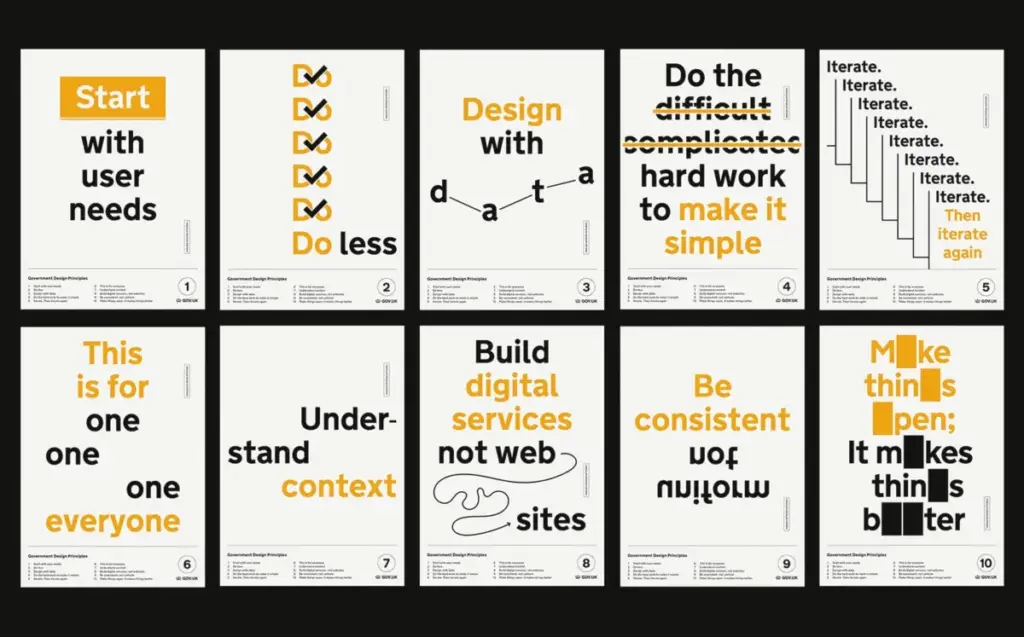
Instead of voluminous rulebooks, organizations require a concise set of foundational principles that can easily fit on a poster or a single reference page. Beyond those core guidelines, leadership must demonstrate a baseline degree of institutional trust, allowing employees to apply their own professional common sense.

Mistakes will inevitably happen as staff test the boundaries, but that friction is an unavoidable cost of organizational change. Companies must accept this reality and build mitigation strategies into their rollout plans rather than attempting to legislate every human action.
Adaptive Technological Rollout
From a purely technical perspective, organizations must also exercise caution regarding how they provision AI infrastructure. Once again, it remains tempting for overstretched IT departments to lock down technological access completely, which ultimately stifles the very adoption they are trying to encourage.
This exact pitfall was visible back in 2014. Burdened IT teams would select a rigid set of enterprise software tools and deploy them universally across the company, often without consulting the actual end-users. Any software request falling outside that pre-approved list was subjected to a grueling, bureaucratic approval process typically overseen by a distant steering committee. The resulting glacial pace of change became a primary contributor to the high failure rate of digital transformation initiatives.
Today, companies are repeating this cycle by purchasing a single enterprise license for a tool like Microsoft Copilot, installing it universally, and declaring the technological transition complete. Yet, that rigid approach frequently falls catastrophically short of meeting specialized departmental needs.
Consider specialized divisions, such as user experience research teams. While management aggressively pushes for AI integration, and the research team is genuinely enthusiastic about building AI-powered research repositories or synthetic user personas, the reality on the ground grinds to a halt. If standard corporate tools like Copilot cannot fulfill the specific technical requirements of the research team, those employees find themselves bogged down in endless bureaucratic appeals as they try to persuade an internal AI steering committee to approve an alternative software stack. Unsurprisingly, employee enthusiasm quickly wanes.
When official internal tools fail to meet basic job requirements, impatient employees do not simply wait around for slow-moving steering committees to grant permission. Much like the shadow IT phenomena of the past—where staff secretly signed up for unauthorized cloud storage solutions because official networks were inadequate—modern workplaces are witnessing the rapid rise of "shadow AI."
When an internal enterprise AI tool prevents a worker from completing a task, they simply open a personal ChatGPT or Claude account on a mobile device or a home laptop and get the job work done independently.
This behavior introduces severe security risks that far outweigh the problems strict IT restrictions were designed to prevent. Proprietary company data ends up being processed in third-party tools completely outside corporate oversight, with zero institutional record of what information was shared. The instinctive corporate reaction to shadow AI is often to clamp down even harder with stricter firewall policies, blocked websites, and threats of disciplinary action. However, such punitive measures rarely work; instead, they simply drive employee behavior further underground.
Shadow AI should be viewed as a valuable symptom rather than a disciplinary infraction, as it highlights precisely where official enterprise tooling is falling short of operational needs. Rather than attempting to stamp out shadow technology entirely, organizations should study it. Leaders should converse with staff to discover what personal accounts are being utilized for and what capabilities are missing from official company software, then use those insights to shape the next phase of enterprise tool deployment.
Admittedly, managing a slightly messy, decentralized technology stack in the early days of a major paradigm shift is far from ideal. However, organizations must accept a degree of operational chaos while workers explore the edges of technological capability and establish practical use cases. Companies must allow staff the flexibility to explore different AI applications and workflows to discover what genuinely suits their specific roles. Governance and lockdown measures can always be introduced later once actual operational needs become crystal clear.
A Dangerous Time
For many traditional organizations, this decentralized approach feels inherently risky. Corporate leadership naturally prefers to control the adoption process centrally and ensure that nothing goes wrong. Yet, every meaningful business transformation carries inherent risk, and moving too slowly in a fast-moving technological landscape ultimately poses a far greater threat than moving too quickly with an adaptable mindset.
The greatest danger facing modern enterprises is treating artificial intelligence purely as a technological hurdle while completely overlooking the human dimension. Successfully adopting artificial intelligence is not simply a matter of purchasing and installing new software. Just like the digital transformation era before it, it is fundamentally an exercise in people management, cultural evolution, and thoughtful change management. The sooner organizations grasp the true scope of what they are dealing with, the better equipped they will be to navigate the road ahead.