
By Staff Reporters
Visitors to Opensource.com may have recently noticed a distinct quietness across the platform’s digital pages. After more than a decade of publishing daily stories, insights, and perspectives on the creation, adoption, and sharing of open source solutions, the site has experienced a noticeable slowdown in new content. According to the community and platform organizers, this lull is far from an accidental pause; rather, it is the deliberate calm before a significant shift. A brand-new project is currently in the works behind the scenes, and while specific operational details and project roadmaps remain tightly under wraps for the moment, organizers indicate that there is already plenty to discuss regarding the future of the platform and the broader open source ecosystem.
For twelve years, Opensource.com has served as a central digital town square for the global open source community. Supported by a commercial entity, the site has cataloged how open source principles have expanded far beyond the realm of software development into culture, education, government, and everyday life. However, as the digital landscape evolves, so too must the platforms that serve its participants. To understand the magnitude of what is coming next, community leaders suggest looking back at the foundational architecture of the internet itself and examining the true nature of networks, identity, and collaboration.
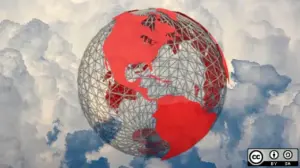
The Internet, and Top-Level Domains
To appreciate the direction of the upcoming project, it helps to examine the very fabric of the internet. Most internet users recognize that the internet is, fundamentally, a network. By definition, a network is a group of interconnected connections—a concept neatly summarized by the portmanteau "internet," which merges "interconnected" and "network."
In its earliest iterations, the internet was a modest system consisting of just two primary networks: a military network and an academic network. These closed environments were designed for specific institutional tasks and relied on trusted, direct lines of communication between authorized nodes. However, as digital technology matured and the network grew increasingly popular outside those initial institutional groups, the limitations of an unstructured digital space became immediately apparent. It quickly became clear that different designations were desperately needed to differentiate entities on the web. A mechanism was required to visually and technically distinguish a commercial enterprise from a charitable organization, an institution of higher education, or a governmental department.

These critical designations eventually became known as top-level domains, commonly abbreviated as TLDs. Today, internet users navigate a vast and complex universe of top-level domains, ranging from generic extensions to country-code specific identifiers. Yet, for a long period during the commercialization and expansion of the web, only a handful of these designations existed.
The original TLDs remain remarkably popular and culturally embedded in how humans navigate cyberspace. Most internet users instinctively understand that when they visit an address ending in .com, they are interacting with a commercial site, whereas a visit to a .org address typically leads to a non-profit organization or public-interest project. These suffixes serve as digital signposts, offering immediate context about the nature, intent, and governance of the entity behind the screen. Over the decades, these designations have come to represent more than just technical routing paths; they often reflect the underlying philosophy and organizational structure of the groups maintaining the web presence.
Open Source is a Network
Translating these concepts of connectivity and categorization to the world of open source reveals a striking parallel. Open source can embody many different forms and serve countless purposes. It can be commercial, driving enterprise software solutions and global cloud infrastructure; it can be non-profit, supporting public goods and digital freedoms; it can be academic, fostering foundational research and computer science breakthroughs; and it can be cultural, shaping how artists, writers, and creators share their works with the public.
Regardless of the specific form it takes, open source is always, at its core, a network. Sometimes—though certainly not always—that network is composed of physical computers, servers, and repositories exchanging code and data packets across fiber-optic cables. More importantly, however, open source is fundamentally a network of people.
Human connection remains the lifeblood of the open source movement. Whether individuals are gathering in person at massive international conferences, chatting casually over drinks at a local pub, or collaborating asynchronously in online chat rooms and communication channels, open source exists primarily as a vibrant community of human beings working toward shared goals. The software, documentation, and open standards are simply the artifacts of human collaboration.

For the past twelve years, the website Opensource.com has been supported and sustained by a commercial entity. That institutional backing provided the resources necessary to build a sprawling archive of articles, tutorials, and community perspectives. Yet, a fundamental distinction lies at the heart of the platform’s identity. The people who make up the actual Opensource.com community—the writers, editors, advocates, contributors, and daily readers—are not commercial entities. They are human beings with a shared passion for openness, transparency, and collaborative problem-solving.
Aligning the digital infrastructure of a community platform with the human-centric reality of its participants is a delicate and ongoing challenge. Over the years, the disconnect between institutional hosting and community-driven ownership has occasionally surfaced as a point of discussion among active contributors. Now, organizers signal that a major resolution to this long-standing dynamic is finally taking shape.
As the platform prepares for its next chapter, the community is hard at work on building something entirely new. While specific feature lists and public schedules have not yet been fully unveiled, the anticipation within the community continues to grow. Organizers note that in just one month, Opensource.com is going to resolve that enduring organizational bug, bringing a fresh approach to how the community connects, shares, and publishes stories about creating, adopting, and sharing open source solutions.
Community members, contributors, and followers are encouraged to stay tuned for further announcements as the timeline progresses. Updates and ongoing discussions regarding the transition can be followed via social media channels, including Twitter at @opensourceway, where the community continues to share news about the evolving open source landscape.