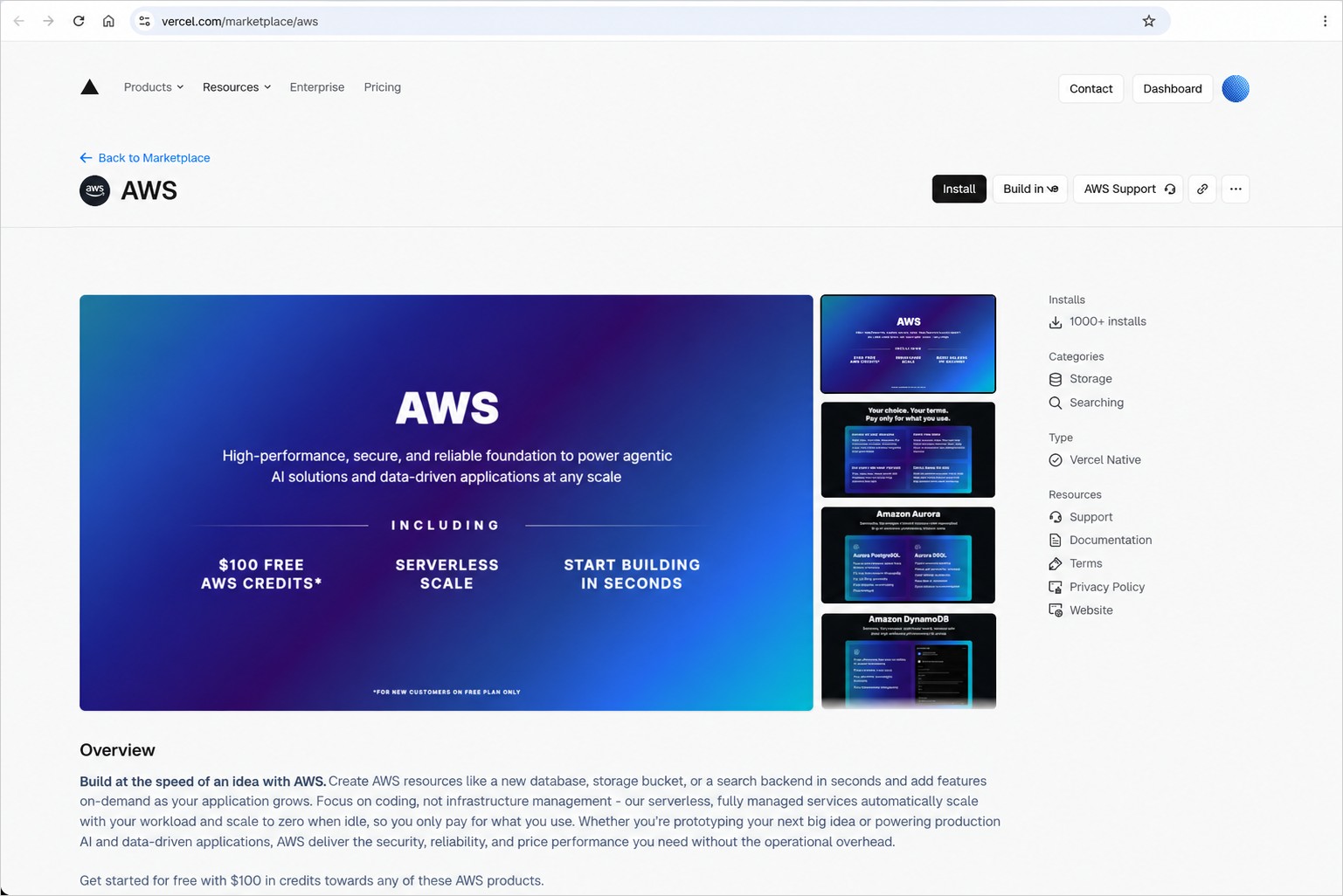
In a significant move to bridge the gap between cloud infrastructure and frontend development, Vercel has announced a comprehensive integration with Amazon Simple Storage Service (Amazon S3). Developers building web and AI-driven applications on the Vercel platform can now provision and manage S3 storage resources directly through the Vercel Marketplace and the AI-powered development environment, v0. By streamlining the connection between Vercel’s deployment workflow and the robust capabilities of AWS, this integration aims to simplify the creation of performant, scalable applications while maintaining the security and durability inherent to the AWS ecosystem.
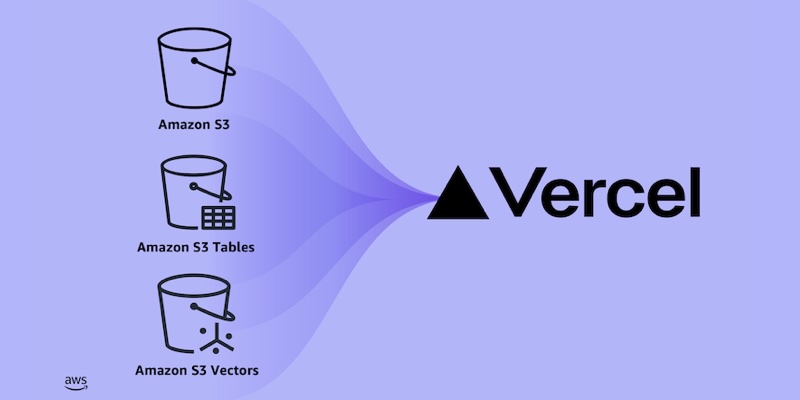
The integration is not limited to standard object storage. It encompasses the full spectrum of S3’s modern capabilities, including Amazon S3 Tables and Amazon S3 Vectors. This means that from the Vercel dashboard, developers can now address three distinct, high-demand workloads: everyday general-purpose storage, advanced analytics, and AI-driven semantic search. By embedding these services directly into the Vercel developer experience, the platform eliminates the need for teams to toggle between Vercel’s interface and the AWS Management Console to handle credential management, policy configurations, and resource provisioning.
Transforming the Developer Workflow
For millions of developers, the challenge of building scalable applications often lies in the complexity of managing infrastructure. Historically, setting up a storage layer meant manually navigating AWS services, configuring IAM roles, and managing credentials, which often introduced friction into the rapid deployment cycles that Vercel is known for. With this new integration, Vercel handles the heavy lifting of resource provisioning and connection configuration automatically.
This update effectively completes the "full-stack" experience within the Vercel environment. By joining forces with existing native integrations for Amazon Aurora, Amazon DynamoDB, and Amazon OpenSearch Serverless, developers can now architect a comprehensive application stack—covering relational databases, NoSQL, search engines, and now object, vector, and table storage—all while managing everything through a single AWS account and a unified billing stream.
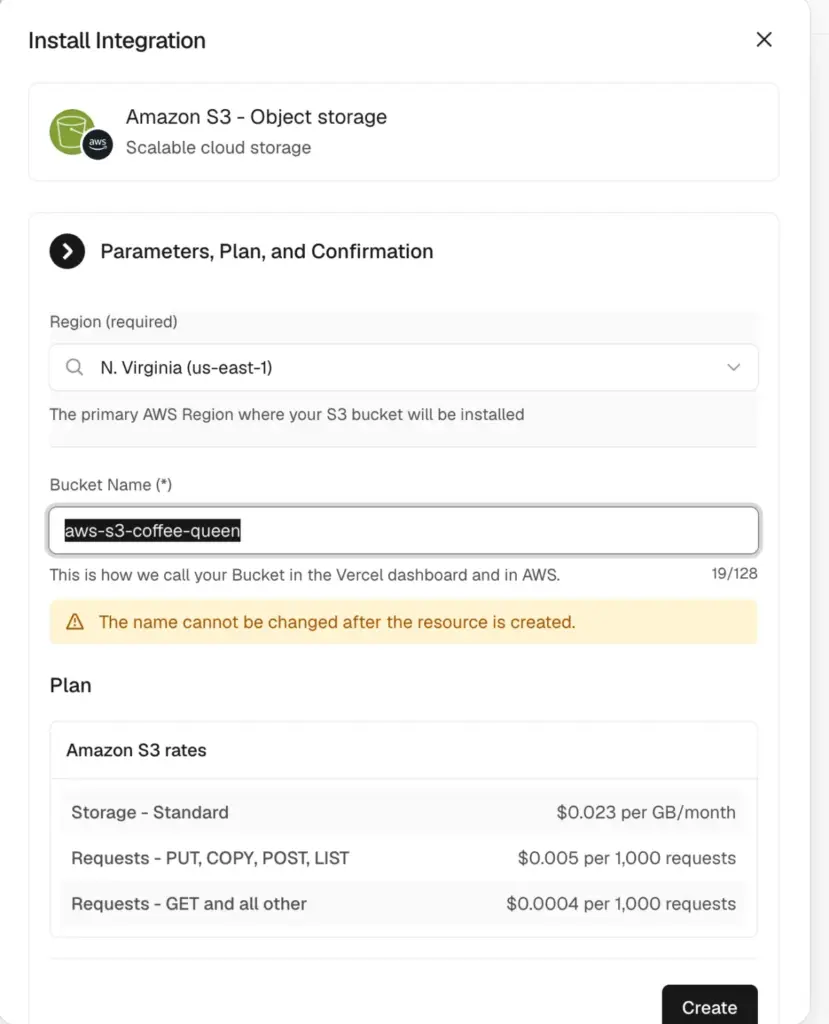
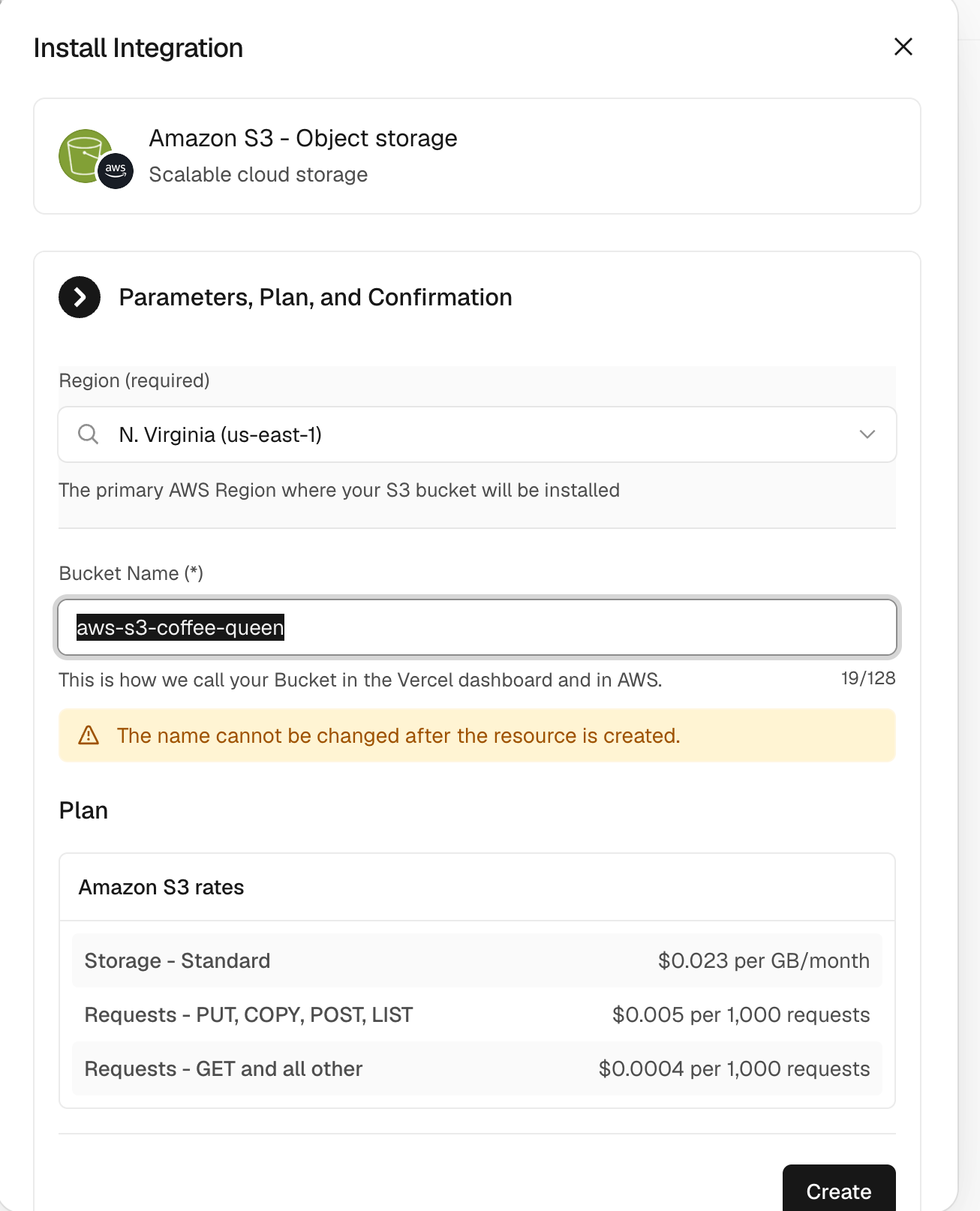
The process of getting started is designed to be intuitive. From the Vercel dashboard, users can navigate to the "Storage" tab, select "Create," and choose the AWS option. From there, the developer selects the desired S3 bucket type, chooses a geographic region, and triggers the provisioning process, which completes in mere seconds. Once the bucket is created and linked to a project, the integration automatically pulls the necessary environment variables via the Vercel CLI, including the AWS region, role ARN, and resource ARNs.
Security remains a primary focus of this integration. Vercel utilizes the awsCredentialsProvider from its OIDC (OpenID Connect) functions, which exchanges a short-lived OIDC token with the AWS Security Token Service (STS). This mechanism ensures that temporary, scoped credentials are used for resource access at runtime, effectively eliminating the risks associated with storing static API keys or long-lived credentials within the application codebase.

Specialized Storage for Modern Workloads
The integration is tailored to handle specific technical requirements depending on the project. For general-purpose object storage, such as handling image uploads or user-generated content, developers can use standard S3 buckets with the AWS SDK. The process is streamlined so that common operations—like uploading files or listing objects—can be integrated into Next.js routes with minimal boilerplate code, leveraging the security of the automated OIDC token exchange.
For developers focused on data-intensive applications, the inclusion of Amazon S3 Tables is a transformative addition. S3 Tables are purpose-built for analytics, designed to optimize query performance automatically as data volumes scale. By providing fully managed Apache Iceberg tables with automated maintenance and compaction, the service allows developers to perform complex data analysis without the overhead of managing a traditional database. The integration supports standard Apache Iceberg REST Catalog-compliant engines, enabling developers to use tools like DuckDB within a Vercel Function to run lightweight, high-performance analytical queries directly against their data.
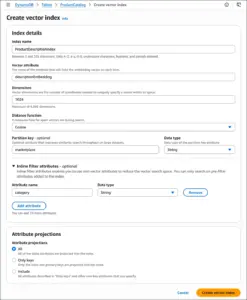
Perhaps the most timely aspect of this integration is the support for S3 Vectors. As the industry pivots toward AI agents, RAG (Retrieval-Augmented Generation), and semantic search, the need for cost-optimized vector storage has become critical. S3 Vectors allows developers to store and query high-dimensional vectors natively within the S3 architecture. By creating embeddings with their preferred AI model, developers can query an index for the closest matches without the necessity of spinning up a separate, specialized vector database. This functionality is particularly useful for AI applications that require searching through vast amounts of document text or multimedia content.
Leveraging AI-Assisted Provisioning via v0
The integration is further enhanced by v0, Vercel’s generative AI interface. The integration allows for a natural-language approach to infrastructure provisioning. A developer can simply describe their requirements—for example, asking for "a photo gallery where users upload images using AWS" or "a support bot that answers questions from my PDFs"—and v0 will automatically identify the appropriate S3 resource, provision the bucket, configure the connection, and even generate the boilerplate code needed to implement the feature.
This capability significantly lowers the barrier to entry for developers who may not have deep expertise in AWS infrastructure but need to build sophisticated, production-grade features. By translating intent into infrastructure, v0 reduces the risk of misconfiguration and allows developers to focus on the application logic rather than the underlying plumbing.
Architectural Synergy and Availability
One of the most compelling aspects of this integration is the ability to combine S3 with existing AWS database services. Because every AWS service on Vercel shares a single authentication and account model, developers can create sophisticated data architectures without extra setup. A common pattern involves storing structured file metadata in Amazon Aurora while keeping the actual files in S3, or storing document text in Amazon DynamoDB with corresponding embeddings kept in S3 Vectors to facilitate rapid RAG retrieval.
Vercel provides flexibility regarding how users connect their AWS accounts. Developers can either create a brand-new AWS account through the Vercel integration, which is ideal for rapid prototyping and testing, or they can link an existing AWS account. When an existing account is linked, Vercel ensures that it only interacts with the specific buckets created through the platform, allowing developers to maintain their current billing and management practices while benefiting from Vercel’s provisioning automation.
There is no additional charge for the integration itself; users continue to pay standard Amazon S3 pricing for the resources they consume. To further incentivize adoption, new AWS accounts created via the Vercel platform are eligible for $100 in AWS credits, valid for six months. The integration is available across all commercial AWS Regions supported by Vercel.
As developers begin to adopt these tools, they can access a wealth of resources for support, including the AWS MCP (Model Context Protocol) Server and various plugins, which allow AI agents to interact with documentation and troubleshoot issues in real-time. By integrating Amazon S3 so deeply into the Vercel workflow, the platform is reinforcing its commitment to simplifying the cloud experience, enabling developers to scale from a simple idea to a complex, data-driven application without leaving their familiar development environment.