Amazon Prime Day 2026, the global retail phenomenon that serves as a benchmark for e-commerce scalability, concluded on June 26, 2026, following a high-intensity four-day event. Spanning from June 23 to June 26, the event offered millions of exclusive deals across more than 35 product categories, exclusively for Prime members. While the consumer-facing story was defined by deep discounts and rapid shipping, the technical backbone of the operation—Amazon Web Services (AWS)—was quietly navigating a landscape of unprecedented data traffic and system demands.
As has become an annual tradition, the engineering teams at AWS have pulled back the curtain to reveal the sheer magnitude of the infrastructure required to support one of the world’s most complex retail events. Since the inaugural public reports on AWS’s role in Prime Day began nearly a decade ago, the company has utilized these post-event analyses to demonstrate the reliability and resilience of its cloud ecosystem. Prime Day 2026 was no exception, representing a significant leap in traffic volume and system stress compared to previous iterations, effectively acting as a massive, real-world stress test for the global cloud infrastructure.
The Scale of Compute and Storage
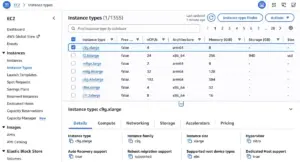
At the heart of the Prime Day architecture, Amazon Elastic Compute Cloud (Amazon EC2) remains the primary engine for processing. This year, the shift toward efficiency was marked by the increasing reliance on AWS Graviton processors. During the four-day shopping event, Graviton-based instances powered up to 49% of the total Amazon EC2 compute capacity utilized by Amazon.com. This transition toward more energy-efficient and cost-effective silicon has become a central theme in AWS’s operational strategy, allowing the company to manage massive spikes in demand while optimizing its underlying hardware footprint.

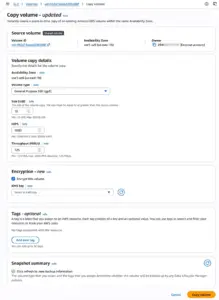
Storage requirements during the event reached staggering proportions. Amazon Elastic Block Store (Amazon EBS), the high-performance block storage service, was pushed to its limits, peaking at more than 24.8 trillion I/O operations. To put this in perspective, the service was responsible for moving over an exabyte of data every single day of the event. This level of throughput is essential for maintaining the performance of Amazon’s databases and applications, which must respond in milliseconds to keep the customer shopping experience fluid.
Serverless technologies also played a critical role in handling the surge in traffic. AWS Lambda, the event-driven compute service, saw an explosion in utilization, managing more than 2.3 trillion invocations per day. Meanwhile, Amazon Elastic Container Service (ECS) and AWS Fargate demonstrated the maturity of containerized workloads at scale. ECS launched an average of 158.3 million tasks per day on Fargate, marking a significant 47.7% increase compared to the previous year. This growth highlights the trend of moving toward ephemeral, scalable compute resources that can be spun up or down instantly to meet the erratic nature of holiday traffic.

Delivering Content and Maintaining Data Consistency
The delivery of content to millions of users globally relied heavily on Amazon CloudFront. During the global week surrounding Prime Day, the content delivery network handled over 2.1 trillion HTTP requests. This represented a 5% increase in total requests compared to 2025, underscoring the relentless growth of the platform’s global reach.
However, the real heavy lifting happened in the background within the database layer. Amazon DynamoDB, the company’s fully managed, serverless NoSQL database, served as the bedrock for critical systems, including Alexa, the retail websites, and the logistics software powering Amazon’s fulfillment centers. Between June 23 and June 26, DynamoDB processed more than 59 trillion requests. Despite the massive load, the system maintained its signature high availability, delivering single-digit millisecond response times and hitting a peak rate of 192 million requests per second.
Relational databases were equally taxed. Amazon Aurora, the high-performance relational database management system designed for PostgreSQL, MySQL, and DSQL, processed hundreds of billions of transactions throughout the event. It managed a massive data footprint, storing 5,491 terabytes and facilitating the transfer of 1,194 terabytes of data. For high-speed caching, Amazon ElastiCache proved indispensable, peaking at over 2.3 quadrillion daily requests, with a staggering 2.1 trillion requests processed in a single minute.
Managing Messaging, Security, and Observability
Data streaming and messaging services ensured that all parts of the retail ecosystem remained in sync. Amazon Kinesis Data Streams processed a peak of 988 million records per second, while Amazon Simple Notification Service (SNS) delivered 5 trillion messages in a single day—a testament to the volume of communications required for order confirmations, inventory updates, and logistics alerts. Simultaneously, Amazon Simple Queue Service (SQS) provided the backbone for microservices communication, receiving a peak of 213 million messages per second.
The sheer volume of activity necessitated rigorous monitoring and security oversight. AWS CloudTrail, which serves as the primary auditing and governance tool for API activity, saw a surge to 3.6 trillion events over the four-day period, a 44% increase over 2025. Monitoring this activity in real-time fell to Amazon CloudWatch, which processed over 2.15 quadrillion metric observations per day.

Security remained a top priority, with Amazon GuardDuty monitoring an average of 14.08 trillion log events per hour. This represented a 59% increase in monitored traffic compared to the previous year, reflecting both the growth of the event and the escalating need for sophisticated, automated threat detection. To ensure the robustness of this entire architecture, the AWS Fault Injection Service (FIS) was deployed extensively. Engineers conducted over 44,000 FIS experiments during the lead-up and duration of the event—more than six times the number conducted in 2025—to proactively identify and mitigate potential points of failure before they could impact the customer experience.
Preparing for Future Scale
The operational success of Prime Day 2026 serves as a proof-of-concept for the scalability of the cloud. For businesses facing their own critical events, product launches, or large-scale migrations, the lessons learned from these metrics are clear: preparedness, proactive testing, and the use of specialized support services are vital.
AWS Countdown Premium, a service specifically designed for business-critical events, is frequently cited by AWS experts as the recommended path for organizations looking to replicate this level of performance. Whether it is a major sporting event, a national election, or a retail peak season, the Countdown service provides the expertise required to manage infrastructure at the edge of its capacity. By working directly with AWS experts, organizations can scale their infrastructure, optimize costs during sudden demand surges, and bolster security measures in real-time.
As Prime Day 2026 fades into the record books, the performance metrics established this year set a new bar for what is possible in cloud-native retail. The infrastructure not only held under the weight of trillions of requests but continued to push the boundaries of efficiency and speed. The teams at AWS are already looking toward the future, anticipating that the milestones shattered this year will likely serve as the starting line for the next generation of record-breaking events.