For decades, the life of a software developer has been defined by a familiar, almost ritualistic setup: a mechanical keyboard, a high-resolution monitor, a terminal window, and an editor surrounded by a dizzying array of browser tabs. This environment was the cockpit of the digital age. Regardless of how the specific tools evolved—from early text editors to modern IDEs—the fundamental relationship between the human and the machine remained stagnant. Developers spent their careers learning the specific syntax of languages, memorizing complex keyboard shortcuts, and constantly adapting their own cognitive processes to the rigid requirements of the hardware and software they utilized. In short, developers learned to speak "computer."
However, we are currently witnessing a seismic shift in how software is created. The emergence of sophisticated artificial intelligence and agentic workflows is moving the profession away from the manual operation of tools toward a new paradigm: the expression of intent. This transition is not merely about using a chatbot to generate a few lines of boilerplate code; it is about delegating the mechanics of software construction to intelligent systems that understand the context of a repository, plan complex tasks, and execute them within developer-defined boundaries.
The Shift from Command to Intent
The core of this transformation lies in the ability to move beyond simple code completion. Modern AI systems, such as GitHub Copilot, have evolved to understand the broader architecture of a project. When a developer articulates a desired outcome, the system can now scan repository context, identify relevant symbols and dependencies, edit multiple files simultaneously, execute tests, and iterate on the results.

In this new workflow, the developer acts more like an architect or a conductor rather than a manual laborer. Within an Integrated Development Environment (IDE), agentic modes allow for an interactive loop where the AI proposes a solution, the developer reviews it, and the system refines it based on feedback. Advanced features, such as the GitHub Copilot coding agent, can even take a specific issue, work within an isolated, GitHub Actions-powered environment, and return a completed pull request for human review.
This evolution is fundamentally changing the developer’s daily experience. The time previously spent navigating menus, managing tool windows, and fighting with syntax is being compressed. Instead, the focus is shifting toward setting the strategic direction, defining project constraints, supplying necessary context, and evaluating the evidence provided by the machine. The development lifecycle is becoming less about the raw mechanics of typing and more about understanding the nuances of the codebase, the specific needs of the customer, and the definition of a "good" solution.
The Rising Value of Human Judgment
Critics might argue that such automation risks devaluing the role of the software engineer, but the reality is quite the opposite. By offloading the repetitive, mechanical aspects of programming to agents, the unique value of the human developer is magnified. Judgment, taste, and experience are becoming the most valuable currencies in the industry.
While an AI agent can churn out three different implementations of a feature in the time it takes a developer to finish a cup of coffee, the agent cannot decide whether a specific abstraction is appropriate, whether a database migration is truly safe, or whether the tests being run provide any genuine insight into the system’s reliability. The developer remains the final arbiter of quality and the primary owner of the outcome. The craft of software engineering is shifting: we are delegating the mechanics to agents, but the accountability for the end product remains firmly with the human.
Achieving Ambient Intelligence
For this shift to be truly transformative, AI cannot simply sit "beside" the developer’s workflow; it must be embedded within it. The objective is to create an "ambient intelligence"—a state where the AI understands the developer’s environment so deeply that it requires minimal prompting to be effective.
Achieving this requires a high degree of portability in terms of context. Frameworks like the Model Context Protocol (MCP) are essential in this regard, as they connect agents to a wide variety of tools and services. Furthermore, repository instructions and specialized skills are being used to encode development conventions, while automated hooks are being deployed to enforce policies and validate output. As these systems become more complex, the interface itself must remain simple, ensuring that the developer can maintain their focus without becoming bogged down in the underlying technical overhead.
This new workflow can be visualized as three distinct layers: a modality layer that captures the developer’s intent, a harness layer that plans and executes the work, and a control plane that allows for inspection, redirection, and final approval. The most successful products of this era will be those that integrate these layers seamlessly without forcing the user to surrender control.
The Re-emergence of Physical Controls
As agentic coding pushes development beyond the traditional confines of the keyboard and the terminal, there is a renewed interest in alternative interfaces. In the maker community, developers have been experimenting with ambient control devices—ranging from repurposed picture frames to custom-built ESP32 hardware—to interact with their software environments.
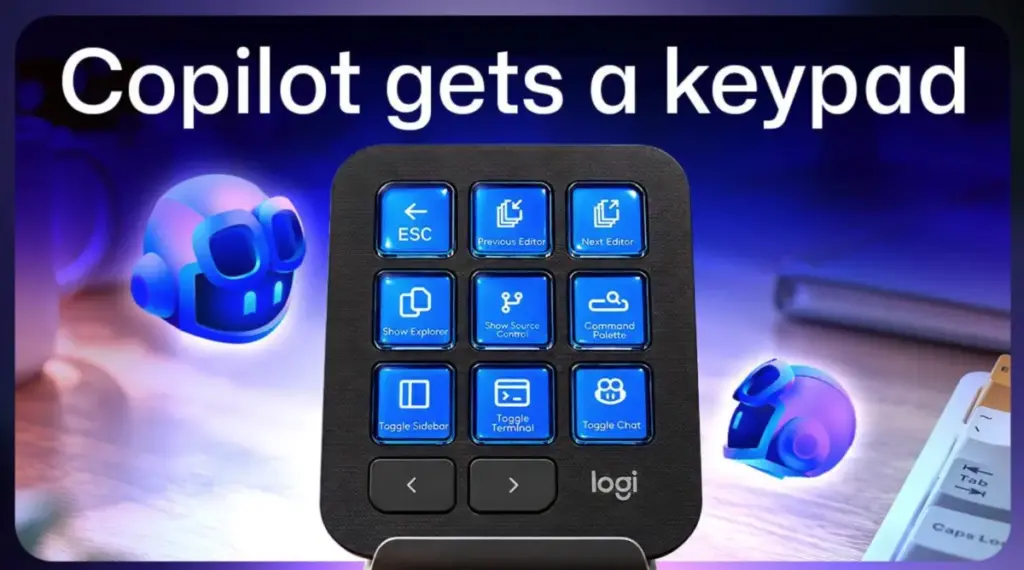
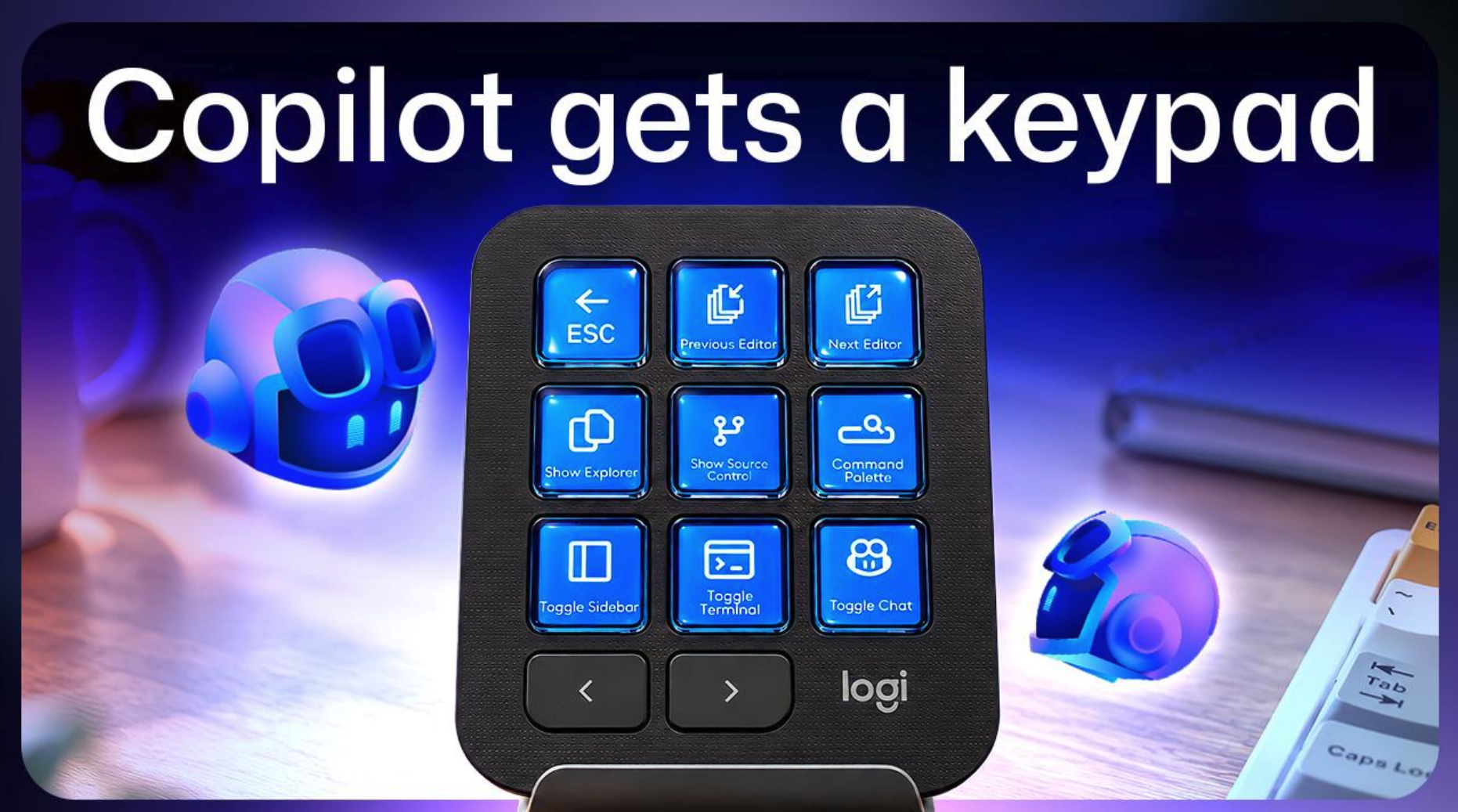
This movement recognizes that when the nature of work changes, the way we interact with that work must also evolve. To this end, there has been a concerted effort to bring this experience to a wider audience, notably through the collaboration between GitHub and Logitech on the MX Keypad.
The MX Keypad represents a shift toward making developer actions programmable and contextual. By turning frequent, repetitive tasks into dedicated physical inputs, developers can accelerate their workflows without needing to leave their "flow state." A single keypress can now trigger a complex, multi-step sequence, such as submitting a parameterized prompt, resuming a dormant Copilot session, or invoking a specific IDE command.
The utility of such hardware is earned through the removal of friction. Not every developer requires additional devices on their desk, and not every task warrants a physical shortcut. However, for the actions that repeat frequently throughout the day, the ability to offload these to a physical button allows the developer to keep their eyes on the code and their mind on the problem. It is about giving the developer the choice of when to use the keyboard, when to use the command palette, and when to rely on a tactile shortcut.
Moving the Interface into the Background
The ultimate goal of this integration is to move the interface into the background. By embedding the GitHub Copilot app experience into hardware like the MX Keypad, developers can steer agentic work in real-time, mapping their most common interruptions to a physical button.
However, we are still in the early stages of this transition. The industry is currently grappling with critical engineering questions: How much organizational context should an agent be permitted to retain? Which tool calls are safe to automate, and which require explicit oversight? How should secrets, credentials, and network access be scoped to ensure security? Furthermore, how can multiple agents coordinate their efforts to prevent conflicting pull requests or redundant work?
Products like the MX Keypad provide a practical sandbox to explore these questions. By allowing developers to invoke, steer, and resume agentic work through physical controls, we gain a clearer understanding of how to maintain focus while leveraging high-level automation.
For decades, the "incantation" of programming—the memorized commands and the copy-pasted code snippets from old forums—was the barrier to entry and the primary source of frustration. Today, computers are finally meeting developers halfway. The most effective interfaces of the future will not be those that boast the most AI buttons or complex dashboards; they will be the ones that understand enough context to be useful, preserve the developer’s agency, and ultimately get out of the way, allowing us to build the software that matters.
The goal is not to remove the developer from the work, but to clear the path around it. As this technology matures, the partnership between human intent and machine execution promises to fundamentally redefine what it means to write software. Developers now have the opportunity to experiment with these workflows, identifying the specific bottlenecks in their daily routines and applying new tools to preserve their most valuable asset: their focus.