








PARIS — As the commercial space industry races toward an era of orbital data centers, private space stations, and sustained lunar infrastructure, the terrestrial infrastructure required to test and validate this revolutionary hardware is facing a severe bottleneck. Emphasizing this growing industry-wide challenge, New York-based startup Icarus Robotics recently completed a crucial phase of microgravity testing for its advanced free-flying robotic platform, named Joy, paving the way for a scheduled demonstration aboard the International Space Station in 2027.
However, the path to validating Joy’s autonomous capabilities was far from straightforward. Due to a pronounced shortage of domestic testing facilities and operational services within the United States, Icarus was forced to look internationally, ultimately partnering with legendary Canadian astronaut Chris Hadfield to secure the necessary environment for critical flight testing.
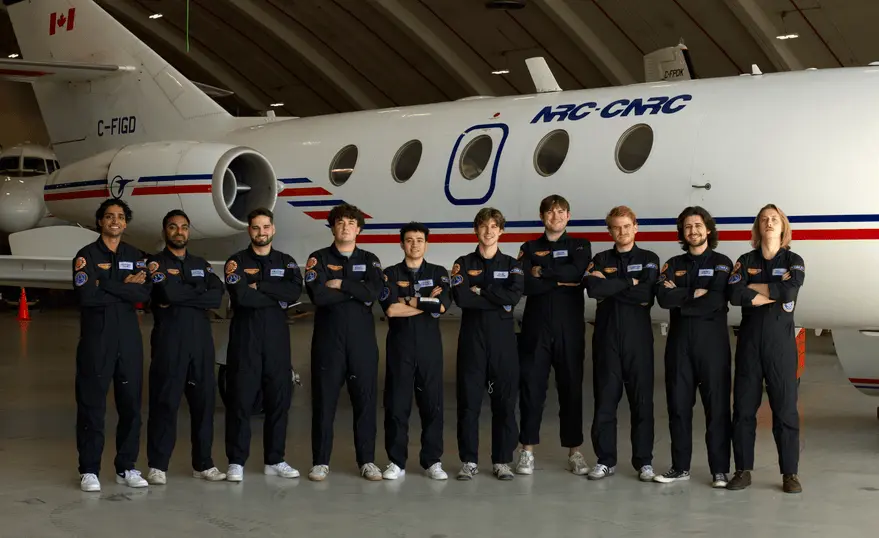
Ahead of Joy’s highly anticipated ISS deployment, Icarus subjected the advanced robot—which features specialized manipulators designed for high-dexterity tasks—to a rigorous series of four parabolic flights. These specialized aviation maneuvers yielded a cumulative total of 22 minutes of genuine microgravity operations. During these brief but intense windows of weightlessness, the engineering team successfully evaluated the core performance of Joy’s advanced flight controller, its complex sensor suite, and its delicate manipulation capabilities.


Beyond validating the hardware and software architecture of the robot itself, the flight campaign served as a comprehensive operational rehearsal for the Icarus personnel involved. Team members practiced intricate scheduling procedures, ground-to-air crew coordination protocols, and strict safety measures essential for operating sophisticated robotics in proximity to humans and sensitive spacecraft environments. Icarus formally announced the successful completion of these trials on September 17.
“This test marks a turning point — not just for Icarus, but for what’s possible in space robotics,” said Ethan Barajas, CEO and co-founder of Icarus Robotics, in a statement released by the company. “The commercial space era is arriving faster than anyone expected, and the infrastructure to support it has to keep pace.”
Barajas noted that Joy represents a vital stepping stone toward establishing a robust robotic workforce capable of performing heavy-duty and precision maintenance in Earth orbit. Such systems will eventually be tasked with maintaining orbital data centers, assembling complex infrastructure on the lunar surface, and carrying out the routine, labor-intensive upkeep required to make a sustained human presence in deep space viable over the long term.
Following the successful completion of the parabolic testing campaign in Canada, the operational timeline for Icarus continues to accelerate. In January, the startup is scheduled to officially hand off the Joy platform to NASA, which will handle its transportation to the International Space Station, where it will undergo its flagship orbital demonstration.

Microgravity Flights
The necessity of conducting testing campaigns outside the United States highlights a broader, increasingly urgent structural challenge facing the domestic aerospace and commercial space sectors. At present, no commercial operators are consistently offering dedicated parabolic flight services within the United States, forcing innovative startups to seek alternatives abroad or find creative workarounds.
This domestic capacity gap is not unique to Icarus. Other commercial entities navigating the burgeoning private space economy are encountering similar hurdles. For instance, Starlab Space has announced plans to conduct its own essential microgravity testing operations through a partnership with the Center for Space and Aviation in Switzerland and Liechtenstein, further illustrating the reliance of American companies on foreign infrastructure.
“Washington and private capital are moving heavily into commercial space, including the stations meant to succeed the ISS when it retires around 2030,” Icarus Robotics pointed out in its corporate release. “The domestic capacity to develop and validate the hardware that goes inside them has not kept pace with the capacity to launch it.”
Historically, U.S. aerospace firms, research institutions, and technology startups seeking to validate hardware in simulated weightlessness routinely turned to Florida-based Zero-G Corporation, the longtime pioneer of commercial parabolic flights in the United States. However, those flights are currently listed as temporarily paused on the company’s official website, leaving a significant void in the domestic marketplace for accessible microgravity research platforms.

Efforts are underway to address this pressing shortfall in American aerospace infrastructure. New market entrants are beginning to position themselves to fill the gap. Startup Mu-g Technologies is actively preparing to enter the parabolic flight market, intending to offer microgravity testing services utilizing a Dassault Falcon 50 business jet. Meanwhile, federal recognition of the problem has also grown; NASA formally awarded a contract modification in June to Denmar Technical Services to convert and modify a Boeing 737-700 aircraft specifically for reduced-gravity testing.
Until these domestic capabilities are fully operational and readily accessible, however, hardware developers like Icarus Robotics must continue navigating international partnerships and overseas facilities to bridge the gap between conceptual space engineering and flight-proven orbital reality.