The United Kingdom has leveled a decisive blow against the shadowy cryptocurrency payment infrastructure fueling Russia’s wartime economy. On October 8, British authorities issued formal economic sanctions against Cryptomus, a chameleonic digital asset platform that security researchers have long identified as a primary conduit for a sprawling network of criminal activity. By targeting Cryptomus and several affiliated entities, including VexPay, TokenSpot, and the Tsunami Payments service, the U.K. is effectively attempting to sever the digital lifelines that have enabled ransomware operators, narcotics traffickers, and darknet marketplaces to move money with impunity.
The sanctions mandate an immediate freeze on any assets Cryptomus may hold within British banks and strictly prohibit U.K. companies from engaging in business with the platform, whether through virtual or traditional financial services. This move marks a significant escalation in the international effort to curb the financial mechanisms that allow Russian government-aligned actors to circumvent global sanctions.
The history of Cryptomus is one of strategic obfuscation. Since emerging in 2022, the platform has operated under various guises, including Certa Payments and Xeltox Enterprises, to stay one step ahead of regulators. Most recently, following a landmark CAD $176 million fine issued by Canadian authorities in 2025 for systemic anti-money laundering (AML) violations, the platform rebranded as “Heleket.” This rebranding was not merely cosmetic; it served as a parallel service designed to continue offering the “no-KYC” (know-your-customer) payment processing that had made it a favorite among cybercriminals, even as the original Cryptomus brand attempted to present a more sanitized face to the world.

The scale of the activity facilitated by this network is staggering. According to data from the blockchain intelligence firm TRM Labs, by April 2026, Cryptomus had processed more than $7 billion in transactions since its inception. This volume was not derived from legitimate commerce; rather, it was deeply intertwined with the most predatory corners of the internet, including vendors of child sexual abuse material, transnational human trafficking rings, and global terrorist financing networks.
Blockchain analytics firm Chainalysis, which has been tracking the infrastructure supporting Russia’s wartime economy, highlighted that the U.K. sanctions are a direct response to a surge in illicit financial flows. In a recent blog post, Chainalysis noted that Cryptomus and its successor, Heleket, evolved into critical hubs for criminal finance. By late 2025, the number of illicit counterparties interacting with these services spiked to more than 900 in a single month. The firm emphasized that these platforms had become so integral to the criminal ecosystem that they were processing more illicit funds across tracked categories than the specialized cryptocurrency "mixers" typically utilized by hackers to obfuscate transaction trails.

The effectiveness of these sanctions, however, hinges on a crucial distinction between administrative penalties and operational disruption. Richard Sanders, a blockchain investigator who has spent months mapping the architecture of Cryptomus’s payment systems, argues that while the Canadian fine was substantial in theory, it proved largely unenforceable in practice.
“A fine doesn’t stop a cryptocurrency payment processor from processing payments,” Sanders noted in a recent professional assessment. “Sanctions kill the operation. The distinction matters.”
Sanders’ investigation into the platform’s roots revealed a pattern of deception that spanned multiple jurisdictions. During his research, he found that Cryptomus previously listed a Vancouver address that it shared with dozens of other foreign currency dealers—a "ghost" office where none of the entities were physically present. Even after the Canadian government attempted to hold the firm accountable, the platform simply appealed the penalty, launched the Heleket interface, and continued to operate with little regard for the legal weight of the fines.
The U.K. action is particularly noteworthy because it represents a rare instance of a “Five Eyes” nation—the intelligence-sharing alliance comprising Australia, Canada, New Zealand, the U.K., and the U.S.—directly sanctioning a cryptocurrency operation that had previously attempted to embed itself within a Five Eyes jurisdiction. This suggests a tightening of the net and a more coordinated approach to policing the "chokepoints" of digital crime.
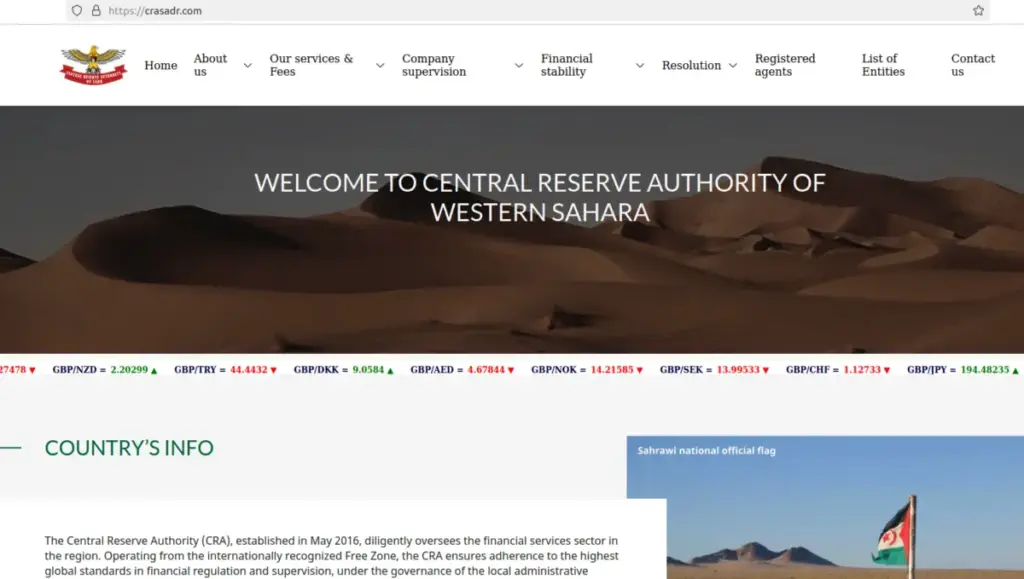
The question of how such a platform could ever claim legitimacy leads to a bizarre web of shell companies and fictional regulatory bodies. Investigations into the parent company of Cryptomus, Certa Payments, uncovered that its sole shareholder was a 25-year-old Ukrainian woman. This individual was also linked to the WS Management and Advisory Corporation, an entity that markets itself as a high-level regulatory authority for cryptocurrency, foreign exchange, and online gaming firms.

The catch, according to investigators, is that the WS Management and Advisory Corporation exclusively oversees licenses for businesses operating in the Western Sahara—a disputed region in northwest Africa that is not widely recognized as a sovereign nation. The organization’s website, crasadr.com, serves as a portal for applicants seeking bank setup, licensing, and legitimacy for their operations. Further technical analysis by investigators revealed that the domain used by Certa Payments shared a server with several other websites, including one dedicated to the “Central Reserve Authority of the Western Sahara.” By rooting their operations in the legal grey zones of a disputed territory, these platforms created an illusion of formal regulatory oversight, providing a veneer of professionalism to operations that were, in reality, little more than money laundering conduits.
On the day the U.K. sanctions were announced, the impact on the platform was immediate. Users attempting to interact with the Cryptomus support bot on Telegram were met with automated messages stating that the platform was suddenly unable to process transactions. For the criminal syndicates and Russian state-aligned actors who relied on this infrastructure, the loss of a primary "off-ramp" represents a significant hurdle in their ability to convert illicit cryptocurrency holdings into usable, spendable cash.
As international law enforcement and intelligence agencies continue to dismantle these networks, the case of Cryptomus serves as a stark reminder of the challenges posed by decentralized, borderless finance. While the platforms themselves can change their names, move their servers, and hide behind the regulations of unrecognized states, the underlying flow of funds leaves a permanent, traceable footprint on the blockchain. The U.K.’s decisive intervention signals that the era of operating with impunity under a rotating list of aliases may finally be coming to a close, as global authorities move from issuing fines to dismantling the underlying infrastructure of the cybercrime economy.