In a significant development in the ongoing investigation into the notorious cybercriminal collective known as "ShinyHunters," federal agents have arrested a Canadian executive on charges related to the group’s high-profile hacking activities. The arrest, which took place in Pennsylvania this past Thursday, marks a major escalation in the federal government’s pursuit of a hacking syndicate that has recently targeted the Federal Bureau of Investigation (FBI) itself, successfully exfiltrating sensitive data concerning thousands of bureau personnel.
Multiple sources familiar with the matter confirmed the arrest to KrebsOnSecurity, noting that the suspect is a Canadian national who holds a prominent role within the cybersecurity industry. While official statements from federal authorities have remained guarded, reports from the New York Times and a brief confirmation from FBI Director Kash Patel via social media have established that an arrest occurred. The suspect was reportedly in the United States to attend the Cyber Risk Summit, an industry gathering held at the Loews Philadelphia Hotel from October 5 through October 7.
The individual taken into custody has been identified as Edward Dubrovsky. Court records indicate that he was arrested on October 8 on charges of cyber extortion and conspiracy. Although several key documents, including the primary criminal complaint, remain under seal, filings accessible through legal databases like CourtListener outline charges of "conspiracy to threaten to impair the confidentiality of information with the intent to extort money" and "interference with commerce by threats."
The Intersection of Professional Security and Cyber Extortion
The investigation appears to have focused on the suspect’s alleged role in facilitating the activities of groups like ShinyHunters. According to information gathered by investigators, the suspect was affiliated with firms specializing in ransomware negotiations—a niche sector of the cybersecurity industry that manages the delicate, high-stakes process of mediating between victimized corporations and criminal organizations.
The suspect’s presence at the Philadelphia summit drew attention given his professional background. Industry records show that he has previously been linked to Cypfer, a Canadian security firm that served as a primary sponsor for the Cyber Risk Summit. While his LinkedIn profile once identified him as a founder of the company, a spokesperson for Cypfer clarified in an update on October 10 that Dubrovsky served as a managing director before resigning from the firm in November 2025. Following his departure from Cypfer, Dubrovsky became associated with CyberSteward, another Canadian firm that also maintained a sponsorship presence at the recent conference.

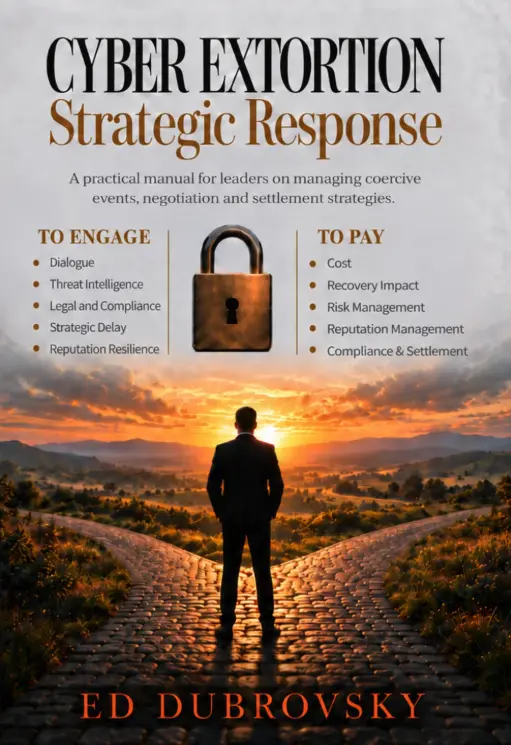
Dubrovsky is a recognized voice in the field of cyber crisis management, having authored a 252-page book titled Cyber Extortion Strategic Response. The work purports to guide organizations through the complexities of responding to ransomware attacks, emphasizing that the process of communication with hackers is a nuanced tactical engagement rather than a simple transaction. An excerpt from the book’s promotional material notes that "communicating with a criminal is not the same as negotiating a payment, and negotiating is not a commitment to pay." The text argues that such engagement can be leveraged to test hacker claims, gather intelligence, and secure time for an organization to formulate a robust defense.
As of the latest reports, the suspect is being held in a federal facility in Philadelphia. However, legal notices filed on October 9 indicate that the case is being moved to the Eastern District of Texas. Sources close to the investigation suggest that the Texas field office has become the centralized hub for the FBI’s broader, multi-jurisdictional inquiry into the ShinyHunters collective. The FBI has declined to provide specific commentary on the ongoing case.
A Pattern of Escalating Federal Action
The arrest of the Canadian executive is the latest in a series of aggressive maneuvers by federal authorities to dismantle the ShinyHunters infrastructure. The group has earned notoriety for its systematic use of phishing campaigns and stolen credentials to infiltrate corporate accounts, particularly within the software-as-a-service sector. Once inside, the hackers exfiltrate vast troves of data, subsequently threatening to leak the information unless exorbitant ransom demands are met. According to internal FBI assessments, the group has successfully extorted over $70 million from victims throughout the current calendar year.
The investigation has gained momentum following the seizure of digital devices last month during the arrest of Pepijn van der Stap, a convicted cybercriminal apprehended by Dutch police. Investigators are reportedly analyzing the contents of these devices to map the network of individuals providing technical and advisory support to the hackers. Officials have hinted that additional charges against principals at various ransomware negotiation firms may be forthcoming as the digital forensic trail is further unraveled.
The friction between the FBI and the hacking group reached a boiling point recently when ShinyHunters compromised the Bureau’s own online recruitment portal. The breach resulted in the theft of sensitive personal information, including unit assignments, specializations, and, in some instances, medical and psychiatric records of agency personnel.

Following the initial arrest of Van der Stap, the hacking group underwent a leadership shift. An individual operating under the alias "Rey" assumed control of the syndicate, reportedly using the platform to taunt federal agents regarding the stolen FBI data. However, the group’s sense of security was short-lived. Last week, Reuters reported that the individual behind the "Rey" persona—identified as a teenager named Saif Al-din Khader—had been detained and is currently cooperating with FBI investigators.
The apprehension of Khader was reportedly tied to an extortion attempt directed at a navigation and digital aviation unit previously divested by Boeing. The swift succession of arrests—from the Dutch operation to the detention of Khader and now the apprehension of the cybersecurity executive in Pennsylvania—underscores a concerted federal effort to move beyond the rank-and-file hackers and target the infrastructure and support networks that allow such groups to function.
For now, the legal proceedings against the Canadian executive remain in their early stages. Court records indicate that the defendant does not currently have legal representation, and the court has yet to appoint a public defender to the case. As the investigation shifts toward the Eastern District of Texas, legal experts anticipate a prolonged legal battle that will likely shed more light on the blurred lines between professional ransomware negotiation and criminal complicity. With the FBI maintaining a policy of silence regarding active investigations, the cybersecurity community remains in a state of heightened watchfulness as the agency continues its pursuit of those who have profited from the digital compromise of both private corporations and federal institutions.