




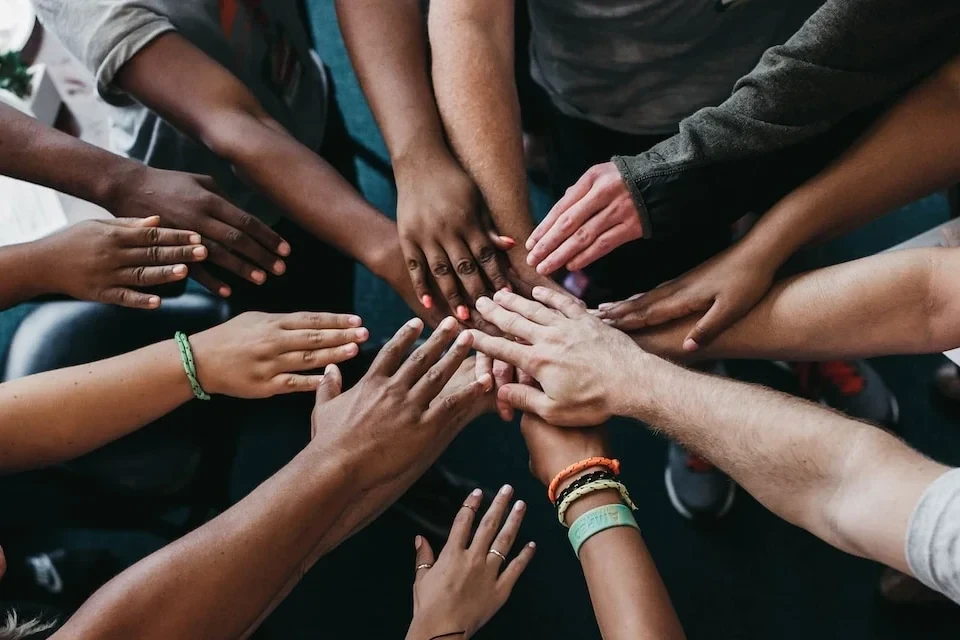
The community is hard at work on something new.
Visitors to Opensource.com may have noticed a distinct quietness settling over the platform lately. That temporary lull is due to an ambitious new project currently in the works behind the scenes. While specific operational details and launch dates remain under wraps for the moment, there is already plenty of anticipation to discuss across the ecosystem. And what better way to kick off a conversation about the future of open source collaboration than by looking at the very fabric of the internet itself?
The internet, and top-level domains
You may know that the internet is fundamentally a network. A network, by definition, is a group of connections working in tandem. The term "internet" is in fact a portmanteau born from the combination of "interconnected" and "network." The internet is a vast network of interconnected networks, and in its earliest days, it consisted of just two primary components: the military network and the academic network.
As the internet expanded and grew popular far beyond those two initial groups, it quickly became apparent that different designations were necessary to properly differentiate various entities. Authorities needed a way to instantly distinguish, for instance, a commercial enterprise from a charitable organization, a university from a governmental department, or a hobbyist network from an enterprise infrastructure.
These structural designations are known as top-level domains, or TLDs. There are hundreds of TLDs available across the web today, but for a long time, there were only a handful of foundational extensions. Those original TLDs remain immensely popular and recognizable to this day. Most internet users intuitively know that when they navigate to a .com address, they are visiting a commercial site, whereas visiting a .org address generally signifies a journey to a non-profit organization, a public interest group, or a community-driven initiative.
These domain endings are more than just technical routing tools; they carry cultural expectations regarding the nature, purpose, and backing of the digital spaces they represent. They help anchor digital destinations within a broader ecosystem of trust and categorization.
Open source is a network
Open source can manifest in many different ways. It can take on a commercial form, driven by enterprise software companies and market demands. It can operate as a non-profit entity dedicated to public good, open standards, and digital rights. It can be entirely academic, serving as the research ground for universities and scientific breakthroughs. It can even be deeply cultural, preserving digital heritage, community guidelines, and shared knowledge.
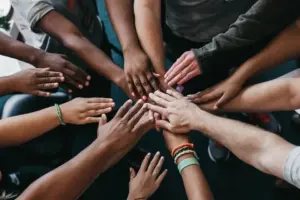
No matter what specific form open source takes, however, it is always fundamentally a network. Sometimes, that network consists of interconnected computers, servers, repositories, and automated pipelines. But most importantly, and most enduringly, it is a network of people.

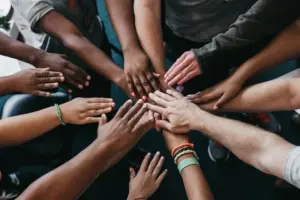
Whether people are gathering physically at an international conference, informally at a local pub, or dynamically within an online chat room, the open source movement is, at its core, a community of human beings collaborating toward common goals. It is driven by shared values, mutual aid, collective code contributions, documentation efforts, and a philosophy of openness that transcends national and corporate boundaries.
The website Opensource.com has been proudly supported by a commercial entity for the past twelve years, acting as a prominent digital hub for the dissemination of open source ideas, success stories, and educational materials. However, the people—that is you, the readers, contributors, maintainers, advocates, and creators who make up the vibrant Opensource.com community—are not commercial entities. The community is made of flesh-and-blood people.
Now, after more than a decade of steady publication under its current corporate stewardship, that dynamic is shifting. In just one month, Opensource.com is going to resolve that long-standing structural mismatch and enter a new chapter. Stay tuned as more details unfold regarding this upcoming transition.