








For decades, the professional life of a software engineer has been defined by a familiar, somewhat rigid setup: a mechanical keyboard, a precise mouse, a code editor, a terminal window, and an ever-expanding collection of browser tabs that serve as a testament to the complexity of modern development. While the specific technologies and languages have evolved at a breakneck pace, the fundamental relationship between the developer and the machine has remained largely static. Engineers have spent their careers learning proprietary commands, memorizing complex keyboard shortcuts, and forcing their human thought processes to adapt to the limitations and idiosyncrasies of the computer.
Today, however, that relationship is undergoing a profound transformation. We are witnessing a paradigm shift that is moving software development away from the granular execution of manual tools and toward the high-level expression of intent. This transition is not merely about using generative AI to write boilerplate code; it is a fundamental rethinking of how software is built, managed, and brought to life.
The Shift Toward Agentic Development
The rise of AI-driven development is often misunderstood as a simple speed-up of existing tasks. In reality, the change is architectural. Modern AI systems are moving beyond the "chat-with-a-bot" phase and into an agentic era. A sophisticated AI agent can now ingest the entire context of a repository, intelligently select the appropriate model for a specific task, plan a multi-step workflow, execute terminal commands, inspect failure logs, and iterate on its own work—all while remaining within the guardrails and boundaries established by the developer.

This capability effectively compresses the traditional development lifecycle. Where a developer once had to manually navigate files, run tests, observe failures, and manually correct errors, they can now describe a desired outcome. GitHub Copilot, for instance, can gather repository context, analyze symbols and dependencies, edit relevant files, execute tests, and refine the implementation in response to real-time feedback. Within the IDE, this "agent mode" creates an interactive loop that feels less like a conversation and more like a collaboration. A coding agent can take a specific issue, work within an isolated, GitHub Actions-powered environment, and return a completed pull request ready for human review.
This is the transition from issuing commands to making intent executable. While the developer remains the ultimate architect and owner of the outcome, the mechanics of how that outcome is achieved have shifted. The burden of low-level tool orchestration is being lifted, allowing developers to focus on the high-level strategic elements of the craft: setting direction, defining constraints, and evaluating the evidence provided by the AI.
Elevating the Human Element
By automating the "how" of coding, the industry is paradoxically making the developer’s role more critical than ever. As the mechanics of software creation are delegated to agents, the value of human judgment, taste, and experience increases. An AI agent is capable of generating three different implementations of a feature in the time it takes to finish a cup of coffee, but it cannot inherently determine whether a particular abstraction is elegant, whether a database migration is truly safe, or whether the tests being run are actually proving something meaningful.
The most significant change in the modern craft is that the developer remains fully accountable for the final product, even as they delegate the labor-intensive mechanics of its construction. This demands a new kind of proficiency. The modern workflow requires a deep understanding of the structure of codebases, the specific needs of the customer, and the ability to articulate what a high-quality solution should "feel" like. Developers are moving away from being laborers who write code and toward being conductors who orchestrate, review, and refine the work of intelligent systems.
Embedding Intelligence into the Workflow
For this new model to be successful, AI cannot simply sit on the periphery of the developer’s workspace; it must be embedded as an ambient intelligence. This requires a robust infrastructure for "portable context." Technologies like the Model Context Protocol (MCP) are essential for connecting agents to the vast array of tools and services required to build software. Repository instructions, explicit coding conventions, and automated hooks that enforce policy and validate output are all pieces of a larger puzzle.
Looking at the emerging workflow, it is possible to categorize this into three distinct layers:
- Modality: The layer that captures the developer’s intent, whether through text, voice, or physical interaction.
- The Harness: The agentic layer that plans, executes, and iterates.
- The Control Plane: The layer that allows the developer to inspect, redirect, and approve the work, ensuring that they never lose agency over the process.
The most effective tools of the future will connect these three layers seamlessly, ensuring that developers can move between different modes of interaction without ever losing the context of the project they are working on.
The Return of Physical Controls
As the industry moves past the keyboard-and-terminal-only era, there has been a renewed interest in ambient control devices. This movement, driven by the maker community and innovators experimenting with everything from hackable picture frames to custom ESP32-based devices, suggests that the future of coding interfaces extends beyond the screen.
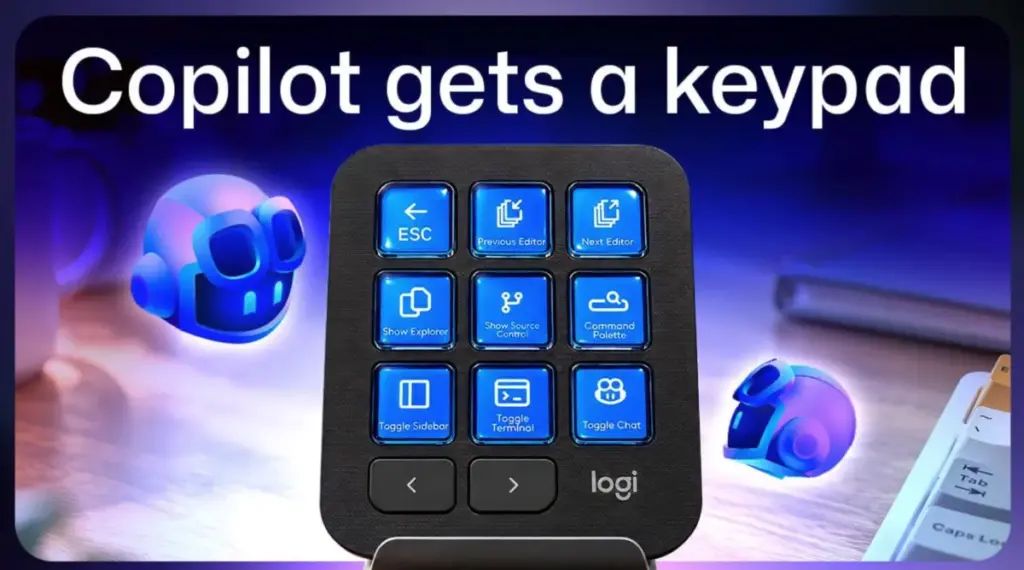
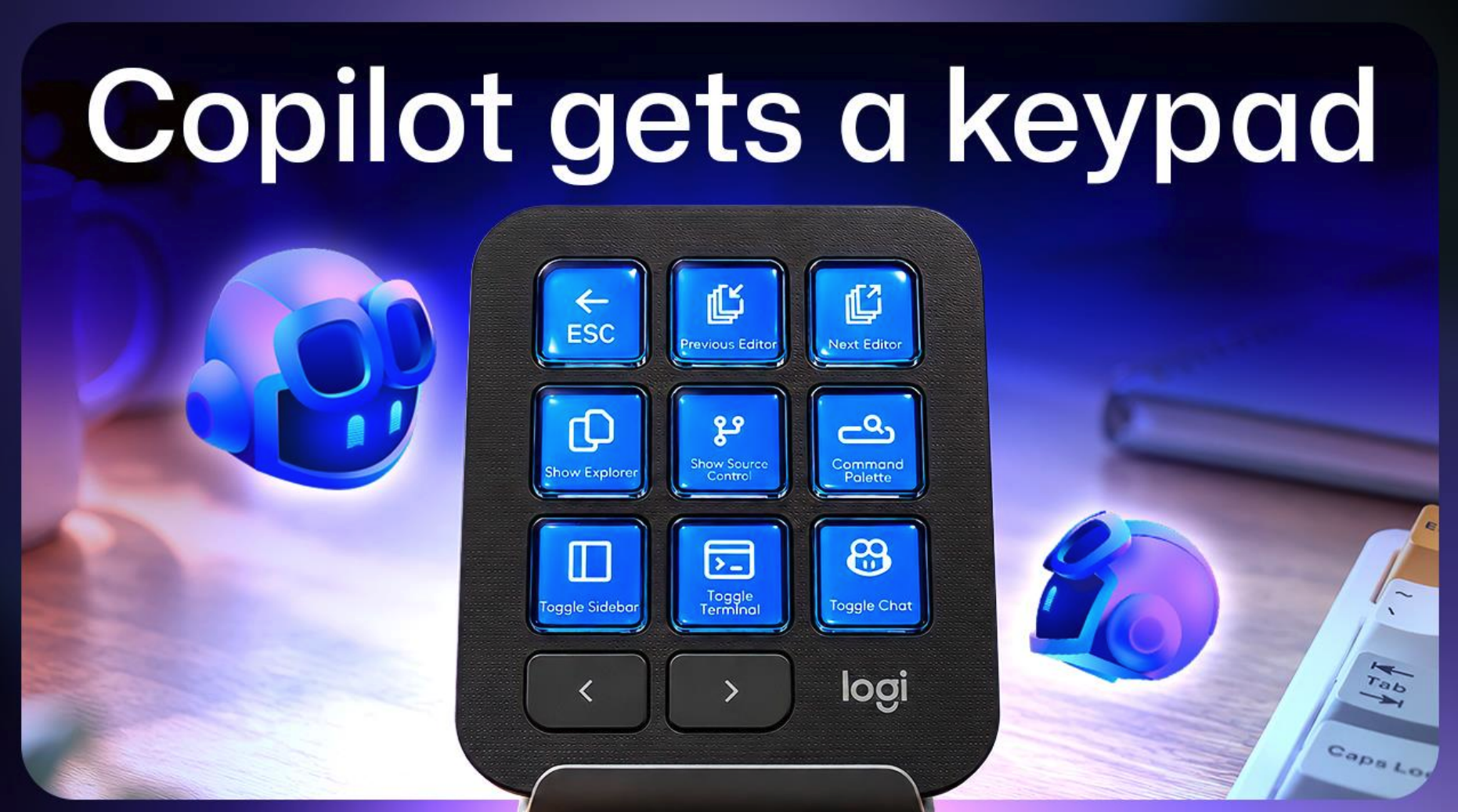
GitHub, in collaboration with Logitech, has been exploring how physical hardware can help bridge the gap between intent and action. The Logitech MX Keypad is designed to turn familiar, repetitive developer actions into programmable, contextual inputs. By integrating the GitHub Copilot app directly with the keypad, developers can map specific keys to trigger multi-step sequences, such as submitting a parameterized prompt, resuming a complex Copilot session, or invoking an IDE command.
This integration is not about adding unnecessary hardware to the desk; it is about reducing friction. Physical controls are most effective when they address actions that occur frequently enough that the overhead of a multi-step software command disrupts the developer’s flow. By allowing the developer to decide which actions earn a dedicated shortcut, the hardware becomes an extension of the developer’s own cognitive process. It provides a way to maintain focus, letting the interface fade into the background.
Moving the Interface into the Background
The ultimate goal of these advancements is not to remove the developer from the work, but to remove the friction that surrounds the work. As we move forward, the engineering questions will shift from "can we build this?" to "how should this be governed?" Developers must grapple with how much context an agent should retain, how credentials and network access should be scoped, and how multiple agents can coordinate without creating conflicting outputs.
The industry is currently in the early stages of this transition. The focus remains on understanding how developers can invoke, steer, and resume agentic work without losing their cognitive momentum. For decades, the barrier to entry for software development was the need to "speak computer"—to master syntax, APIs, and the various incantations required to satisfy the compiler. Today, computers are increasingly meeting developers halfway. The most successful interfaces of the future will not be those with the most buttons or the most complex AI-driven dashboards; they will be the ones that understand the necessary context, preserve meaningful human control, and ultimately get out of the way, allowing developers to focus on building software that truly matters.
For those looking to explore this new paradigm, the current ecosystem offers a chance to experiment with these workflows firsthand. By mapping repeated interruptions to a physical control, developers can test for themselves how much focus they can reclaim. As the interface moves into the background, the craft of software development is poised to become more expressive, more intent-driven, and, ultimately, more human.