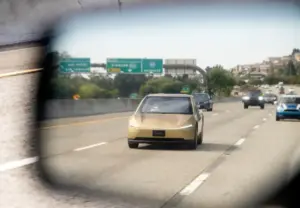









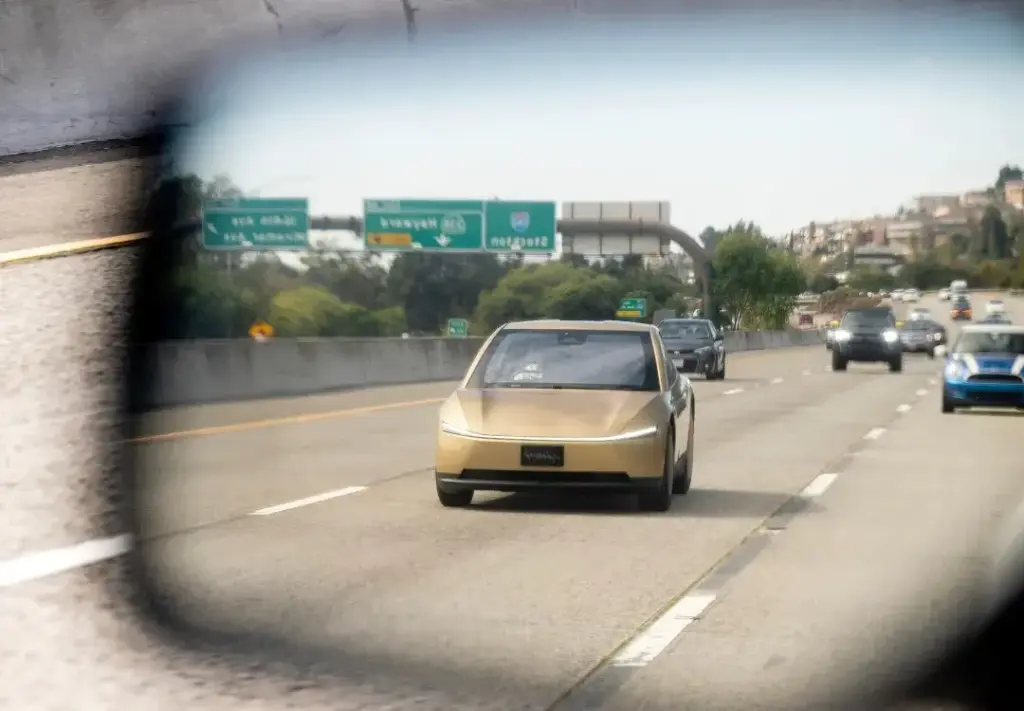
In a significant move that signals the next phase of its aggressive push into the autonomous vehicle market, Tesla announced late Friday evening that a select group of customers can now begin placing pre-orders for the company’s signature, golden Cybercab. The move marks a pivotal transition for the automaker, shifting the Cybercab from a futuristic concept showcased at high-profile events to a tangible product available for "personal use."
For years, the promise of a fully autonomous, steering-wheel-free vehicle has been a cornerstone of Elon Musk’s vision for Tesla. By opening the order books, the company is finally putting that vision to the test, albeit within a carefully controlled and limited framework.
The Reality of Early Adoption
As the first round of prospective buyers began navigating the official Tesla order page, the logistical realities of owning such a cutting-edge machine became immediately apparent. High-profile tech reviewer and industry analyst Marques Brownlee was among the first to bring these critical details to the public eye. In a post on social media, Brownlee highlighted that the initial rollout of the Cybercab is far from a nationwide launch.

According to the order documentation, early buyers must agree to take delivery of their vehicles in one of a handful of designated Texas cities. Furthermore, the operational capabilities of the Cybercab are currently tethered to specific, geofenced zones. This suggests that while the hardware may be ready for the road, the complex software and regulatory maps required to navigate the vehicle autonomously are still being refined for broader use. Tesla has provided an estimated delivery window of December 2026, setting the stage for a busy end-of-year push as the company attempts to put its first fleet of personally owned autonomous cabs on the road.
Pricing and Operational Costs
The pricing structure for the Cybercab has been a subject of intense speculation, and the official announcement brings both clarity and new questions. The base price for the vehicle itself is set at $29,990—a competitive entry point for a vehicle that promises to revolutionize personal transportation. However, the cost of ownership extends beyond the initial purchase price.
The order page revealed that Cybercab owners will be expected to pay a monthly subscription fee of $299 to maintain the vehicle’s operational functionality. This fee presumably covers the necessary software updates, connectivity, and the intensive compute power required to manage the Full Self-Driving (FSD) stack that powers the vehicle.
The announcement of this $299 fee sparked immediate debate within the tech community regarding the long-term affordability and value proposition of the vehicle. In a rapid response to the public discourse, including a direct engagement with Brownlee’s critique, Tesla CEO Elon Musk acknowledged that the $299 figure might be too high. Musk stated that the intent is for the monthly operational cost to eventually align with the pricing of existing Tesla Full Self-Driving and connectivity packages, suggesting a target closer to $115 per month.
Musk’s comments also provided a glimpse into the company’s broader strategy. "The Cybercab will be available nationwide, as we receive regulatory approval," Musk explained. This clarification underscores that the current limitations are not necessarily technological bottlenecks, but rather a reflection of the slow, methodical process of securing the necessary permissions from state and federal authorities.

The Role of Geofencing and Software
Supporting the rollout, Ashok Elluswamy, Tesla’s director of AI software, offered additional technical context regarding how these vehicles will function in the real world. Elluswamy clarified that the Cybercabs will operate with the same level of "unsupervised" capability that Tesla has been testing in its broader robotaxi initiatives.
The primary distinction is the shift from a fleet-managed model to an ownership model. "The vehicles will work unsupervised inside all the same geo-locations as our robotaxi fleet, just serving the owners’ needs," Elluswamy noted. This implies that owners are essentially buying a vehicle that functions as a private, automated chauffeur within pre-mapped, safe-to-navigate urban environments. The reliance on geofencing is a common safety strategy in the autonomous vehicle industry, ensuring that the car only operates in environments where the software has high confidence in its ability to handle traffic, pedestrians, and infrastructure.
A Strategic Pivot in Production
The introduction of the Cybercab comes at a transformative time for Tesla’s manufacturing operations. In recent weeks, the company has made the difficult decision to recalibrate its production roadmap. Following sales performance that fell short of internal projections, Tesla confirmed that it would cease production of the Cybertruck in 2027.
This decision is not merely a downsizing; it is a strategic reallocation of resources. Tesla plans to convert the factory capacity previously dedicated to the Cybertruck to facilitate the mass production of the Cybercab. This move highlights the company’s laser-focus on autonomous technology. By pivoting away from the niche, high-cost manufacturing requirements of the Cybertruck, Tesla is betting that the future of its bottom line—and its brand identity—lies in the scalable, high-volume production of the Cybercab.
For the automotive industry at large, the Cybercab’s entry into the market represents a major milestone. If Tesla can successfully transition these vehicles from the drawing board to the driveways of early adopters in Texas, it will prove the viability of a model that has eluded many competitors. The challenges remain significant: regulatory hurdles, the necessity of expanding geofenced areas, and the task of proving that a $29,990 vehicle can reliably and safely navigate complex urban environments without human intervention.
As the industry looks toward December 2026, all eyes will be on those first few "select customers." Their experience will provide the first real-world data on whether the Cybercab is truly ready to replace the traditional private vehicle or if it will remain a specialized tool for specific, pre-mapped urban environments. With Musk’s stated goal of nationwide availability and a more accessible pricing structure, the company is clearly positioning itself to dominate a market that is only just beginning to take shape.
The path forward for the Cybercab will likely be defined by the balance between aggressive technological ambition and the cautious, often sluggish nature of regulatory compliance. As Tesla prepares to phase out the Cybertruck and ramp up its autonomous efforts, the company is signaling that the era of the personal robotaxi is no longer a distant possibility, but an active, unfolding project. For now, the focus remains on the streets of Texas, where the first golden Cybercabs will begin to prove whether the future of transit is truly autonomous.