







In an era where the financial barriers to entry for high-end gaming have never been higher, consumers are increasingly forced to weigh their options between the convenience of a console and the modular flexibility of a custom PC. For those staring down the barrel of a potential hardware upgrade, the question of value is paramount. Is a mid-range PC build truly a superior investment compared to the streamlined, dedicated architecture of a PlayStation 5? As Sony and AMD continue to iterate on the specialized silicon powering the PlayStation ecosystem, the desire to draw direct parallels between console hardware and desktop graphics cards has only intensified.
However, the reality of this comparison is rarely straightforward. While many enthusiasts seek a simple "apples-to-apples" answer to determine which NVIDIA GeForce card mirrors the power of a PS5, the truth is that the two platforms operate under fundamentally different philosophies. If you are currently enjoying a PS5—or even the upgraded PS5 Pro—the consensus remains that you are likely better off sticking with the hardware you own rather than attempting to chase equivalent performance on the PC market, especially given the current volatility in component pricing.
What GPU offers the same power as the PS5?
The challenge in answering this question begins with the architecture itself. The PS5, much like its counterpart the Xbox Series X, does not rely on a standalone graphics card in the traditional sense. Instead, it utilizes an Accelerated Processing Unit (APU)—a sophisticated, custom-designed chipset that handles both CPU and GPU workloads within a single, integrated package. This design is highly optimized for the closed environment of a console, allowing developers to extract performance that often defies raw spec-sheet comparisons.

Despite these architectural differences, the industry analysts at Digital Foundry have long provided a benchmark for what users can expect when translating console performance to desktop hardware. For the base PlayStation 5, the NVIDIA RTX 2070 Super is widely considered the closest equivalent in terms of raw graphical output. It is a striking realization: the card most closely aligned with the modern PS5 is now three generations old.
While the 2070 Super can hold its own, it is hardly the cutting-edge silicon that many might expect. In today’s market, this seven-year-old card can often be found on the second-hand market for around $280. When placed against the $600 price point of a PS5 Digital Edition, the math seems to favor the PC in a vacuum, but this ignores the "hidden" costs of building an entire system around that card. Furthermore, relying on hardware from 2019 to compete with a modern, optimized console environment comes with significant caveats regarding driver support, power efficiency, and the lack of the specific, unified memory architecture that allows the PS5 to punch above its weight class.
For those looking to navigate the GPU market in 2026, the advice remains cautious: the cost of new, current-generation graphics cards has become prohibitively high, leading many to the pre-owned market. While the 2070 Super features 8GB of GDDR6 memory, it cannot be directly compared to the 16GB of unified memory found in the PS5. The unified memory architecture allows the console to allocate resources dynamically between the CPU and GPU, a feat that a traditional desktop setup—even one with a more powerful GPU—cannot easily replicate without a high-end CPU and significant RAM overhead.
Is the RTX 5060 stronger than the PS5 Pro?
As of September 2026, the landscape of PC gaming is dominated by cards like the NVIDIA GeForce RTX 5060, which has cemented itself as a staple in the Steam Hardware & Software Survey. As a mid-range entry in the Blackwell architecture, the 5060 has become a polarizing subject, particularly due to its integration with DLSS 5, a technology that has sparked intense debate regarding image reconstruction and AI-driven upscaling. With 8GB of GDDR7 memory and a substantial base clock speed, the card is a capable performer, yet it struggles to justify its retail price of roughly $500.
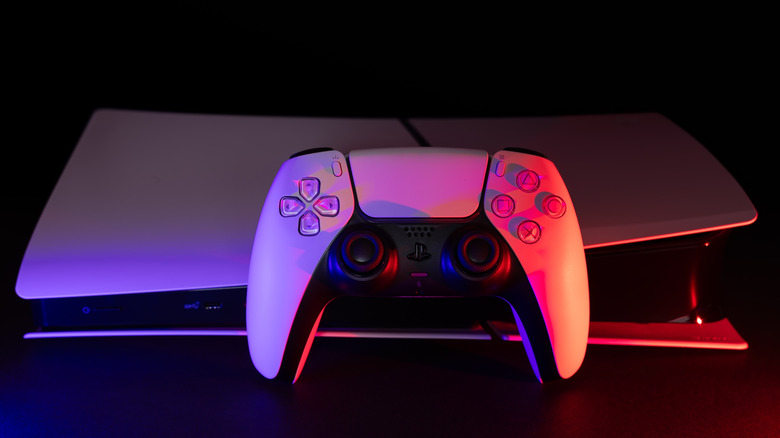
This brings us to the PS5 Pro, a machine that has become a focal point of frustration due to its inflated pricing. Following its late 2024 launch at $700, the console now commands a market price closer to $1,250, exacerbated by global supply shortages and the overwhelming anticipation surrounding the release of Grand Theft Auto VI.
Technically, the PS5 Pro features a custom AMD "Trinity" APU, which delivers a notable, though not revolutionary, boost in performance over the base model. While the GPU performance sees a significant uplift, the CPU improvement remains relatively modest at around 10 percent. Sony’s reliance on its proprietary PSSR (PlayStation Spectral Super Resolution) upscaling aims to bridge the gap between this hardware and the requirements of modern, high-fidelity titles. However, the result is a complex performance profile; while it excels in console-optimized environments, it sometimes falls short of the raw throughput one might expect from a $1,000 gaming rig.
When evaluating raw horsepower, the 16GB RTX 5060 Ti or AMD’s Radeon RX 9060 XT are the closest analogs to the PS5 Pro. With the right configuration, including a high-performance processor and high-speed RAM, these cards can certainly outperform the PS5 Pro. However, the comparison remains fundamentally flawed. The simplicity of the console—a "plug-and-play" experience that guarantees a baseline level of performance for every user—remains its greatest strength. For the average player, the $900 investment for a console provides a level of stability and ease that is difficult to replicate on PC without a significantly higher financial and technical commitment.
Why comparing a graphics card to a console GPU is complicated
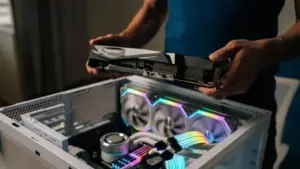
The persistent struggle to equate a custom console chip with a standalone desktop graphics card is rooted in the inherent differences between the two ecosystems. A PC is an open-ended, modular collection of components that requires balancing CPU, GPU, memory, and cooling. A console, conversely, is a closed-source, highly specialized ecosystem where developers can squeeze every drop of performance from a known, static configuration.
When developers target the PS5 or PS5 Pro, they are optimizing for a specific hardware target, which allows them to achieve 60 frames per second at high resolutions through advanced supersampling and clever resource management. The RTX 2070 Super may be able to match the PS5’s graphical output in certain scenarios, but it does so without the benefit of a console’s specialized I/O architecture or the streamlined software stack that Sony has spent years perfecting.
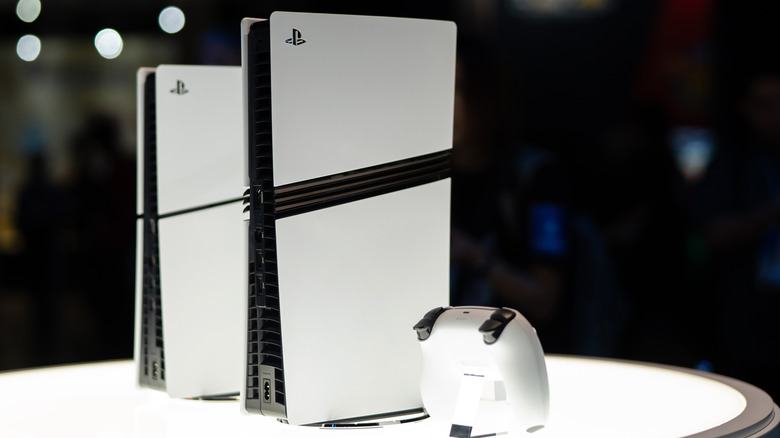
Furthermore, the "bottleneck" factor remains the silent killer of many PC builds. If a user pairs a high-end card—even one equivalent to or better than a PS5—with a lackluster CPU or insufficient system memory, they will quickly find themselves CPU-bound. In such a scenario, the performance gains of an expensive GPU are rendered moot, and the user is left with a sub-optimal experience that lags behind the consistent performance of a well-optimized console.
For those currently navigating these waters, the conclusion is clear: the choice is less about which piece of silicon is "stronger" and more about what the user values. If the goal is 4K gaming with minimal configuration and long-term support for the latest AAA titles, the PS5 or PS5 Pro offers an unparalleled value proposition. The console is built to last, and Sony’s commitment to the platform ensures it remains a viable way to experience the latest games for years to come.
Conversely, the PC platform is for those who prioritize the flexibility of a high-end rig, the potential for path-tracing at 120 frames per second, and the freedom to tweak settings to an extreme degree. While mid-range PC hardware will inevitably cost more than a console, it offers a different tier of control. Ultimately, the PS5 and its Pro variant represent the pinnacle of console efficiency, delivering a reliable, high-fidelity experience that, despite the complexity of the hardware market, remains a benchmark for the industry.