







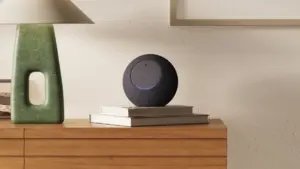

Apple made a massive splash earlier this October with its high-profile smart home announcement, capturing the industry’s attention by introducing new Siri AI features, the company’s very first smart display known as HomeView, and the long-awaited successor to its popular smart speaker, the HomePod Mini 2. The debut positioned Apple to take a more aggressive stance in the connected household ecosystem, blending its proprietary operating systems with advanced contextual awareness derived from user communications and daily habits.
Now, Amazon has entered the ring with its latest wave of Echo lineup updates, immediately prompting tech consumers and industry analysts to compare these new smart speakers and displays directly against Apple’s offerings. What makes this hardware cycle particularly fascinating is that Amazon is charting a completely different strategic path for its new home devices. This divergence is especially clear in the latest iteration of the Echo Show, which is already available for preorder. These competing philosophies highlight a fundamental question for potential buyers heading into the holiday shopping season: Do you want a compact, audio-centric companion deeply integrated with your personal phone data, or a larger, media-forward hub that functions essentially as a secondary television?
Amazon’s Echo Show 16 is Everything the HomeView Is Not
Apple’s maiden voyage into the smart display market relies heavily on Siri AI and high-end audio capabilities as its primary selling points, adopting a compact design footprint somewhat akin to the Echo Show 11. During Apple’s initial product unveiling, tech observers noted that this design choice created a distinct functional dissonance. Specifically, the 7-inch screen is simply too small to comfortably watch the latest Apple TV shows or enjoy other immersive video content, even if the accompanying audio output is remarkably crisp and powerful. That exact limitation is precisely why companies like Amazon have steadily pushed Echo Show devices toward larger form factors over the years.

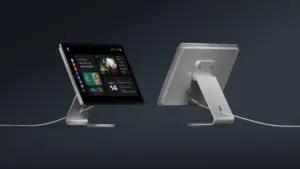
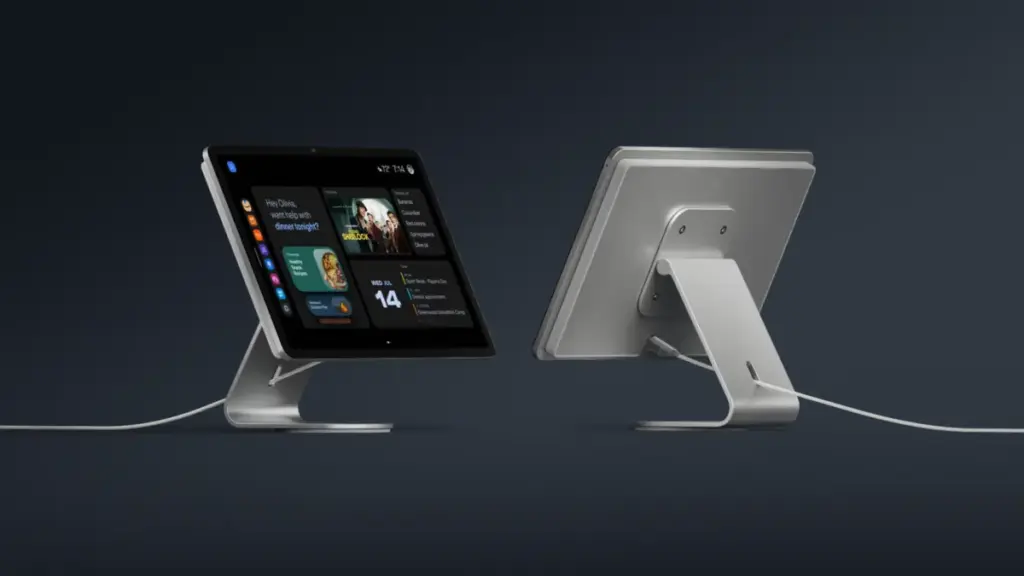
With the introduction of the Echo Show 16, Amazon is leaning harder than ever into the concept of a secondary television display tailored for high-traffic zones like the kitchen or hallway. This new iteration notably ditches the massive, dominant speaker housing of previous generations in favor of an array of discreet woofers and tweeters. Furthermore, it incorporates a physical stand design that appears pointedly reminiscent of Apple’s iconic Mac computer aesthetic.

While real-world acoustic testing will determine how the audio holds up in practice, Amazon appears to be shifting away from the 360-degree, room-filling sound profile of the past. Instead, the hardware is engineered to act more like a traditional television, while still retaining the responsive touchscreen, integrated camera, and microphone arrays characteristic of standard smart displays. For users who prefer to clear off their counter space entirely, the hardware continues to fully support standard wall mounting options.
To back up its larger physical size and visual ambitions, the Echo Show 16 features a built-in Fire TV platform. This software layer was previously restricted to larger, wall-mounted-only Echo Show variants. Integrating Fire TV not only simplifies access to Amazon Prime content but also vastly improves compatibility with third-party streaming applications and complex navigation controls.
Consumers who prioritize binge-watching television series or catching live sports can even opt for an upgraded Nanomatte display configuration, specifically engineered to cut down on ambient glare and enhance color accuracy. While Apple has remained somewhat guarded regarding precisely which third-party applications will be officially supported alongside Apple TV, Amazon has confirmed that the Echo Show lineup will natively support Netflix, Disney Plus, YouTube, HBO Max, Peacock, Tubi, and Pluto. This robust software lineup should offer considerable peace of mind to dedicated streaming enthusiasts.
Naturally, the drawback to packing this level of advanced technology into a household device is the price tag—a pain point that consumers eyeing Apple’s HomeView will find all too familiar. While the smaller-screened HomeView starts at $299, Amazon’s standard Echo Show 16 commands a starting price of $499.99, with the anti-glare Nanomatte display pushing the base cost up to $569.99. Buyers must also factor in the cost of a compatible physical stand, which starts at $69.99 and can reach up to $150 depending on the model chosen, demonstrating how quickly total expenses can escalate.

This premium pricing structure represents a challenging sell for households that already own functional smart displays or are heavily emotionally invested in the Apple ecosystem. However, consumers specifically hunting for an extra screen dedicated to streaming Fire TV content may find the investment easier to justify. Industry reviewers emphasize the necessity of hands-on testing for both ecosystems before making a definitive purchasing recommendation.
Amazon Adds an Echo Camera to Compete with the HomePod Mini 2
The Echo Show 16 was far from Amazon’s only hardware release designed to challenge Apple’s autumn announcements. The retail giant also revealed a brand-new Echo Studio model, starting at $249.99, intended to compete directly with the Apple HomePod Mini 2—though with one significant twist. This latest Echo Studio model comes equipped with a built-in, nearly invisible home security camera integrated directly into its chassis.
Amazon states that the primary purpose of the camera is to gather visual intelligence for Alexa, a feature that inevitably triggers privacy concerns among consumer advocates. Nevertheless, the hardware capability allows the voice assistant to answer contextual questions about activity occurring within the room when residents are away, or to provide live video feeds, essentially functioning as a miniature security camera.
While the necessity of adding an optical lens to a dedicated smart speaker remains a subject of debate among tech analysts, the addition successfully differentiates the Studio from the $149 HomePod Mini 2. To the casual shopper comparing the two audio-first devices side-by-side, this visual hardware creates a stark point of separation.

Alongside the camera-equipped Studio, Amazon introduced a camera-free Echo Dot priced more affordably at $99.99. This model receives an internal hardware upgrade powered by a custom-designed AZ3 silicon chip intended to accelerate Alexa response times, alongside a dedicated children’s variant featuring parallel capabilities.
While Apple demonstrated during its own showcase how the iPhone Duo could double as an impromptu bedside alarm clock, Amazon countered with a dedicated smart clock bearing the straightforward name Echo Time. This round, dial-like smart display is purposefully designed for the nightstand, utilizing the updated software capabilities of Alexa Plus. It incorporates specialized smart alarm mechanics meant to ease users into waking up gradually. Yet, true to form for this hardware cycle, Amazon has attached a high price tag to the accessory, setting the standalone clock at $199.99.
Alexa Plus is Ready to Duel with Siri AI
No discussion of contemporary smart home hardware is complete without examining the underlying artificial intelligence powering these devices, particularly as Alexa Plus prepares to go head-to-head against Apple’s Siri AI. Both software suites introduce advanced capabilities designed to extract maximum utility from new smart displays. Siri AI focuses heavily on native home automation controls alongside a streamlined interface for surfacing information pulled directly from user emails, text messages, and other connected iPhone data sources.
Meanwhile, Alexa Plus debuts a completely redesigned interface tailored for the Echo Show 16. This layout replaces the older transcription visual style with an interactive display capable of dynamically pulling up relevant graphics, videos, calendar events, and interactive elements during a spoken dialogue with Alexa. Each individual conversation thread receives its own dedicated Card icon, enabling users to easily revisit and resume past interactions whenever needed. Furthermore, Alexa introduces a brand-new Home Map mode, rendering a dynamic visual layout of all connected smart devices in the residence to let users control operational statuses room by room with minimal friction.

While early impressions suggest Alexa Plus offers a robust conversational experience—albeit occasionally overly talkative—software accessibility remains tied to economic factors. Apple has indicated that its most advanced Siri AI features will require an active iCloud Plus subscription, though specific pricing and tier details remain sparse. Conversely, Alexa Plus is included at no additional charge for Amazon Prime subscribers, but costs a steep $20 per month for users without an existing Prime membership.
Ultimately, Apple is treading cautiously with its inaugural smart display, though its compact screen size presents a unique usability hurdle for media consumption. Amazon, conversely, is making a massive financial and structural bet that consumers actively want a secondary television experience built right into their kitchen or hallway displays, and that they are willing to absorb a higher cost to get it.
Both AI-driven assistants are arriving with fresh functional capabilities that promise to reshape how users interact with their living spaces. At the same time, Amazon’s experimentation with unconventional smart home avenues—such as embedding active cameras into flagship audio speakers and releasing hyper-targeted screens dedicated to alarm clock duty—pushes hardware pricing to unprecedented levels. This dynamic inadvertently grants Apple a strategic advantage heading into the high-stakes holiday shopping season, though Amazon’s distinctly different hardware vision ensures both ecosystems are targeting fundamentally different consumer desires.