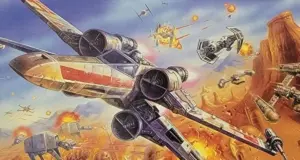








The enduring passion of the Star Wars fan community has once again yielded an extraordinary result, proving that patience and dedication can overcome even the most daunting development timelines. After a staggering gestation period of nearly 20 years, a dedicated group of volunteer developers has officially released Fate of the Galaxy, a comprehensive Star Wars space combat simulator built upon the robust, open-source engine of the 1999 classic, FreeSpace 2. This total conversion mod, engineered using the FreeSpace Open framework, is now available as a free download for players on Linux, macOS, and Windows.
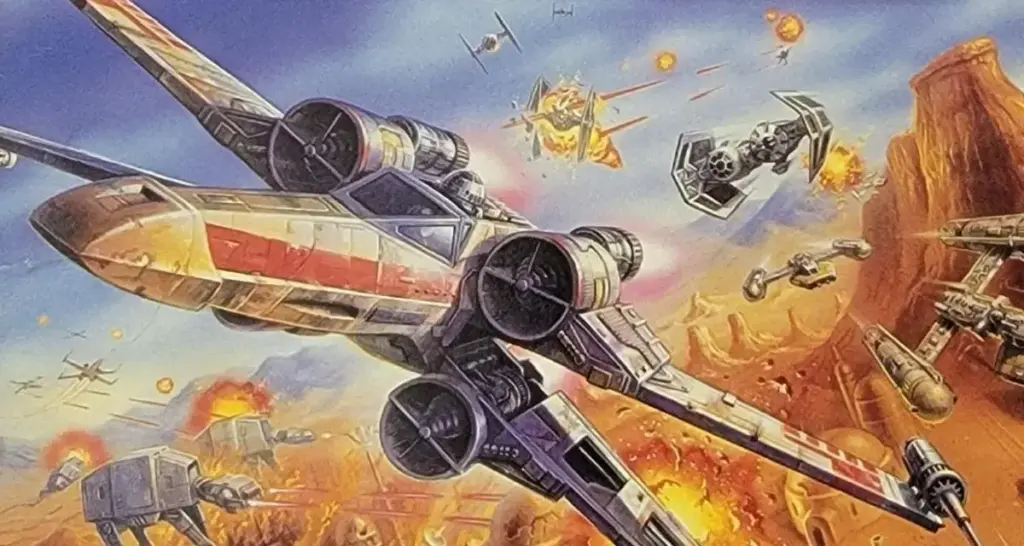
For nearly two decades, this project has remained a labor of love, surviving the shifting tides of the gaming industry and the evolution of modding technology. The result is a sprawling, feature-rich experience that aims to capture the cinematic intensity of the Star Wars universe while providing the mechanical depth expected of a high-fidelity space combat simulation. As the developers noted on the game’s official website, their primary objective was to deliver a starfighter experience that captures the distinct look, sound, and tactical feel of the source material. By providing players with the agency to engage in combat on their own terms, the mod offers an expansive suite of tools, including dynamic campaigns, mission creation suites, and deep customization options.
A Galaxy of Combat Options
The sheer scale of Fate of the Galaxy is perhaps its most impressive achievement, given its grassroots origins. The game is not merely a single-player mission pack; it is a full-featured simulator that accommodates a variety of playstyles. The title includes interconnected story-driven campaigns that weave through the Star Wars narrative, as well as highly customizable dynamic campaigns that span the galaxy, allowing for emergent gameplay scenarios that change based on player performance and strategic decisions.

For those who prefer a more pick-up-and-play experience, the developers have included a robust selection of arcade and training scenarios, alongside stand-alone single-player missions. Multiplayer enthusiasts are not left behind either, as the game supports quick matches via LAN, ensuring that the legacy of competitive space combat remains intact.
The game’s interface offers a comprehensive map of various star systems, providing players with a clear view of available missions and strategic objectives. Players are not locked into a single perspective; they can choose to align themselves with the Rebel Alliance, enlist as a pilot for the Galactic Empire, or strike out as an independent adventurer, each path offering a different set of challenges and narrative flavors. The technical depth is equally impressive, with a roster of over 64 distinct ships available for flight. Each vessel features a fully functional, immersive cockpit and allows for detailed customization of weapon loadouts, encouraging players to tailor their ships to their specific combat needs.
Beyond the pre-packaged content, the inclusion of a comprehensive mission editor serves as a cornerstone of the game’s longevity. This tool provides users with the power to craft their own battles, scenarios, and tactical challenges, ensuring that the content pipeline for the game remains open well after its official release. The developers have emphasized that their goal was to provide a "wide range of play styles," catering to everyone from the casual fan looking for a quick dogfight to the hardcore simulation enthusiast seeking a grounded, realistic space-combat experience. To this end, the game supports a variety of input methods and offers multiple difficulty settings, and even includes support for VR, allowing players to experience the cockpit of an X-wing or TIE fighter with unprecedented immersion.

A Commitment to Craft
In an era where the discussion surrounding game development is increasingly dominated by the integration of artificial intelligence and procedural generation, the team behind Fate of the Galaxy has made a clear, ideological stand. The developers have explicitly stated that the project is completely open-source and that "all assets were made by humans only." This commitment to traditional, human-led creative labor has become a point of pride for the team, distancing the project from the concerns regarding "AI slop" that have recently permeated the gaming discourse. This dedication to craft is evident in the attention to detail applied to the models, textures, and mission design, all of which have been painstakingly created to maintain the aesthetic integrity of the Star Wars franchise.
The foundation for this massive undertaking is the FreeSpace 2 engine, a choice that links Fate of the Galaxy to a long history of fan-driven preservation and development. When Volition released FreeSpace 2 in 1999, the decision to openly distribute the game’s source code proved to be a watershed moment for the flight-sim community. By allowing fans to peek under the hood and modify the core mechanics, the developers inadvertently sparked a subculture of total conversion mods that has lasted for over 25 years.
The FreeSpace Open project has served as the backbone for several legendary community projects, including The Babylon Project—a faithful recreation of the Babylon 5 universe—and Beyond the Red Line, which brought the intense, grounded space combat of Battlestar Galactica to the engine. By joining this prestigious lineage of total conversion mods, Fate of the Galaxy solidifies its place as a significant achievement in the world of fan-made software, demonstrating that when a passionate community is given the right tools, they can produce content that rivals professional titles in scope and execution.
The Current State of Star Wars Gaming
The release of Fate of the Galaxy arrives at a time when the Star Wars gaming landscape is experiencing a period of significant activity and variety. The franchise has seen a diverse array of releases throughout the current year, catering to different genres and player demographics. This past August, the release of Star Wars: Zero Company was met with critical acclaim for its tactical gameplay and sharp writing, which successfully brought the late Republic era of the Star Wars timeline to life with fresh, engaging mechanics.
Earlier this month, the release of Star Wars: Galactic Racer further expanded the franchise’s presence in the gaming market, proving that there is still significant appetite for high-speed, arcade-style racing within the Star Wars universe. The game was praised for its breakneck speed and its ability to capture the adrenaline-fueled nature of podracing, while also introducing a new character, Biddy Blas, into the expanded Star Wars lore.
The arrival of Fate of the Galaxy serves as a poignant reminder of the power of community-driven development. In a gaming market that often feels driven by corporate timelines and quarterly earnings, the release of a project that has been in development for nearly two decades highlights the enduring, singular appeal of the Star Wars universe. It is a testament to the fact that for many, the "galaxy far, far away" is not just a commercial property, but a canvas for endless creativity and a shared passion that transcends the limitations of commercial game development. As players begin to explore the campaigns, design their own missions, and strap into the cockpits of their favorite starfighters, Fate of the Galaxy stands as a definitive tribute to the fans who refused to let their vision fade away.