










In the complex ecosystem of modern product creation, establishing a harmonious workflow between product teams and end-users is often treated as the gold standard. Designers frequently find themselves closely aligned with the people who consume their products and the product managers who direct their trajectories. Yet, despite being housed under the same digital or physical roof, a critical fault line frequently runs right through the center of product organizations: the relationship between designers and developers.
For many cross-functional teams, this particular partnership remains surprisingly difficult to build, nurture, and maintain over the long lifecycle of a project. When a close, collaborative relationship is absent, solving complex problems or implementing iterative improvements becomes an uphill battle. Silos emerge, miscommunications multiply, and the overall quality of the product invariably suffers.
According to industry insights, however, teams do not have to remain stuck in these traditional adversarial or transactional silos. By applying the principles found within the open-source Open Decision Framework, organizations can successfully dismantle these operational obstacles and foster a culture of shared ownership.

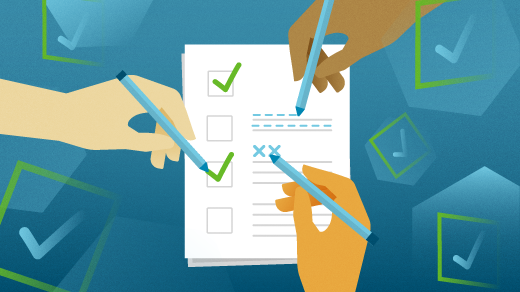
The Open Decision Framework is rooted in the fundamental assertion that open decision-making processes must be transparent, highly inclusive, and relentlessly customer-centric. At its core, the framework involves clearly communicating problems, technical requirements, and strict project constraints to every affected party from the very beginning of the product lifecycle. It actively enables collaboration across multiple diverse stakeholders, ensuring that teams can secure a wide array of opinions and comprehensive feedback before choices are finalized. Above all, it serves as a mechanism to carefully manage relationships and balance competing needs and priorities across different departments.
These foundational principles are likely to resonate deeply with anyone who has ever navigated the labyrinth of choices required to design a new product, ship a complex feature, or overhaul a digital service. For a user experience designer, developers are not merely downstream recipients of mockups or task-masters dictating technical limits; they are critical, indispensable stakeholders in making the absolute best design decisions possible. For designers navigating these cross-functional waters, experts argue that it is past time to actively embrace the opportunity to seek out and incorporate diverse opinions from the engineering side of the house.
The Backend and the User Experience
To understand why developers are such vital stakeholders, one must look beyond the surface level of digital interfaces. A user’s overall experience of a product or service is vastly more expansive than just the pristine pixels glowing on a screen or the smoothness of a visual workflow design. True user experience encompasses the service’s underlying performance, the raw speediness of application programming interface (API) calls, the security and integrity of how user data is treated and stored, and even the structural design of the data to ensure long-term scalability.
When developers are brought into the fold as full stakeholders in the design phase rather than simple executors of specifications, they can contribute their deep, specialized expertise regarding the backend and architecture of services. This technical insight actively assists and reframes the overall design of the experience, preventing costly mistakes before a single line of code is written.
Conversely, a user experience designer is equally a stakeholder in the items for which the development team carries direct responsibility. A sudden performance deficit, or the cascading effects of a rigid technical architecture on what data is actually available to present, can severely hinder the user experience. An open, collaborative relationship between the development and design camps allows for a high degree of trust and transparency across all functional areas. When both sides understand each other’s constraints and goals, the resulting product bridges the gap between aesthetic usability and technical brilliance.
Making Space for Collaboration
Despite the clear benefits of breaking down traditional silos, maintaining an open and transparent relationship between developers and design teams is far from common practice in the technology sector. This collaborative, highly communicative way of working may feel entirely foreign and challenging to both sides, particularly in organizations accustomed to rigid, waterfall-style handoffs where designers finish their work and literally throw it over the fence to engineering.
Transitioning away from this legacy mindset requires deliberate effort, patience, and a willingness to rethink how teams interact daily. Establishing this environment means creating physical and digital spaces where questions are welcomed, early drafts are scrutinized without defensiveness, and technical feedback is treated as a creative asset rather than a roadblock.
An Open Collaboration in Practice
The tangible value of this open philosophy is best illustrated through real-world scenarios. In one typical early design review between a designer and a developer on an active project, the designer presented a specific, highly polished interaction intended for displaying expanded data about a particular object on the screen. The designer carefully communicated the underlying user need and demonstrated how the interaction was supposed to function.
At that moment, instead of simply accepting the mockup or immediately shutting it down as impossible, the developer asked a crucial, probing question: "Does it need to be done in exactly this way?"
The developer went on to explain that by making a few minor, subtle adjustments to the design layout, the actual engineering effort required to build the feature would drop significantly. Upon deeper inspection, both parties agreed that these technical optimizations would not negatively affect the end user’s experience in any meaningful way, and users would still be fully able to achieve their goals quickly and efficiently.
This proactive, early feedback loop saved the development team a substantial amount of implementation time. That reclaimed time was subsequently redirected toward addressing lingering bugs, building additional valuable features, and preserving a healthier work-life balance for the engineering staff under tight delivery deadlines. Ultimately, the user experience remained robust and uncompromising, and the team emerged stronger, more cohesive, and more communicative. This highly successful outcome simply would not have been possible without early, candid feedback from a developer with whom the designer had cultivated a strong, trusting working relationship.
Moving Forward Together
Creating a truly exceptional digital experience is never the result of a single brilliant mind working in isolation; rather, it is the cumulative sum of a series of deliberate decisions made by a deeply collaborative cross-functional team. Product managers, designers, and developers must learn to operate simultaneously as experts in their respective domains and as invested stakeholders in the work of their peers.
As modern organizations continue to navigate increasingly complex user demands and technical landscapes, fostering environments where design and development can engage in open, continuous feedback is essential. By working together closely and transparently, teams can pool their diverse expertise to consistently create the best possible products with the highest quality user experiences.