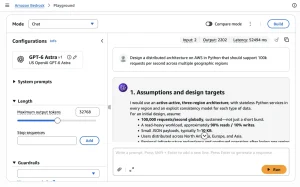










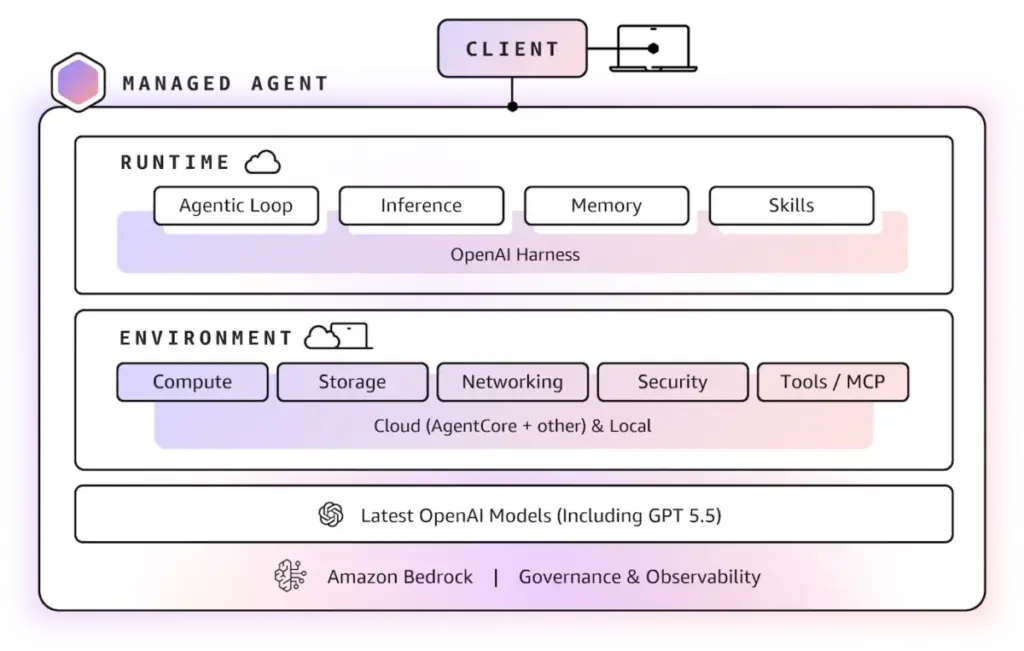
In a significant move to bridge the gap between third-party generative AI innovation and enterprise-grade infrastructure, Amazon Web Services has announced the public preview of Amazon Bedrock Managed Agents powered by OpenAI. This development represents a strategic integration of OpenAI’s sophisticated agentic capabilities within the AWS ecosystem, offering developers and organizations a path to build, deploy, and manage AI agents that operate with the rigorous security, governance, and identity controls native to the cloud provider.
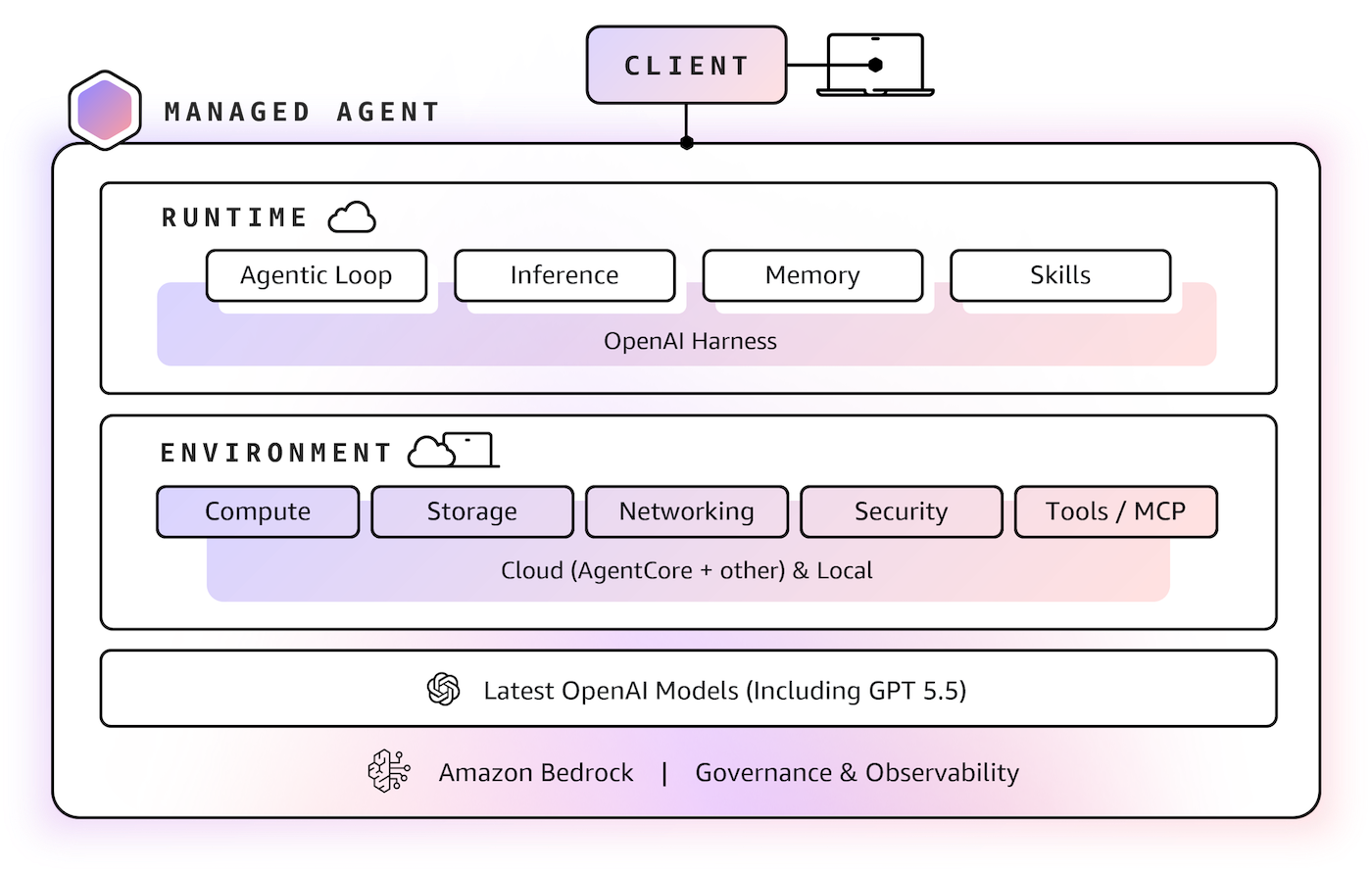
The new offering is built on a customized version of OpenAI’s Agents API, which has been re-engineered to function as an AWS-native service. By bringing these models into the Bedrock environment, AWS is addressing a critical requirement for enterprise customers: the need to leverage cutting-edge AI technologies while maintaining strict control over data privacy, resource access, and operational compliance. This integration allows users to utilize OpenAI’s model intelligence while ensuring that the agents remain fully tethered to their existing AWS account infrastructure, including AWS Identity and Access Management (IAM) roles and centralized logging and monitoring tools.
Flexibility in Execution Environments
A key highlight of the Bedrock Managed Agents launch is the flexibility provided to developers regarding execution environments. AWS has recognized that different workloads require different levels of abstraction and control. To support this, the service offers two distinct deployment paths.
For developers and teams who prefer granular control over their runtime environment, the self-hosted compute option allows for the deployment of agents on existing development machines, container clusters, or custom compute environments. This path is particularly advantageous for organizations that have already invested heavily in specific container orchestration workflows or specialized local hardware and wish to maintain total control over the agent’s execution stack.
Alternatively, for those seeking a more streamlined, hands-off approach, AWS has introduced the Amazon Bedrock AgentCore Runtime. This managed runtime session environment provides a fully integrated experience, handling the heavy lifting of infrastructure management, scaling, and stateful storage. By utilizing AgentCore, developers can offload the complexities of maintaining a persistent, reliable runtime, allowing them to focus exclusively on the logic and capabilities of the agents themselves. The integration with configurable storage options within the AWS account ensures that state management and session history are handled securely and efficiently.
Advancing the Frontier of Generative AI
The introduction of these managed agents comes as part of a broader, ongoing effort by AWS to expand the diversity and capability of models available on Amazon Bedrock. The platform continues to position itself as a central hub for generative AI, providing customers with a curated selection of frontier models that can be accessed through a single, unified API. By continuously adding new models to the platform, AWS is providing organizations with the agility to swap or upgrade their AI backends as newer, more performant models emerge, without needing to overhaul their entire application architecture.
This strategy of model agnosticism is central to the value proposition of Amazon Bedrock. By providing a common interface for different model providers, AWS is shielding developers from the rapid volatility of the AI market. Whether an organization is building a customer service bot, an automated code analysis tool, or a sophisticated data retrieval agent, the Bedrock infrastructure ensures that the underlying model—whether from OpenAI, Anthropic, Meta, or Amazon’s own Titan models—can be swapped out with minimal friction.
Navigating the AWS Product Lifecycle
As AWS continues to innovate at a rapid pace, the company remains focused on maintaining the stability of its customers’ production environments. The evolution of the cloud often necessitates the retirement of older services or the transition to newer, more efficient alternatives. To assist in this process, AWS maintains a structured approach to service lifecycle management, providing clear guidance on product availability and migration support.

Effective as of late September 2026, several updates have been made to the AWS Product Lifecycle documentation. For services entering a maintenance phase, new customer access will be restricted starting October 29, 2026. This period of transition is designed to provide existing users with ample time to plan their migrations or transition to newer service iterations. Furthermore, the company has updated its status for services entering the sunset phase and those that have reached their official end-of-support date.
AWS emphasizes that while these lifecycle changes are a natural part of the platform’s evolution, they understand the potential impact on business operations. The company encourages customers to consult the official service documentation for specific migration paths and to reach out to the AWS Support team for personalized guidance if they are currently utilizing services that are nearing the end of their lifecycle. These resources are designed to ensure that disruptions are minimized and that organizations can continue to benefit from the latest innovations in cloud technology without compromising the reliability of their systems.
Staying Connected with the AWS Ecosystem
The pace of change within the AWS ecosystem is matched by a robust schedule of community-driven events and educational initiatives. As the industry looks toward upcoming milestones, including the annual AWS re:Invent conference and the global series of AWS Community Days, the focus remains on collaboration and knowledge sharing. These events serve as a critical venue for builders, architects, and developers to exchange ideas, showcase solutions, and gain insights into the latest architectural patterns.
For those looking to deepen their engagement, the AWS Builder Center has become a primary resource for connecting with a global community of experts. The center provides access to curated content, best practices, and collaborative spaces that are designed to support developers at every stage of their career—from those just beginning their journey in the cloud to seasoned engineers managing massive, global-scale deployments. By participating in these forums and attending both virtual and in-person events, builders can ensure they stay at the forefront of the technical developments that are shaping the future of the industry.
As we look ahead, the integration of powerful agentic models from companies like OpenAI into the Bedrock platform signals a new chapter in how organizations approach AI development. By combining the agility of modern generative models with the security and reliability of the AWS cloud, the barriers to building high-impact, production-ready AI applications continue to lower. For developers, the goal remains clear: to build, innovate, and deploy at scale, backed by an infrastructure designed to grow alongside the rapidly evolving landscape of artificial intelligence. Weekly updates and technical roundups, such as this, continue to serve as the roadmap for navigating this fast-paced environment.