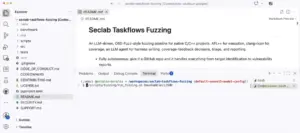










As artificial intelligence continues to reshape the landscape of software security, the GitHub Security Lab has unveiled a significant evolution in how researchers identify and mitigate flaws in complex codebases. The introduction of the GitHub Security Lab Taskflow Agent provides a standardized, open-source framework designed to help security professionals automate, package, and share the AI prompts and workflows that have proven most effective in real-world auditing. By leveraging these AI-driven taskflows, researchers can guide large language models (LLMs) through incremental, specialized steps, uncovering sophisticated vulnerabilities that might otherwise remain hidden within massive Android applications.
The shift toward AI-assisted security research is driven by the increasing ability of modern models to parse and comprehend complex code structures. However, simply asking an AI to "find bugs" is rarely sufficient for high-stakes security work. Instead, the taskflow framework focuses on providing the model with a structured, step-by-step methodology. By breaking down the auditing process into granular tasks, researchers can ensure the LLM maintains focus, understands the specific threat model of the application, and explores code paths with greater depth and creativity. This approach has already yielded substantial results, with the research team reporting over 24 vulnerabilities across various Android applications to date.
Strategic Implementation of Audit Taskflows
To effectively audit Android applications, the research team found that generic security prompts were insufficient due to the unique architectural nature of mobile software. Android apps rely heavily on specific entry points, such as exported activities, intents, and broadcast receivers, which act as the primary surface area for potential attacks. To address this, the team developed a specialized taskflow known as gather_mobile_entry_point_info.yaml. This tool systematically distinguishes between mobile-specific entry points and general code components, allowing the AI to maintain a clear understanding of the application’s unique attack surface, even when analyzing repositories that contain a mix of mobile, web, and desktop components.

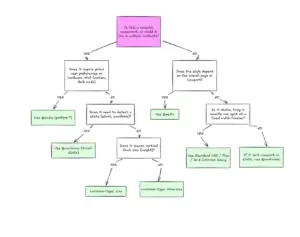
Following the initial gathering of entry points, the team refined the classify_application_local.yaml taskflow. This component is designed to guide the LLM through a list of popular, high-risk vulnerability classes relevant to the mobile ecosystem. Given the non-deterministic nature of LLMs, providing a structured checklist ensures that the model consistently evaluates critical issues like confused deputy scenarios or insecure broadcast handling. By forcing the model to verify these connections between components, the taskflow helps the LLM maintain a comprehensive view of the application’s security posture. This dual-prompt strategy—combining strict, systematic checks with broad, creative analysis—allows researchers to benefit from both the reliability of automated scanning and the nuanced insight of advanced generative AI.

Real-World Impact: Lessons from Recent Disclosures
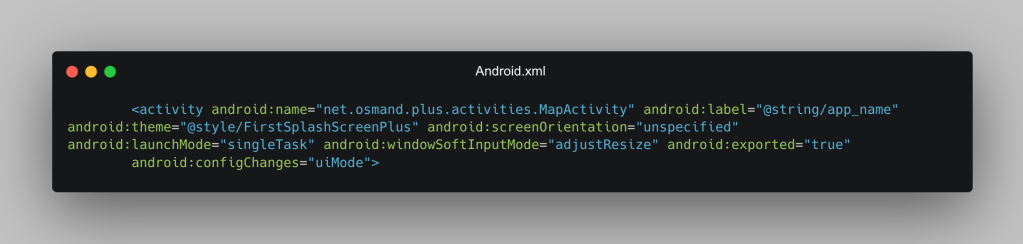
The efficacy of these AI-driven taskflows is best illustrated through the discovery of high-impact vulnerabilities in widely used mobile applications. One notable case involved OsmAnd, a popular navigation application with over 10 million downloads. The audit revealed a critical vulnerability that enabled malicious third-party applications to track a user’s physical location. The issue stemmed from an exported activity, MapActivity, which improperly handled intent extras. While the app expected these inputs to originate from a secure, internal channel, the design flaw allowed any external application to inject arbitrary data into these extras.
By exploiting this vulnerability, an attacker could manipulate the application’s settings, specifically overwriting the URL templates used to fetch map tiles. By redirecting these requests to an attacker-controlled server, the malicious actor could effectively log the x and y coordinates of every tile the user loaded, granting them a precise view of the user’s location in real-time. Furthermore, because the attacker could manipulate route settings, they were able to obtain the origin and destination points for every journey taken by the user, all without the victim noticing any anomalous behavior.
In a separate instance, the research team identified a critical account takeover vulnerability within the Wikipedia Android application. The app utilized a custom URL scheme, wikipedia://, to navigate users to specific articles. However, a logic error within the application’s hostname parser allowed an attacker to bypass intended security checks and load non-Wikipedia URLs. When combined with a secondary issue related to how the app handled cookies, an attacker could trick a user into visiting a malicious site while believing they were still within the official Wikipedia environment. By chaining these two vulnerabilities together, an attacker could effectively leak session cookies and gain unauthorized access to user accounts, demonstrating the power of AI to uncover complex, multi-stage logic flaws.
Navigating the Limitations of AI in Security
Despite these successes, the research team emphasizes that AI remains a tool for augmentation rather than a total replacement for human expertise. One of the most persistent challenges is the AI’s difficulty in accurately assessing the severity of a discovered issue. LLMs frequently flag "vulnerabilities" that, while technically present, require highly specific or nearly impossible real-world conditions to exploit. Additionally, models often struggle to account for the complex mitigating factors inherent in mobile development, such as internal storage overriding external data, which can render a theoretical exploit harmless.
Because of these limitations, every finding generated by the taskflow agent requires careful review by a security researcher familiar with the intricacies of mobile applications. The current standard for verifying these findings involves "proving" the vulnerability—a process that requires the LLM to write and potentially execute a proof of concept. While this is an effective way to filter out false positives, it places a heavy demand on computational resources and model time. As the field matures, the team anticipates that providing LLMs with direct access to debuggers and runtime environments will be the next logical step in reducing false positives and improving the accuracy of automated security assessments.
The Future of AI-Assisted Research
The research team’s experience highlights a fascinating development in security tooling: the deep, intuitive knowledge LLMs possess regarding API behaviors and common coding pitfalls. The models demonstrated a surprising ability to identify unsafe patterns—such as the misuse of specific file path cleaning functions—even without direct access to the underlying language source code. This capability suggests that LLMs have successfully internalized vast amounts of security data and historical exploit patterns, making them exceptionally well-suited for identifying standard, high-impact bugs.
As the GitHub Security Lab continues to refine these tools, the focus remains on empowering the broader open-source community. By making the seclab-taskflow-agent open source, the team encourages maintainers and researchers to contribute their own unique prompts and mechanisms for finding vulnerabilities. Whether applied to mobile, web, or desktop applications, AI-powered security research represents a paradigm shift in how vulnerabilities are discovered and disclosed. With the potential to automate the identification of critical flaws, this technology offers a vital defense in an era where software complexity is rapidly outpacing traditional manual audit capabilities. For developers and maintainers, integrating these AI-driven taskflows is a proactive step toward building a more secure and resilient software ecosystem.