









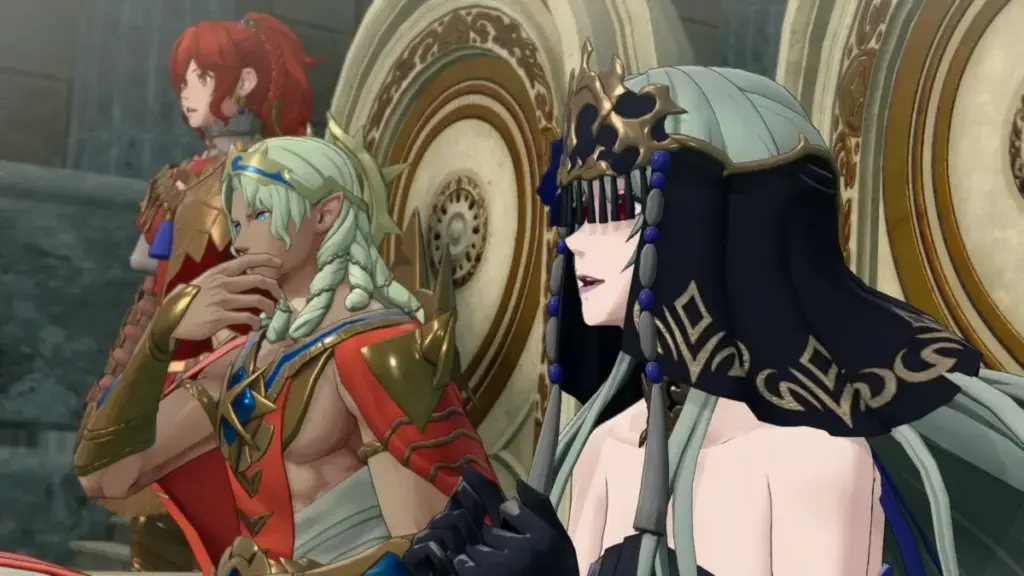
When one thinks of Nintendo’s flagship strategy franchise, Fire Emblem, the immediate associations are usually tactical grid-based combat, complex weapon triangles, and the high-fantasy drama of warring kingdoms. Adroit, searing political commentary is rarely the first thing that comes to mind. Historically, developer Intelligent Systems has kept the series’ thematic focus on the costs of war and the bonds of camaraderie, with political messaging often relegated to surface-level warnings, such as the classic trope of "don’t trust the maniacal king with absolute power."
While that particular cautionary tale remains an eternal truth in storytelling, the latest entry in the franchise, Fire Emblem: Fortune’s Weave—released September 17 for the Switch 2—takes a significantly more mature and provocative stance. The game serves as a somber, extended commentary on the mechanics of nationalism, the insidious nature of historical revisionism, and the devastating consequences of refusing to confront the atrocities of the past.
The Myth of Divine Manifest Destiny
The central narrative of Fortune’s Weave revolves around the history of the Dagda Empire. Its story is a familiar one to students of history: centuries of aggressive expansion and conquest, fueled by a fervent, state-sponsored belief in the divinity of the empire’s mission. When a nation’s ruler claims to be a god, or the direct offspring of the world’s ultimate deity, it becomes remarkably easy to consolidate power and manufacture public consent.

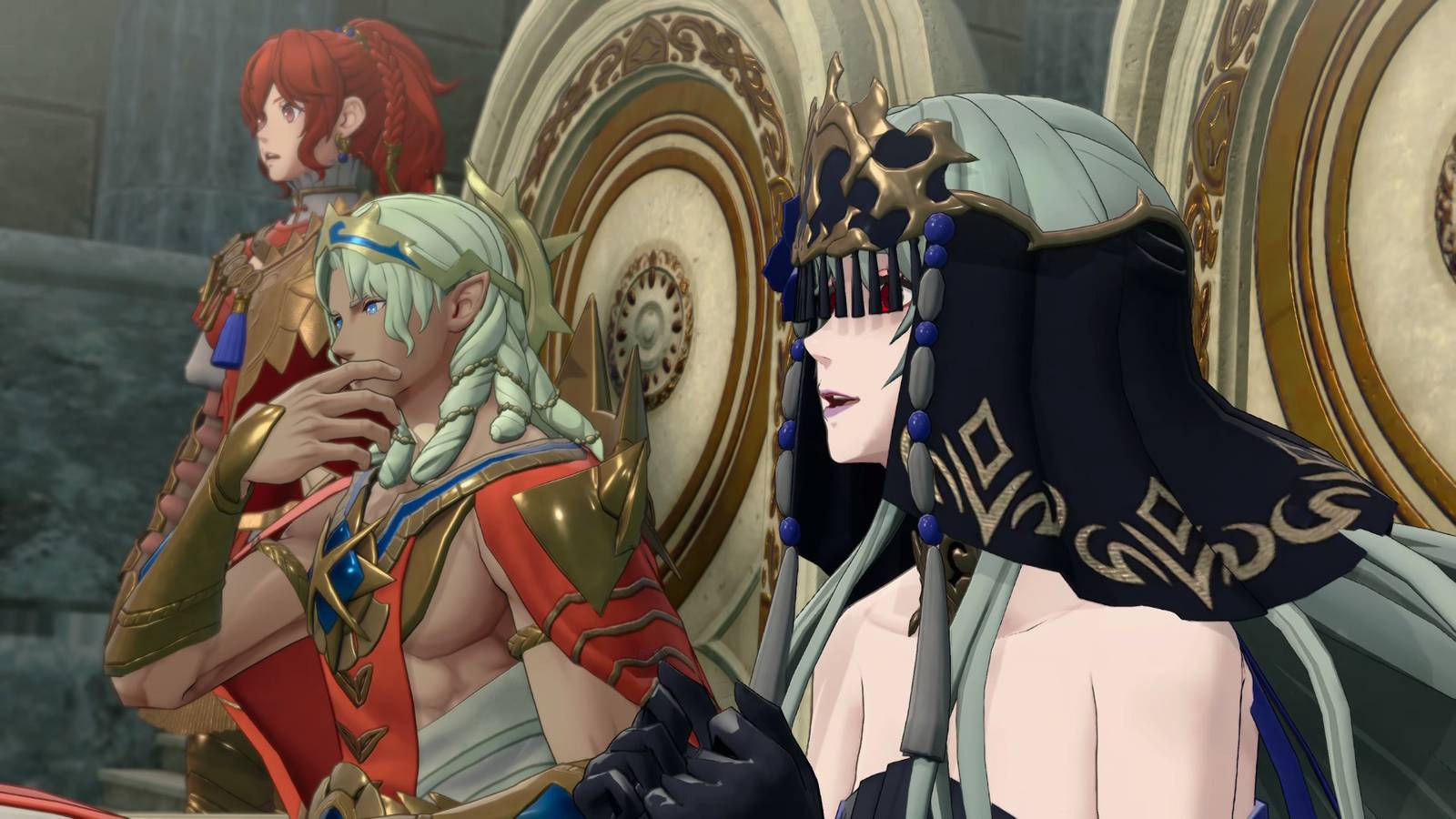
In the second act of the game, Dagda justifies his latest campaign of conquest by reminding his inner circle—or at least the few he hasn’t purged—that Sothis, his mother and the progenitor god, explicitly tasked him with bringing the entire continent under his singular control. This narrative device mirrors the concept of the "Mandate of Heaven" found in ancient Chinese history, where an emperor’s right to rule was contingent on divine favor. However, as players progress through the game’s first act, participating in the "Heroic Games" that celebrate the empire’s past, it becomes increasingly clear that the game is drawing a direct line to the 19th-century doctrine of Manifest Destiny.
In the lore of Fortune’s Weave, this divine justification was used to rationalize the systemic subjugation of smaller nations and the deliberate erasure of their cultural identities. The empire’s history is a centuries-long ledger of conquest, where local leaders were replaced by the emperor’s kin, and the populace was slowly indoctrinated into believing they were inherently "Dagdan." Over time, these subjugated peoples were conditioned to revere the very empire that stripped them of their heritage, believing that their devotion to the state and its gods was synonymous with their own prosperity.
The Erasure of Atrocity
As the narrative unfolds, the game peels back the veneer of this "glorious" history. We learn that the People of the White Egg, a marginalized group that posed no genuine military threat to the empire, were subjected to a state-sanctioned genocide. Dagda executed 100,000 of them, hunted their survivors into hiding, and confined the remainder to the most barren, desolate reaches of the continent.

The parallels here are striking and deliberate. The game forces the player to grapple with how governments—both in fiction and reality—treat indigenous populations. The echoes of the Japanese treatment of the Ainu, the historical relationship between the Chinese state and the Mongols, and the modern complexities of the Israeli-Palestinian conflict are all present in the subtext of the game’s world-building.
Perhaps most unsettling is the way the game depicts the popular memory of these events. Within the borders of the Dagda Empire, these massacres are not remembered as horrors; they are repackaged as romanticized fairytales and celebrated as markers of imperial strength. The official, state-sanctioned version of history is one of pride and unity. In Leda’s route, when the character Anatolia joins as a guest, Sha Lan expresses profound sadness upon realizing that the "glorious" history she was taught is a whitewashed lie. This ignorance is not merely a background detail; it is the engine that drives the empire’s inevitable undoing.
The Politics of Status Quo
The character of Solel, Dagda’s son, serves as the archetypal politician desperate to maintain a crumbling status quo. After assuming the role of Divine Sovereign, Solel does not move to rectify his father’s past crimes. Instead, he perpetuates the lies, allowing the systematic denigration of his deceased wife, Yu Phas—who was murdered by Dagda for attempting to rescue the children of Damascar—to continue unchecked.

Solel’s governance is a masterclass in political pragmatism devoid of morality. He grants land to the survivors of the Damascar incident not out of a desire for justice, but as a calculated, cynical move to create a "buffer state" between the empire and its hostile southern neighbors. He allows the Order of Mithras, a shadowy, cult-like organization founded by his father, to operate with impunity, facilitating the very madness that would eventually consume the state.
This behavior reflects a cynical reality: those at the top of the social and economic hierarchy are often insulated from the suffering of the masses. To Solel, the Cydonian massacre is merely a political inconvenience, and the deaths of thousands have no bearing on his daily life. Why look into the truth when doing so would only "upset things"? It is a haunting critique of how modern elites often view the state of the world—so long as the economy serves their interests, the reality of systemic violence is treated as an optional perspective.
The Heroic Games and the Mirror to Reality
The "Heroic Games" themselves are the ultimate manifestation of this moral rot. The game presents them as a spectacle—a Squid Game-esque contest where desperate people are forced to fight for the amusement of the elite, under the guise of "national glory." The fact that the rulers promise the winners rewards they could easily have provided at any time highlights the cruelty of the system. The citizenry, fueled by the state’s propaganda and their own misguided nostalgia for a "golden age" that never truly existed, views these games as a virtuous pursuit.

Playing Fire Emblem: Fortune’s Weave in 2026, it is impossible to ignore the real-world parallels. The narrative of a leader whose legacy was defined by failure and atrocity, yet who is welcomed back to power by a populace clinging to warped, nostalgic stories, reflects the current political climate in several major nations. Whether it is the rise of right-wing nationalist movements in Japan or the significant gains made by the AfD in Germany, the recurring theme is a shared fear of "the other" and a deliberate determination to ignore the darker truths of the past.
The game concludes with a sense of inevitability. The characters’ good intentions—or, more accurately, their cowardly silence—lead to catastrophe. When Dagda returns, he is exactly the monster history warned about. The "slumber" he had been in did nothing to soften his tyranny; it only allowed the rot to fester.
As the story reaches its climax, fans have begun speculating about the true identity of the character Eshmel. The prevailing theory is that Eshmel is a reincarnation of Solel, seeking the redemption he never achieved in life. Whether or not this is confirmed, the message of Fortune’s Weave is clear: history is not just a collection of stories we tell to feel good about ourselves. It is a weight that, if ignored, will eventually drag the present down with it. In a year defined by political tension, Intelligent Systems has delivered a game that is not only a compelling strategy experience but a stark, unflinching mirror of our own era.