










The rapid evolution of artificial intelligence has brought more than just new capabilities to the software engineering landscape; it has introduced a deluge of new terminology. For developers, keeping pace with this shifting linguistic terrain can feel overwhelming, as industry discourse is flooded with terms that range from legitimate architectural patterns to rebranded concepts and evolving definitions. As the tools themselves become more sophisticated, the language used to describe their integration into professional workflows has become increasingly specialized.
In a recent episode of the GitHub Podcast, hosts Marlene Mhangami, GPS, and Cassidy Williams sat down to deconstruct the jargon currently dominating developer conversations. The discussion aimed to cut through the noise, exploring essential concepts such as loop engineering, Ralph loops, squads, harness engineering, hill climbing, forward-deployed engineering, and the critical distinctions between closed, open-weight, and open-source models. By clarifying these terms, the industry hopes to move beyond buzzwords and focus on the practical, repeatable, and scalable engineering patterns that actually move the needle in production environments.
Moving Beyond One-Shot Prompts with Loop Engineering
One of the most significant shifts in AI development is the move away from the "one-shot" interaction model. Traditionally, users would prompt an AI to perform a task, receive an output, and consider the interaction complete. However, modern production-grade AI systems rely on "loop engineering"—the practice of designing repeatable, automated systems around agents. Instead of manually invoking an AI for every individual task, engineers are building cyclical processes that function autonomously.
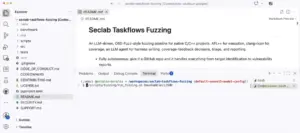
A practical way to conceptualize loop engineering is to view it as an AI-native version of the classic "cron job." For example, rather than a developer manually checking for new issues in a repository every morning, summarizing them, and drafting potential fixes, they can deploy an agentic loop. This system runs on a defined schedule, fetches new data, passes it through the AI for processing, validates the output, and automatically escalates or flags tasks that encounter errors. By moving to a loop-based architecture, developers shift from being manual prompters to being system architects who define the boundaries and success criteria of automated workflows.
The Rise of Ralph Loops and Iterative Agentic Cycles
Within the broader category of loop engineering, a specific implementation has gained traction under the informal, yet descriptive, label of "Ralph loops." A Ralph loop is essentially a brute-force approach to agentic execution. In this pattern, an agent is provided with a comprehensive task—often derived from a product requirements document or a technical specification—and is instructed to work continuously until the objective is met.
While Ralph loops can be highly effective for complex, multi-step tasks that require breaking down objectives into "plan-act-check" cycles, they come with significant trade-offs. The primary concern is cost and efficiency; because these loops operate through repeated iterations, they consume substantial token counts, context window space, and computational power. A poorly managed Ralph loop can lead to an infinite cycle of "try again" prompts, which is neither efficient nor sustainable. Consequently, the industry is refining these loops by adding primitives such as observability, validation layers, routing, and checkpoints. This transition from "brute-force" to "structured" loops is a critical step in maturing agentic workflows, ensuring that AI systems are not just capable of working until a job is done, but are also cost-effective and reliable.
Squads, Fleets, and the Future of Multi-Agent Workflows
As workflows become more complex, the industry has turned toward the concept of "squads" and "fleets" to describe how multiple agents collaborate. This is a departure from the "single-agent-does-it-all" paradigm. A squad, in this context, is a group of specialized agents, each assigned a specific role that mimics a real-world software engineering team. One agent might be dedicated to planning, another to auditing or vetting that plan, a third to implementing code, and a fourth to testing or reviewing the results.
Parallel to this is the concept of a "fleet," which refers to the deployment of multiple agents working on tasks simultaneously. Whether a squad operates within a fleet in a parallel or sequential fashion, the core objective is the same: to achieve parallelization and deep specialization. By breaking down the software development lifecycle into distinct segments handled by different agents, organizations can fine-tune the capabilities of each agent for its specific role. This modular approach not only increases efficiency but also makes it easier to audit and troubleshoot specific parts of the development process.
Harness Engineering: Building the Infrastructure Around the Model
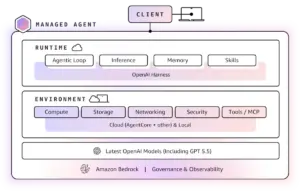
A critical distinction in modern AI development is the separation between the model itself and the system that contains it. This is where the concept of "harnesses" comes into play. A harness represents the entire infrastructure surrounding a model, including tools, permissions, memory, context, and orchestration logic, all of which guide the model’s behavior and make it useful within a professional workflow.

The term is derived from the equipment used to guide horses; just as a harness allows a horse to pull a load safely and effectively, an AI harness directs the power of a foundational model toward productive tasks. GitHub Copilot is a prime example of a robust harness. It does not just provide a model; it connects that model to the user’s codebase, the IDE, the terminal, and the pull request environment, providing the necessary context to make the AI’s output relevant and actionable. "Harness engineering," therefore, is the discipline of designing, maintaining, and improving these surrounding systems, which is arguably as important as the underlying model itself.
Hill Climbing and the Pursuit of Continuous Improvement
To measure the success of these systems, developers are increasingly adopting the term "hill climbing." Borrowed from mathematical optimization, hill climbing in an AI context refers to the iterative process of improving agents and harnesses based on feedback. This involves setting up evaluations—or "evals"—to measure whether an agent is producing the desired quality of output and then incrementally adjusting the harness or the system prompts until performance improves.
For instance, if an agent is tasked with reviewing pull requests, hill climbing involves rigorously assessing whether the agent successfully identifies meaningful bugs or provides useful architectural recommendations. If the agent fails to do so, the engineer adjusts the tooling, the context provided to the model, or the validation layer to nudge the agent toward a better outcome. It is a process of constant, incremental refinement, mirroring traditional software quality assurance practices.
The Evolving Role of the Forward-Deployed Engineer
The rise of AI has also necessitated a shift in human roles, most notably the "forward-deployed engineer." While this job title existed prior to the current AI boom, its current iteration is deeply focused on the deployment of AI agents and workflows. These professionals act as the bridge between cutting-edge technology and real-world application. They are typically customer-facing or solutions-oriented, working closely with organizations to integrate AI agents and specialized tooling into existing legacy systems. Their value lies in their ability to translate high-level AI capabilities into practical, integrated solutions that solve specific business problems.
Navigating the Landscape of Open and Closed Models
Finally, the podcast discussion addressed the terminology surrounding model accessibility. The industry is currently divided into three distinct categories: closed models, open-weight models, and open-source models.
Closed models are accessible only through APIs or proprietary platforms. While powerful, developers have no visibility into the underlying weights, training datasets, or the specifics of the training process. This is the model typical of many large, commercial "frontier" models.
Open-weight models, by contrast, allow developers to download and run the models on their own infrastructure, providing access to the "dials" (the weights) that dictate how the model processes inputs. However, this does not necessarily mean the training data or methodology is open.
True open-source models take this a step further, providing the code, the data, and the training processes for full inspection and modification. The degree of openness is becoming a key factor for organizations that prioritize auditability, customization, and trust.
As the industry continues to mature, these terms will inevitably evolve. Some will become standard, while others may fade away, replaced by more precise language. For developers, the goal is not to master every buzzword, but to understand the core engineering practices—reliability, validation, observability, and system design—that define the next era of software development. As these practices solidify, the focus will remain on building systems that are not just impressive in their output, but dependable and efficient in their execution.