









Apple made a significant splash early this October with its massive smart home announcement, introducing new Siri AI features, the company’s first smart display called HomeView, and the long-awaited smart speaker, the HomePod Mini 2. The tech giant’s entrance into the smart display market immediately shifted industry conversations, putting pressure on established competitors to respond.
Now, Amazon has entered the fray with its comprehensive new Echo lineup, sparking widespread comparisons between its smart speakers and displays and what Apple currently has to offer. What makes this hardware cycle particularly interesting is that Amazon is taking a completely different philosophical and design path with its new home devices—especially the latest Echo Show, which is currently available for preorder. This divergence highlights a stark contrast in strategy between two of the world’s largest technology companies and carries significant implications for potential buyers heading into the holiday shopping season.
Amazon’s Echo Show 16 Is Everything the HomeView Is Not
Apple’s first smart display relies heavily on Siri AI and integrated audio features as its primary selling points, adopting a compact design somewhat reminiscent of the Echo Show 11. During Apple’s hardware event, industry analysts noted that this design choice created a notable functional dissonance. Specifically, the 7-inch screen is simply too small to easily watch the latest Apple TV shows or enjoy other immersive video content, even if the built-in audio hardware happens to be exceptional. That fundamental limitation is precisely why companies like Amazon have steadily moved toward larger form factors, pushing Echo Show devices to scale up in size over successive generations.


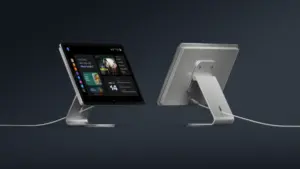
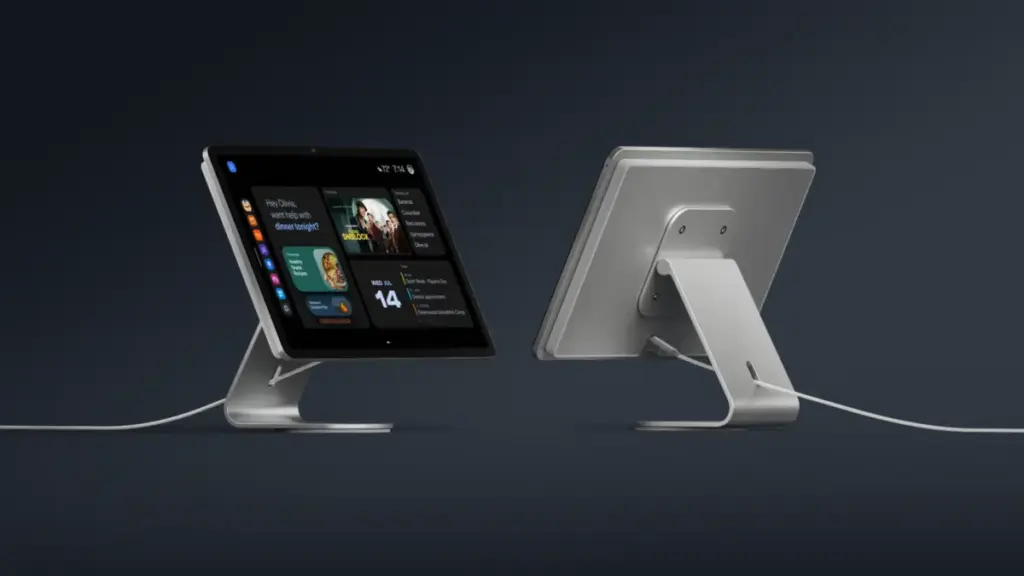
With the introduction of the Echo Show 16, Amazon is embracing the concept of a secondary television device for the kitchen, bedroom, or hallway more fully than ever before. This new iteration of the Show ditches the traditional, bulky speaker housing in favor of an array of small woofers and tweeters. Furthermore, it incorporates a physical stand design that appears pointedly reminiscent of Apple’s iconic Mac computers, introducing an interesting visual crossover in the competitive landscape.
While long-term testing will reveal the true acoustic capabilities of the hardware, it appears that Amazon is deliberately moving away from 360-degree, room-filling sound. Instead, the company is opting for an audio profile that behaves more like a traditional television, while still retaining the touchscreen interface, high-definition camera, and microphone arrays found in previous smart display models. For consumers who prefer a cleaner aesthetic or lack counter space, the device also fully supports traditional wall mounting.
Backing up its expanded size and visual design, the Echo Show 16 features a built-in Fire TV platform. This capability was previously restricted to larger, wall-mount-only Echo Show variants. Integrating Fire TV not only simplifies access to Amazon Prime video content but also ensures robust support for third-party streaming applications and more complex media navigation controls.

Consumers who are heavily invested in catching up on television programs, movies, or live sports can also opt for an upgraded hardware configuration featuring an enhanced Nanomatte display. This specialized screen coating is engineered specifically to reduce ambient glare and significantly improve color accuracy under varying indoor lighting conditions. While Apple has remained somewhat guarded about which third-party applications will be officially supported alongside its native Apple TV app, Amazon has confirmed that the Echo Show will support major streaming services including Netflix, Disney Plus, YouTube, HBO Max, Peacock, Tubi, and Pluto. This extensive compatibility offers immediate reassurance to dedicated streaming media fans.
Naturally, the primary drawback to this advanced technology is the cost—a reality that fans of the Apple HomeView will find entirely familiar. While the smaller-screened HomeView starts at $299, Amazon’s Echo Show 16 starts at a much higher $499.99, and opting for the upgraded Nanomatte display pushes the price tag to $569.99. Additionally, buyers will need to factor in the cost of a compatible stand, which starts at $69.99 and can scale up to $150 depending on the model chosen, demonstrating how auxiliary hardware costs can quickly escalate.
This elevated pricing structure represents a tough sell for households that already own functional smart displays or those leaning toward Apple’s ecosystem. However, consumers who are specifically searching for a secondary television screen for a shared living space may find the investment easier to justify. Industry reviewers have emphasized the need for comprehensive, side-by-side testing before making a definitive recommendation between the two ecosystems.

Amazon Adds an Echo Camera to Compete With the HomePod Mini 2
The Echo Show 16 was far from the only hardware announcement aimed squarely at countering Apple’s latest product releases. Amazon also announced a new Echo Studio model, starting at $249.99, positioned as a direct competitor to Apple’s HomePod Mini 2. However, Amazon’s offering introduces one major hardware differentiator: the inclusion of a built-in, nearly invisible home security camera.
Amazon explains that the integrated camera is designed to gather visual intelligence for Alexa, a capability that immediately triggers privacy discussions among security advocates. Despite potential privacy concerns, the camera allows the voice assistant to answer contextual questions about activity within a room when users are away from home, effectively serving as a mini security camera similar to dedicated standalone hardware.
While opinions remain divided on whether a camera integrated into a smart speaker is a necessary or desirable addition, the hardware feature successfully distinguishes the Echo Studio from the $149 HomePod Mini 2. For casual consumers browsing retail shelves, this clear hardware distinction prevents the two smart speakers from appearing entirely interchangeable.

In addition to the flagship Studio, Amazon announced a camera-free Echo Dot priced more affordably at $99.99. This model has been upgraded with a custom-designed AZ3 silicon chip built specifically to deliver faster, more responsive interactions with Alexa, alongside a dedicated children’s version featuring similar internal hardware.
While Apple demonstrated how the rumored iPhone Duo could double as an impromptu bedside alarm clock, Amazon countered with a dedicated smart clock. The newly announced Echo Time is a round, dial-like smart display tailored specifically for nightstand use, operating in tandem with advanced software capabilities. It includes unique smart alarm features engineered to assist users in waking up gradually through a combination of tailored lighting and audio cues. Continuing Amazon’s trend of premium pricing for specialized hardware, the Echo Time launches at a relatively high price point of $199.99.
Alexa Plus is Ready to Duel with Siri AI
Any discussion of modern smart home ecosystems must address the underlying software intelligence driving these devices, particularly as Alexa Plus goes head-to-head with Apple’s newly revamped Siri AI. Both platforms introduce substantial new capabilities to their respective smart displays. Siri AI incorporates expanded smart home automation functions and a streamlined interface designed to surface relevant information pulled directly from emails, text messages, and other native iPhone sources.

Meanwhile, Alexa Plus features a redesigned interface on the Echo Show 16. This update retires the traditional text transcription visual display in favor of an interactive layout that dynamically populates with relevant graphics, videos, and calendar events as the user converses with the assistant. Each distinct conversation session is organized into its own visual card icon, allowing users to easily revisit and resume past interactions whenever needed. Furthermore, Alexa introduces a new Home Map mode, functioning as an interactive digital blueprint of all connected smart devices and enabling granular control over lighting and appliances on a room-by-room basis.
While initial impressions suggest that Alexa Plus offers a robust conversational experience—albeit with a tendency toward verbosity—costs remain a significant consideration for consumers. Apple has indicated that the most advanced Siri AI features will require an active iCloud Plus subscription, though specific pricing and packaging details remain sparse. Conversely, Alexa Plus is included at no additional cost for existing Amazon Prime subscribers, but unbundled access requires a standalone subscription fee of $20 per month for users seeking full feature parity.
Ultimately, Apple is proceeding with caution in its initial foray into the smart display market, though the compact screen size presents a distinct compromise for media consumption. Amazon, by contrast, is betting heavily that consumers are willing to invest significantly more money in a device that effectively functions as a secondary television screen for non-traditional living spaces. As both technology giants roll out competing AI voice assistants loaded with novel features, the upcoming holiday shopping season will reveal whether consumers prefer Apple’s tightly integrated ecosystem approach or Amazon’s hardware-diverse, television-centric vision.