









The typical user journey into local artificial intelligence often begins with a late-night descent into online roundups and benchmark leaderboards. After settling on whatever name consistently dominates the top of the rankings, the user downloads the model, points it toward a concrete weekly task—such as debugging a complex Python script—and waits for results. Too often, the outcome is mediocre. The model is not necessarily broken or poorly engineered; rather, it feels underwhelming in the precise way a general-purpose tool tends to falter at a specialized trade. The model was never optimized for coding in the first place, and nothing in the promotional roundups highlighted that limitation.
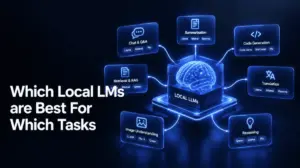
This recurring mismatch highlights a fundamental truth about modern open-weight artificial intelligence: "best" has never been a single, monolithic ranking. Treating it as one is the primary reason capable models frequently feel disappointing through no fault of their own. Understanding how to navigate local language models requires moving past aggregate scores and examining what these models actually are, why running them locally matters, and how specific architectures perform across distinct operational workloads.
At its core, a language model is a predictive text system. Given an existing sequence of text in a conversation or document, it calculates the most plausible subsequent tokens. When applied at a massive scale, this simple predictive mechanism enables systems to answer questions, write code, summarize extensive documents, or sustain fluent multi-turn conversations. Prominent proprietary chat platforms, including ChatGPT, Claude, and Gemini, are all built upon variations of this foundational architecture.
The designation "local," however, refers strictly to deployment and access rather than the underlying technology. A local language model is one where the user downloads the actual model weights—the massive file of learned parameters comprising the trained system—and executes it entirely on local hardware. Under this arrangement, no application programming interface calls leave the machine, no user accounts are required, and no external corporate server ever processes the prompt. This creates a fundamentally different relationship with the technology compared to hosted cloud alternatives, where users query remote infrastructure they can neither possess nor inspect.
The methodology behind open-weight distribution has matured significantly, largely driven by standardized tooling. Platforms like Ollama have emerged as de facto standards for local deployment, hosting public libraries of ready-to-pull GGUF builds for a vast array of models, with download figures for popular open architectures regularly climbing into the tens of millions.
Yet, relying on a single aggregate benchmark score or raw parameter count provides surprisingly little insight into how a model will perform on a specific operational task. A model can score exceptionally well on general academic knowledge while producing subpar code. Conversely, a small, highly efficient architecture can lead its weight class in tool-calling capabilities while lagging significantly in creative writing. Understanding what industry benchmarks actually measure is critical, as these metrics are rarely interchangeable.
Standard evaluations like Massive Multitask Language Understanding test broad factual knowledge across dozens of academic domains, serving as a reasonable proxy for how much information a model has absorbed. HumanEval, by contrast, specifically evaluates whether a model can generate correct, functional code for designated programming challenges, offering a direct measurement of coding competence rather than general intelligence. Meanwhile, MT-Bench assesses how effectively a model follows complex instructions and maintains a coherent multi-turn dialogue, capturing the qualitative experience of conversation. Recognizing these distinctions prevents the common pitfall of assuming a model that dominates one metric will perform similarly across others.
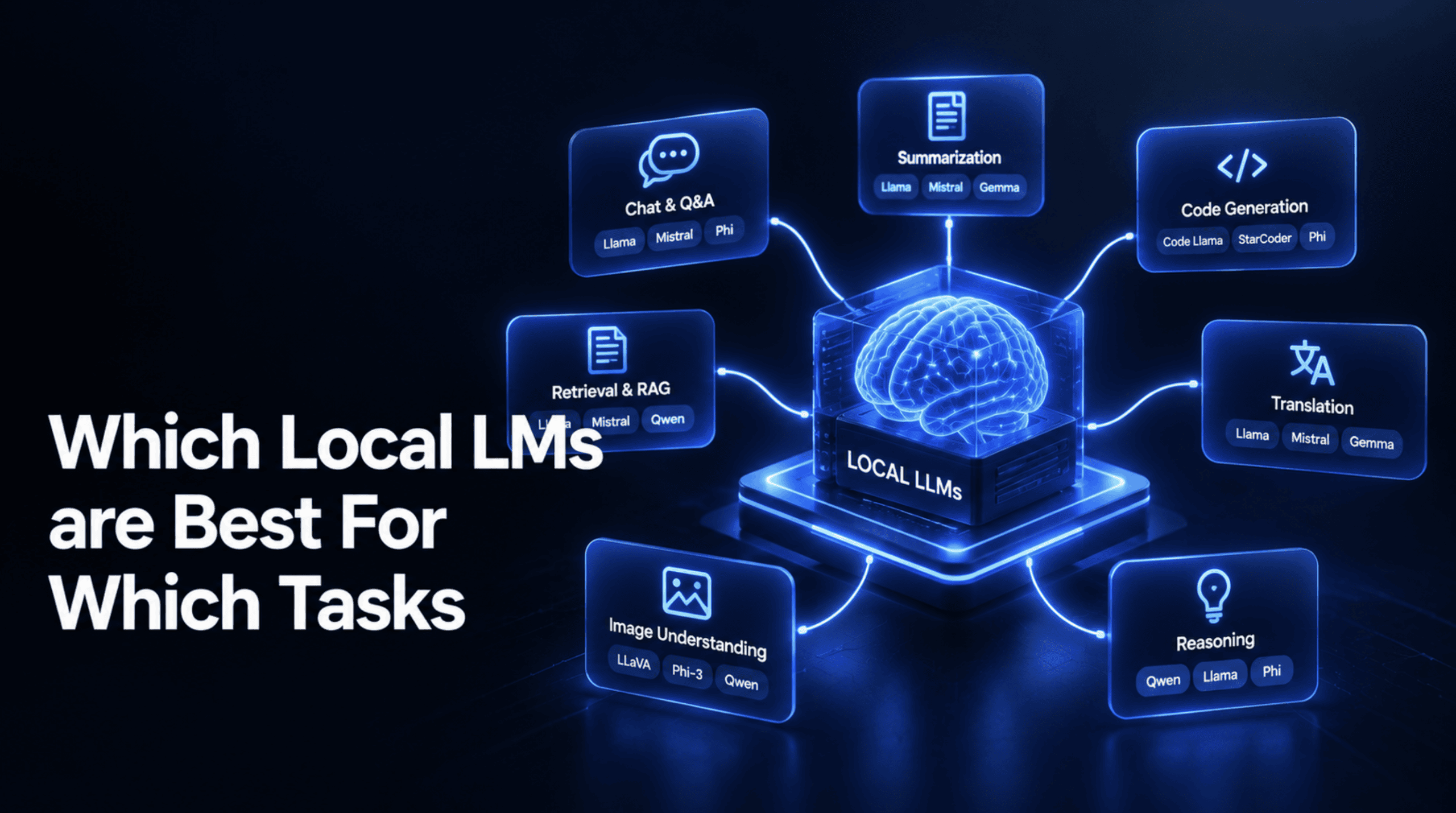
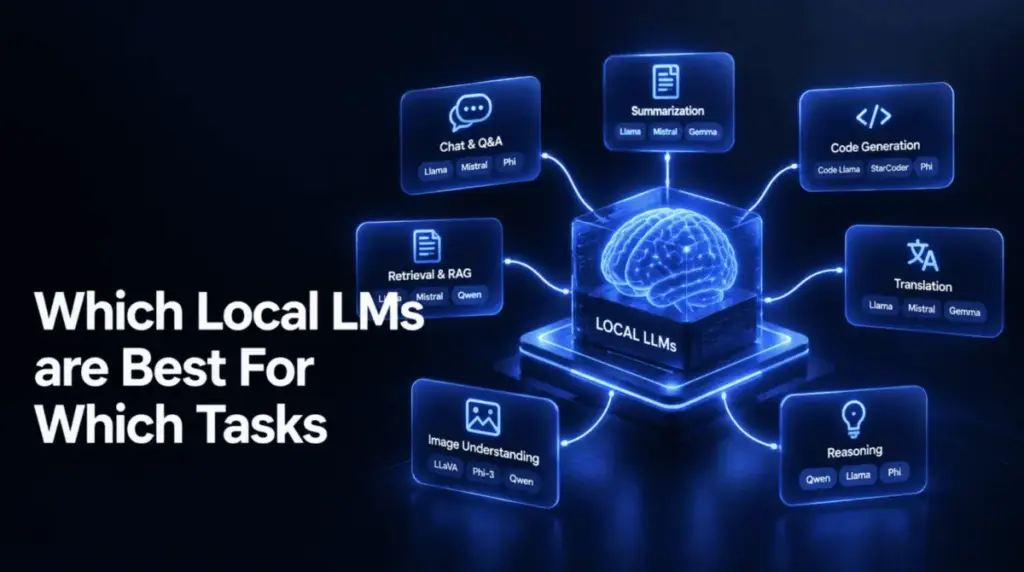
Evaluating the current landscape of open-weight models reveals a diverse roster of specialized systems, ranging from ultra-compact reasoning engines to multimodal powerhouses and essential embedding models.
Microsoft’s Phi-4-mini addresses the challenge of maximizing capability within a constrained physical footprint. According to the official technical report, the model achieves strong scores on MMLU and BigBench-Hard, representing highly competitive performance for a system roughly a fifth the size of many twenty-billion-parameter competitors. Independent evaluations examining reasoning consistency across foundation models have noted that Phi-4-mini excels specifically in step-by-step reasoning accuracy, indicating that its logical pathways remain stable even at a smaller scale.
Google DeepMind’s Gemma generation, exemplified by the E2B and E4B variants, represents the smaller tiers of an open-weight family designed for native multimodality. These models are engineered to process text, images, and, in these specific compact variants, audio input natively. They incorporate built-in function-calling support trained directly into the model weights rather than implemented via prompt engineering, while maintaining extensive context windows even on edge devices.
In the mid-tier domain, Qwen2.5-7B-Instruct delivers robust general knowledge and programming metrics, while its dedicated sibling, Qwen2.5-Coder-7B-Instruct, pushes coding performance higher on independent HumanEval evaluations. Building upon this foundation, newer iterations like Qwen3.5-9B introduce native multimodality from the ground up, expansive context windows, and Mixture-of-Experts architectures utilizing Gated Delta Networks for efficient inference relative to parameter count, all under commercially permissive licensing.
Established options like Mistral 7B continue to serve as foundational bases for fine-tuning due to their reliable instruction-following and clean structural output, which require minimal prompt engineering. Similarly, Meta’s Llama 3.1 8B remains a primary reference point within its size class, buoyed by one of the most extensive community fine-tuning ecosystems in the open-weight landscape.
Alongside these generative chat models, specialized utility systems play a vital role in local architectures, particularly in retrieval-augmented generation pipelines. Models such as nomic-embed-text operate with a compact parameter footprint and an extensive native context window, serving as the foundational embedding layer for local document retrieval with widespread community adoption.
Ultimately, extracting value from local artificial intelligence depends less on identifying a single universal champion and more on aligning system capabilities with immediate operational requirements. Whether the objective is executing step-by-step reasoning on restricted hardware, managing multimodal edge inputs, generating clean code, or powering a retrieval pipeline, matching the model to the task eliminates the performance mismatches that often accompany generalized deployments.