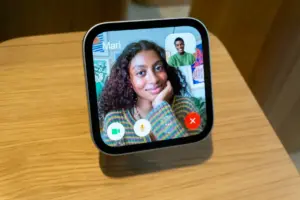
Apple’s “Welcome Home” event marked a significant and long-awaited strategic shift for the tech giant, proving that the introduction of the new HomeView smart display was merely the opening salvo in a much broader initiative. For years, Apple has taken a cautious, measured approach to the smart home category. Aside from occasional minor hardware collaborations—such as the LG Circle security camera—the company largely dipped its toes into the water rather than diving in headfirst, leaving many early smart home ventures to quietly fizzle out. Now, that era of hesitation is officially over, and the Cupertino company’s aggressive expansion is poised to reshape the competitive landscape for smart home ecosystems across the industry.
This first-of-its-kind Apple lineup introduces a deeply integrated partnership with LG Electronics to manufacture a comprehensive suite of smart security cameras, alongside a uniquely designed smart lock developed in collaboration with industry leader Schneider Electric. Featuring Apple’s signature minimalist aesthetic, intuitive setup procedures, and a strong emphasis on user privacy, these new products have immediately caught the attention of consumers and industry competitors alike.
“Apple Home Collection makes it easy to choose smart home accessories with confidence,” said Matthew Costello, Apple’s vice president of hardware engineering, on the official announcement page. “Working closely with industry leaders LG Electronics and Schneider Electric, we designed every accessory to work seamlessly with Apple Home, so managing your home is simple, reliable, and private.”


As Apple makes its most ambitious play yet in the connected home space, industry analysts and consumers are closely examining what makes these new hardware offerings distinct. Combining high-end design with robust ecosystem integration, the latest hardware release highlights Apple’s renewed commitment to dominating the modern household.
An Innovative Smart Lock Design Developed with LG
Among the most striking hardware announcements is Apple and LG’s joint smart lock, which immediately stands out in a crowded market dominated by established players like August, Yale, and Schlage. While smart locks have evolved through various form factors over the years, this new model introduces an entirely unconventional design philosophy. The exterior housing features a distinctive circular keypad that users must physically twist to achieve manual unlocking—a mechanism that may initially confuse first-time visitors or unfamiliar users. Retailing at $349.95, it ranks among the most expensive consumer smart locks available on the market.
Although Apple has kept specific technical specifications under wraps, the lock is fully expected to support Apple Home Keys and advanced proximity-based auto-unlocking features. Crucially, the device incorporates the universal Matter standard, a departure from Apple’s historically walled-garden approach. This compatibility ensures that the hardware can operate seamlessly across competing ecosystems, including Amazon Alexa and Google Home, alongside Apple Home. Furthermore, the inclusion of Aliro compatibility allows the lock to interface directly with digital wallets, such as Samsung Wallet, when an authorized mobile device is brought into close range. The lock is also engineered to coordinate natively with other newly announced LG and Apple ecosystem products, such as the accompanying video doorbell.

A Wave of Home Security Cameras Focused on Simplicity
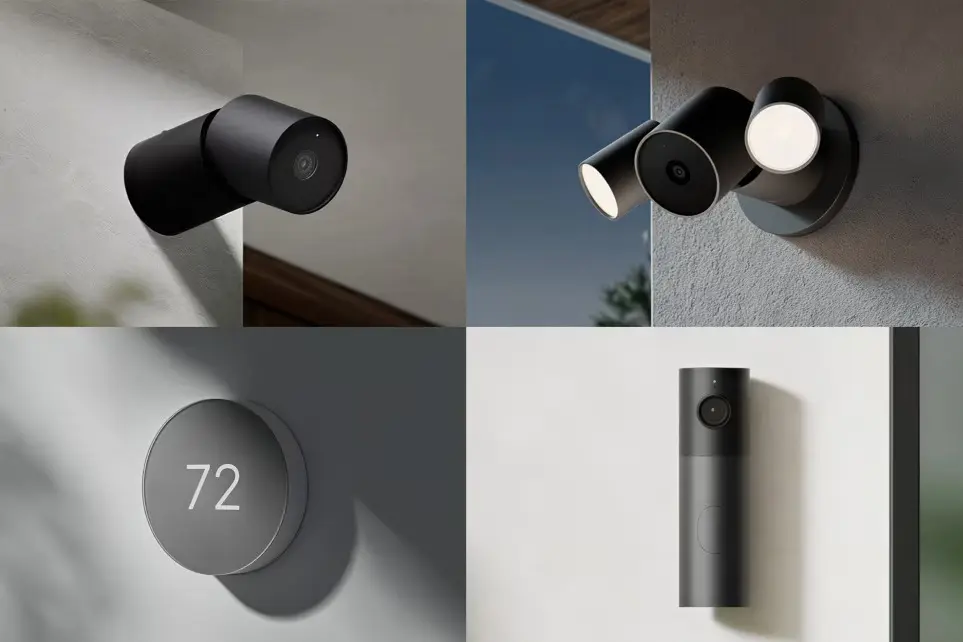
The partnership with LG has also yielded an extensive portfolio of home security cameras. Rather than releasing a single flagship model, Apple and LG are launching a family of four distinct camera options, all boasting a crisp 2.5K resolution. These devices are built for deep integration with Apple’s hardware ecosystem, including Apple TVs, the new HomeView display, and HomePod speakers like the newly announced HomePod mini 2.
Among the lineup, the slim video doorbell, priced at $249.95, stands out as a particularly compelling option. It features a dual-camera optical layout reminiscent of systems produced by brands like Eufy, capturing both a wide-angle overview of the front yard and a focused, close-up perspective of the doorstep, packages, and arriving visitors.
The security lineup also includes a heavily featured wired floodlight camera retailing at $399.95, equipped with dual LED arrays and adaptive brightness controls, alongside standalone indoor ($199.95) and outdoor ($299.95) security cameras. The indoor camera includes a motorized privacy mechanism, automatically tilting its lens to obstruct the view when occupants are present and lowering itself to signal active privacy when family members arrive home—a design approach highly comparable to recent hardware from Arlo.

These cameras support intelligent detection categories capable of recognizing people, pets, vehicles, packages, and familiar faces. However, important details regarding pricing for these advanced computational features remain undisclosed, though Apple has confirmed that an iCloud Plus subscription will be required to utilize them. This subscription tier includes 10 days of cloud video storage, though heavy usage across multiple cameras could rapidly consume existing iCloud storage quotas, potentially presenting a drawback for users accustomed to the dedicated cloud storage plans offered by rival security brands. While Apple has noted that the cameras include local storage buffers to preserve footage during network outages, the exact capacity of this local backup has not been specified.
Users can monitor these camera feeds across iPhones, Apple TVs, and HomeView displays, while integrated Siri AI capabilities promise to generate descriptive video summaries and answer natural-language queries regarding recorded footage. While this conversational functionality offers potential time-saving benefits, its practical utility in day-to-day home monitoring remains to be thoroughly tested in real-world conditions.
Navigating Complex Privacy Questions Around Facial Recognition
The inclusion of familiar face recognition technology introduces significant utility alongside complex regulatory and privacy hurdles. By detecting and identifying recurring visitors, the cameras can deliver specific, contextual notifications—such as identifying a family member by name rather than simply issuing a generic motion alert.

However, the widespread implementation of facial recognition technology remains a contentious subject. Several U.S. states, including Illinois and Texas, alongside municipalities like Portland, Oregon, enforce strict legislative limitations or outright bans on certain facial recognition applications in public and semi-public spaces. Furthermore, major smart home competitors like Amazon Ring and Google Nest have faced multiple privacy-related lawsuits regarding the collection and processing of biometric data without explicit consent from bystanders.
Addressing these concerns, Apple maintains that all Home app data is protected via end-to-end encryption, ensuring that neither Apple nor its manufacturing partners can access raw video feeds or biometric profiles for auxiliary purposes. Video processing is handled locally via an Apple Home hub or through Private Cloud Compute infrastructure, with encrypted archives stored within iCloud. Nevertheless, the legal and ethical implications of deploying consumer-facing facial recognition technology mean Apple will likely face intense scrutiny from privacy advocates and regulatory bodies alike.
Entering a New Category with Smart Thermostats
In another unprecedented move, Apple is expanding its hardware footprint into the smart thermostat market, tackling a complex home climate category without dipping its toes into simpler peripheral devices like smart plugs first. Through its dual partnerships with LG and Schneider Electric, Apple is offering consumers two distinct thermostat options at launch.

Both thermostat models start at $199.95 and share a largely identical feature set, including integrated humidity sensors, adaptive temperature control algorithms, and compatibility with Clean Energy Guidance data in the United States to help households minimize energy consumption during peak utility pricing periods. The primary distinction between the two devices lies in their physical geometry—one features a circular housing while the other adopts a squarish profile—raising questions among industry observers regarding the necessity of releasing two distinct branded options with identical core capabilities.
Smart thermostats represent a mature product category known for generating measurable energy savings over time, often offsetting their initial retail cost within a couple of years while streamlining climate scheduling. To ease the transition for DIY consumers, Apple has incorporated on-device wire detection technology designed to simplify the physical installation process.
How the New Lineup Compares to Established Competitors
Apple is entering the mature smart home market significantly later than dominant ecosystem competitors like Amazon and Google. While this delayed entry allows the company to observe industry missteps and refine its user experience, Apple must prove that its high-end hardware represents an indispensable addition to the modern household. Many of the core features introduced in the Home Collection have established precedents across competing platforms, meaning Apple’s success will heavily depend on execution, design cohesion, and reliable performance.

While bundling security features into iCloud Plus plans could lower ongoing subscription overhead for existing Apple ecosystem users, the steep retail pricing of the hardware itself positions these products firmly in the luxury tier. With several items exceeding the cost of even the highest-end competitor equivalents, initial acquisition costs may present a barrier for mainstream consumers.
As these devices undergo rigorous real-world testing in the coming months, the broader tech industry will be watching closely. When a dominant ecosystem player makes such a definitive pivot into connected home hardware, the entire market is forced to adapt, but long-term success will ultimately be determined by the everyday reliability and practical value of the products themselves.