











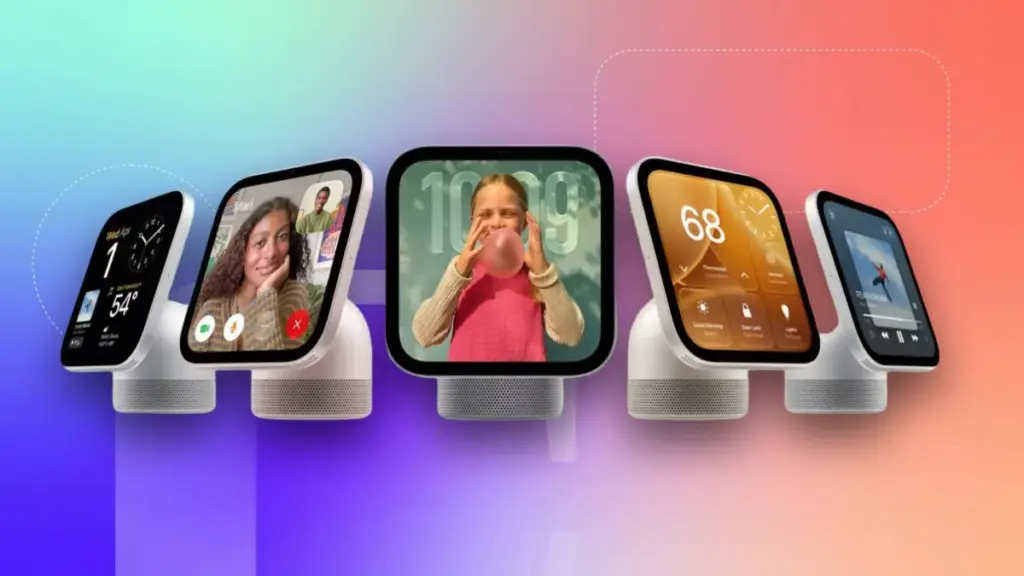
As the smart home market continues to expand with increasingly sophisticated hardware, Apple’s newly announced HomeView has emerged as one of the most promising control centers for tech aficionados and everyday homeowners alike. Featuring a sleek design and robust integration into the Apple ecosystem, the upcoming device is designed to act as a central hub for entertainment, home security, and automation. However, for consumers planning to adopt the device as their main smart home dashboard, navigating the purchasing process requires careful consideration, as Apple is releasing two distinct versions tailored to very different installation preferences and use cases.
Ahead of its official release on November 13, Apple has opened preorders for the HomeView, offering a $299 tabletop model complete with a speaker base and automatic tilting capabilities, alongside a $299 wall-mounted model. While both configurations share the same price point, they cater to radically different physical environments. The wall-mounted version requires buyers to select from multiple mounting options—some of which necessitate professional installation by a licensed electrician—and strips away the enhanced audio power found in the tabletop counterpart. Understanding these critical distinctions is essential for buyers looking to avoid unexpected installation costs or configuration regrets.
What Do Both the Tabletop and Wall-Mounted Models Include?
Beneath their differing physical configurations, both versions of the HomeView share a core set of hardware and software features centered around a vibrant 7-inch Liquid Retina display. Both models are engineered to serve as the definitive smart screen for managing home entertainment, home security monitoring, and a wide array of connected smart home appliances.


Functionally, the user experience is identical across both devices. Both models support advanced facial recognition technology to seamlessly switch between personalized user accounts, alongside native integration with Apple services such as Messages, FaceTime, Calendar, Reminders, and Find My. Furthermore, both versions fully support Siri AI capabilities and key third-party integrations, ensuring that users receive the same software performance regardless of where or how the device is placed in the home.
Despite these shared capabilities, a common misconception has emerged in early launch coverage regarding the physical design of the tabletop version. Like many standard smart displays currently on the market, the tabletop HomeView does not feature a detachable screen. Instead, the display is permanently integrated directly into the specialized speaker base.
This means that buyers of the tabletop model receive the added value of extra speaker power, automatic tilting, and physical adjustment flexibility for the same $299 price as the wall-mounted model. Conversely, purchasing the wall-mounted version means sacrificing the built-in speaker base entirely. Apple has designed these models as mutually exclusive choices; there is no price difference between them, and consumers cannot purchase the wall-mounted version and later acquire the tabletop speaker base, or vice versa. Once a model is purchased, the user is permanently locked into that hardware configuration.

Who Should Buy the Tabletop HomeView?
For consumers seeking a straightforward setup process with the lowest possible barrier to installation, the tabletop HomeView is the most practical choice. Beyond its physical flexibility, the tabletop model comes equipped with a sophisticated speaker base designed to deliver room-filling, high-fidelity audio. The acoustic architecture features down-firing woofers, two passive radiators, and two full-range drivers, producing impressively deep and booming sound that easily fills a spacious room.
In addition to its acoustic performance, the tabletop model is ideally suited for renters and individuals who prefer flexibility over permanent home modifications. Because it relies solely on a standard power adapter and a USB-C cable plugged into a nearby wall outlet, the device can be set up on virtually any flat surface without requiring professional installation, drilling, or permanent alterations to living spaces.
Who Should Get the Wall-Mount HomeView and What Are the Options?
For homeowners looking to integrate a permanent command center directly into their interior architecture, the wall-mounted HomeView offers a clean, streamlined aesthetic. Because this model omits the bulky speaker base, it relies exclusively on the speakers built directly into the display panel itself. This trade-off makes the wall-mounted version an ideal choice for dedicated smart home dashboards, smart calendar displays, and home security monitoring stations, where users can configure a wide array of widgets for rapid access and control over compatible automation devices.

Apple offers three distinct wall-mounting options manufactured by Schneider Home, each designed for specific installation environments and technical requirements.
The Power Mount USB-C Wall Connector serves as the entry-level, self-installable option, priced at $59.95. This package includes the mount and an attached USB-C cable, though users must supply a separate 20-watt power adapter if they do not already own one. While it represents the cheapest and easiest mounting method for DIY enthusiasts or renters willing to drill a few small anchors into drywall, it is also the least visually discreet option, as the USB-C cable remains visibly exposed as it runs down the wall to a standard outlet.
For a more permanent and aesthetically clean solution, the Power Mount AC Wired is available for $79.95. This hardwired alternating current mount routes power directly through the interior of the wall, delivering 30 continuous watts of power through a standard single-gang wall box and sitting completely flush against the surface. While Apple recommends that this option be installed by a licensed electrician, it represents a superior choice for homeowners seeking a polished, wire-free appearance for their central smart home hub.

Michael Malfettone, owner of Malfettone Electric and a licensed master electrician based in Jersey City, notes that the AC-wired mount is the ideal choice for the vast majority of homeowners. He explains that it connects directly to existing home electrical infrastructure, fits into a standard single-gang box, and leaves no visible cords. While the USB-C wall connector is convenient for those comfortable with a visible cable or an existing nearby outlet, it lacks the clean finish of a hardwired setup.
The third and most advanced option is the Power Mount PoE Wired, priced at $129.95. This mount utilizes Power over Ethernet technology to deliver both continuous power and a direct, high-speed internet connection through a single Ethernet cable run, eliminating any reliance on Wi-Fi connectivity. While it requires a compatible PoE network switch and an Ethernet run routed directly to the mounting location, it represents the ultimate solution for comprehensive home security, climate control, and advanced automation setups.
Malfettone notes that Power over Ethernet is primarily designed for users who want an always-online, hardwired network connection that remains independent of wireless interference, making it particularly valuable for homes equipped with structured wiring panels or dedicated network closets. Because PoE relies on low-voltage current rather than line-voltage AC wiring at the wall, it offers unique technical advantages for specific network infrastructures.

How Much Will a Licensed Electrician’s Installation Cost?
When opting for a hardwired installation, prospective buyers must factor in professional labor costs, which can vary significantly depending on existing home infrastructure. According to Malfettone, an AC-wired installation where an existing electrical box or outlet is already present directly at the desired mounting location typically ranges from $150 to $300.
However, if an electrician is required to fish a new electrical line through a finished wall from a nearby circuit, costs generally rise to between $400 and $600. More complex installations involving a dedicated new circuit pulled directly from the main electrical panel, or challenging architectural conditions such as plaster walls, multiple stories, or a lack of attic and basement access, can drive expenses anywhere from $600 to $1,000 or more, not including local permit fees and potential drywall repair work.
Malfettone also cautions that line-voltage electrical work often requires municipal permits, depending on regional regulations. The installation requires a single-gang box with a 120-volt feed at the mounting site, which must be safely tied into an existing circuit or established via a new line before the mount can be secured and the surrounding wall patched. In states like New Jersey, adding a new electrical box or circuit routinely triggers the need for a formal electrical permit.

For installations utilizing the PoE mount, costs are primarily dictated by the labor required to run an Ethernet cable back to the primary network hardware, typically averaging between $150 and $400 per cable run, with an additional $100 to $250 required if a PoE network switch must be purchased. Such installations are naturally most cost-effective during new construction projects or major home renovations when interior walls are already open.
While single-family homeowners enjoy straightforward control over their interior walls and electrical panels, condo owners face additional administrative hurdles, often needing to secure formal approval from their Homeowners Association and verify strict building requirements for licensed trade work. Regardless of the property type, experts emphasize that incorporating a permanent smart home display requires deliberate planning as part of a residence’s broader electrical and networking infrastructure. The ideal installation prioritizes reliable power delivery, clean visual aesthetics, and long-term flexibility to accommodate future technological expansions.