










Picture a quiet afternoon in a suburban parking lot. A nondescript SUV sits idle, seemingly indistinguishable from any other vehicle. Without warning, the floor of the vehicle violently bursts outward. The entire battery pack is forcibly ejected, skidding across the pavement and coming to a rest several yards away, far from the chassis. This startling display, which looks more like a scene from a high-budget action film, is actually a real-world prototype currently under development in China.
Researchers have been testing a radical safety concept: an ejectable electric vehicle (EV) battery pack designed to physically remove itself from the vehicle at the first sign of a thermal runaway event. Clips of this technology in action have begun to circulate across social media platforms, capturing the attention of the automotive industry and safety advocates alike. The prototype aims to sense the onset of a fire and execute a complete detachment of the battery unit in approximately one second. The demonstrations, which were initially circulated under the banner of an entity identifying itself as the "China Collision Repair Technology Center," have sparked a broader conversation about the inherent dangers of lithium-ion batteries and how manufacturers might mitigate the risks of catastrophic failure.
While the technology is garnering significant buzz, it remains in its infancy. The developers have openly acknowledged the practical hurdles that remain, not least of which is the potential for collateral damage. Launching a smoldering, high-voltage battery pack into a crowded urban environment presents its own set of risks—specifically, where exactly the pack lands and what it might hit. Despite these concerns, the urgency to solve the problem of EV fires is at an all-time high, with major automakers around the world exploring similar "quick-release" solutions to protect both passengers and infrastructure.

How the Ejection System Works
The mechanics behind this experimental system are surprisingly reminiscent of passive safety features already found in modern cars, such as airbag deployment. The prototype reportedly utilizes a gas-powered generator, similar to the inflators used to deploy airbags in a crash. When the vehicle’s sophisticated battery management system (BMS) detects the chemical instability that precedes a fire, the gas generator is triggered. This force pushes the battery pack sideways, sliding it away from the frame and depositing it at a safe distance—typically 10 to 20 feet—from the vehicle.
According to a staff member involved in the project, the hardware design is a direct evolution of research into side-loading battery-swapping technologies. These swap stations, which are increasingly common in China and are currently expanding into European markets, allow an EV to replace a depleted battery with a fully charged one in minutes. The vision for this ejection system is that it would remain locked and inactive in dense urban areas where pedestrians and mixed traffic make sudden ejections dangerous. However, reports from the Chinese outlet 36Kr indicate that the software required to intelligently distinguish between a safe, open area and a crowded street has not yet been developed.
The origins of the technology remain somewhat opaque. While the viral videos credited the development to the China Collision Repair Technology Center in collaboration with Joyson Electronics—a prominent Shanghai-listed automotive parts supplier—the narrative has faced skepticism. Joyson Electronics has publicly stated that it has no joint development agreement or cooperation with the center. Similarly, the brand whose vehicle was used in the test, the Chery-owned iCar, has denied any involvement in the demonstration. Further investigations by local media outlet Yicai revealed that there is no formal business registration for the "China Collision Repair Technology Center," with sources suggesting the entity is linked to the Maite Group, an aftermarket automotive repair company that has yet to comment on the project.
The Challenge of Extinguishing Lithium-Ion Fires
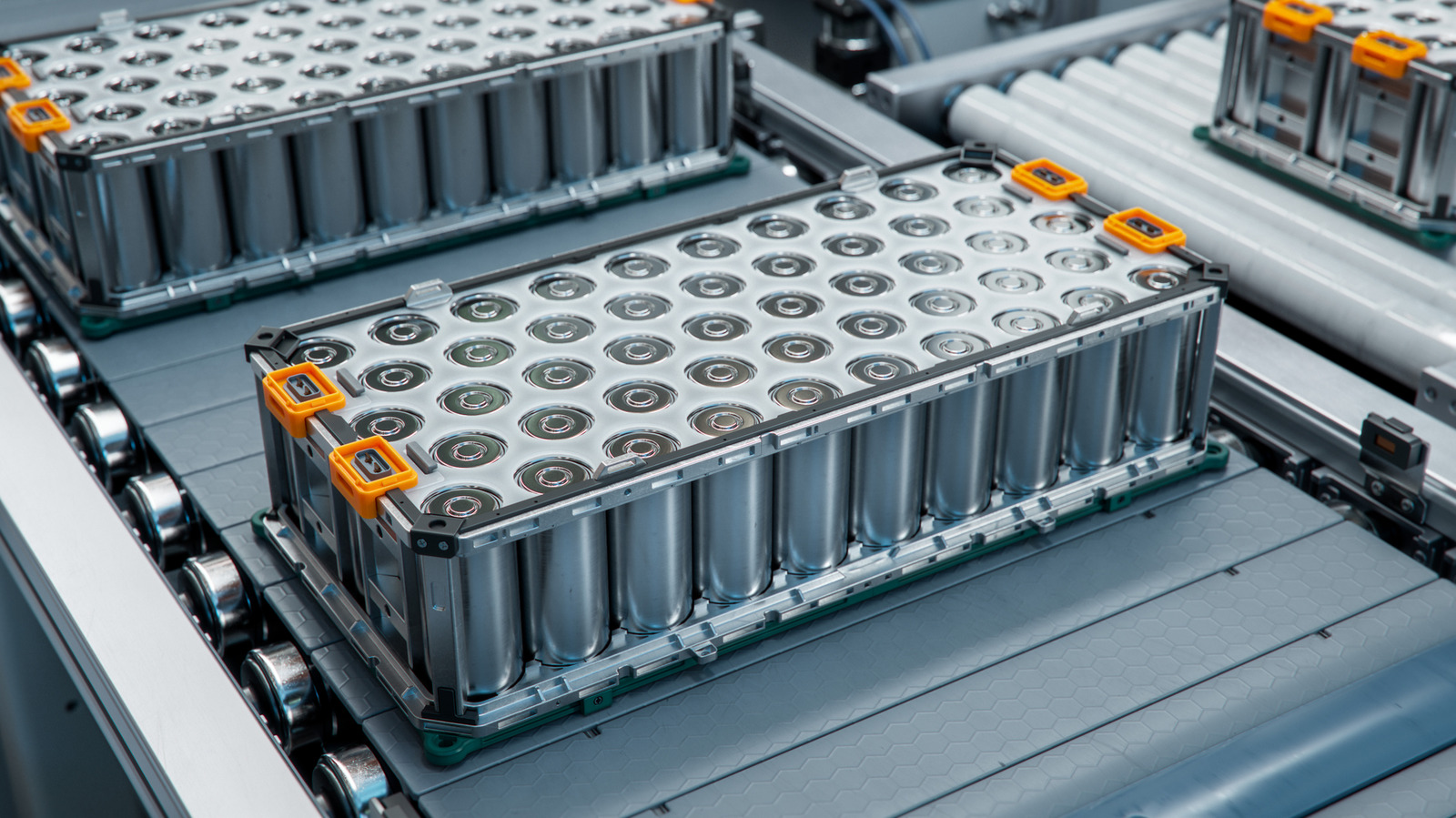
The intense interest in such extreme measures as "ejection" is rooted in the physical reality of lithium-ion batteries. When a cell enters "thermal runaway," it generates heat at a rate that far exceeds its ability to dissipate it. According to the UL Research Institutes, a battery in this state sees its temperature climb by more than 20 degrees Celsius per minute, eventually reaching peak temperatures exceeding 300 degrees Celsius. As the temperature spikes, the cell vents hazardous gases, smoke, and flames.
The difficulty in suppressing these fires is well-documented. A 2020 report from the U.S. National Transportation Safety Board (NTSB), which examined several Tesla fires, highlighted the persistent nature of these blazes. In one instance involving a crash in Florida, a battery pack reignited multiple times after initial suppression efforts, requiring massive quantities of water—in some cases upwards of 20,000 gallons—to fully extinguish.
Further compounding the issue, the Fire Safety Research Institute (FSRI) published findings in August 2026 after conducting controlled burns on 18 electric vehicles. The study concluded that current firefighting techniques are largely ineffective at stopping thermal runaway once it has fully initiated. Because these fires are essentially self-sustaining chemical reactions, moving the source of the heat away from the passenger cabin and the vehicle structure is one of the few strategies that does not rely on brute-force cooling.
The industry is clearly taking note of this vulnerability. Beyond the Chinese prototype, established global automakers are quietly filing patents for similar concepts. Stellantis’ North American division has submitted a patent application for a system that uses a trigger—activated either by a manual switch in the cabin or automatically via sensors—to release the battery pack. This system would utilize sliding frames or explosive bolts to drop the malfunctioning pack to the ground, while a secondary 12-volt battery would power a motor to physically roll the vehicle away from the danger zone.
Meanwhile, Hyundai and Kia have held a patent for a similar concept since 2024. Their approach is more manual, requiring the vehicle to come to a complete stop and the driver to pull a physical lever to release the pack, which then drops under the force of gravity.
These ideas represent a pivot in how the automotive industry approaches EV safety. Rather than focusing solely on flame retardant materials or stronger battery casings, some engineers are betting that the safest place for a burning battery is outside the car entirely. While regulations are evolving—such as China’s July 2026 mandate requiring that battery packs be designed to prevent fires or explosions during thermal runaway—the quest for redundancy remains a top priority. Other manufacturers, such as Renault, are taking a different path, providing free licenses for a specialized port that allows firefighters to flood the battery pack directly with water. This method aims to cool the cells internally, potentially allowing crews to extinguish an EV fire with the same efficiency as a conventional gasoline-powered vehicle.
As the global transition to electrification continues to accelerate, these competing strategies—from high-speed ejection systems to advanced internal cooling ports—underscore a singular reality: the industry is still learning how to manage the unique risks posed by high-density energy storage. Whether an ejection system ever finds its way into a production vehicle remains to be seen, but as long as thermal runaway remains a significant challenge, engineers will continue to explore even the most dramatic solutions to keep drivers and pedestrians safe.