










The digital landscape for independent game developers is undergoing a seismic shift, and the latest data from itch.io paints a sobering picture of an ecosystem struggling to cope with an unprecedented influx of new content. As the democratization of game development tools reaches new heights, the barrier to entry has plummeted, leading to a situation where the sheer volume of new releases threatens to overwhelm the very platforms that once served as the gold standard for indie discoverability.
A report published on October 31, 2026, by the prominent indie storefront itch.io, revealed that the number of new game pages being created on the platform has doubled in just two months. According to the data, which was shared via the social media platform Bluesky, daily game page creations hovered around 3,000 in August 2026. By October 30, that figure had climbed to over 6,000. This rapid acceleration in content production is not merely a sign of a burgeoning creative community; it is a clear indicator of a fundamental change in how games are being produced, with itch.io officials noting that a significant majority of these new pages are populated by projects generated using artificial intelligence.
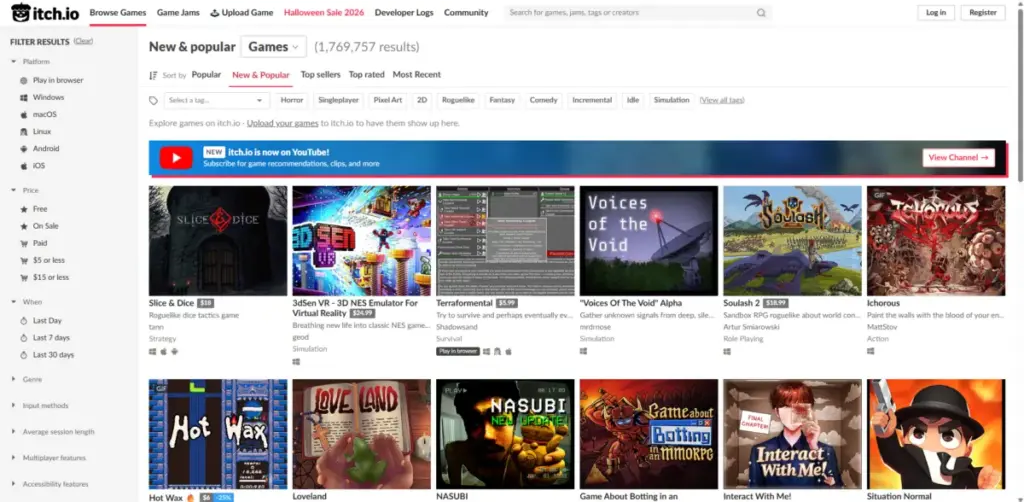
For years, itch.io has been widely regarded as the most welcoming and accessible hub for independent creators. Its open-door policy has made it a home for everything from experimental student projects and rapid-fire game jam entries to high-profile indie titles and massive charity bundles. By fostering an environment where anyone with a vision and a bit of code can share their work, itch.io has played a pivotal role in the indie gaming boom. However, the current influx of AI-assisted content is challenging the sustainability of this model, raising difficult questions about discoverability, curation, and the future of the indie storefront.

The Disconnect Between Content Growth and Market Demand
The most alarming aspect of this trend is the widening gap between the number of games being published and the actual engagement those games receive. Logic might suggest that a doubling in the number of available titles would lead to a corresponding, or at least proportional, increase in user traffic, downloads, and sales. Unfortunately, the reality is far more stagnant. In follow-up discussions regarding the data, itch.io representatives confirmed that the total volume of downloads and purchases has not doubled alongside the influx of new game pages.
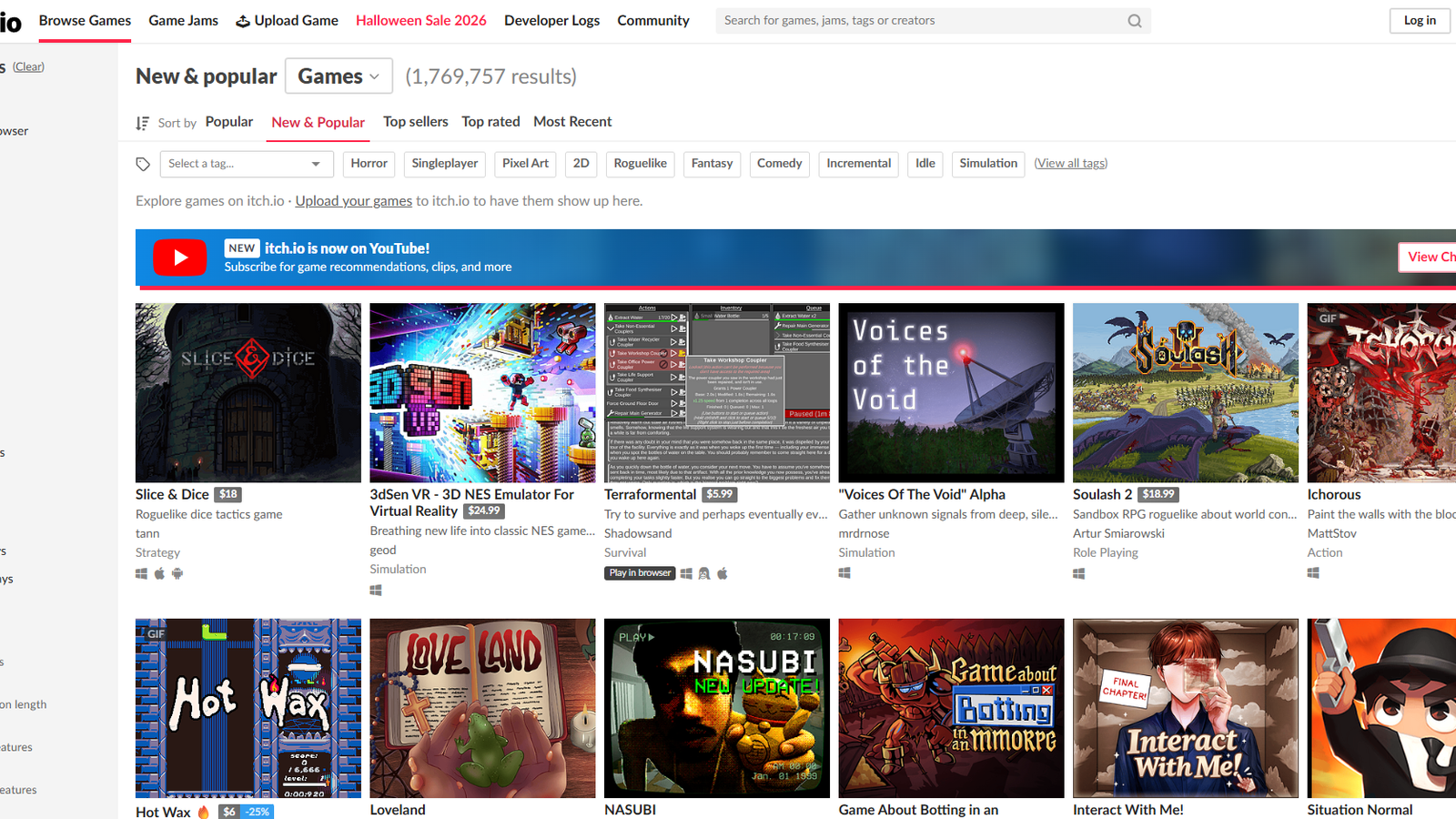
This discrepancy highlights a growing "discoverability crisis." In a marketplace where thousands of new pages are created daily, the "noise-to-signal" ratio has reached a breaking point. Genuine, hand-crafted projects—the kind that historically defined the indie scene—are increasingly being buried under a mountain of AI-generated content. For an indie developer, the ability to be found is everything. When a storefront becomes flooded with a deluge of low-effort or automated projects, the organic reach that independent creators rely on begins to evaporate.
The phenomenon is not isolated to itch.io. The broader industry is witnessing similar tensions on platforms like Steam. Valve’s storefront has long grappled with the challenge of managing an overwhelming number of submissions, but the rise of generative AI has exacerbated the problem. Developers have frequently voiced concerns about their games being drowned out by "AI slop"—a term used by the community to describe the rapid-fire deployment of automated, often derivative, or low-quality content. During events like Steam Next Fest, where developers vie for the attention of millions of potential players, many creators report that their demos are being overshadowed or, in some cases, having their assets or identities co-opted by AI-generated clones.
The Future of Indie Discoverability
The situation at itch.io serves as a microcosm of a larger, existential dilemma facing the gaming industry: how can platforms maintain the ethos of open access while ensuring that the marketplace remains a viable environment for professional and hobbyist developers alike?
To its credit, itch.io has already begun implementing measures to manage the transition. The platform requires developers to disclose the use of generative AI in their projects, a policy designed to provide transparency to consumers and allow for better categorization of content. However, as the volume of AI-assisted submissions continues to surge, the question arises as to whether disclosure alone is a sufficient safeguard against the dilution of the storefront.
For the independent developer, the implications are profound. If the platform becomes a sea of automated content, the traditional marketing strategies—relying on storefront algorithms, discovery queues, and "new release" sections—become significantly less effective. Developers are increasingly forced to rely on external marketing, building their own communities on social media, or finding niche audiences through word-of-mouth, as the storefront itself loses its utility as a primary engine for organic growth.
The current trend suggests that we are entering a new era of digital distribution, one where the sheer ease of creating a game page is beginning to work against the health of the ecosystem. Without more robust curation, improved filtering tools, or a shift in how platforms prioritize content, the risk is that the "indie-friendly" storefronts will cease to be the engines of discovery they once were.
As the gaming industry looks toward the end of 2026 and into the future, the challenge for platforms like itch.io will be to balance the democratic spirit of the internet—where everyone has a voice—with the practical need for a marketplace that rewards quality and genuine human effort. Unless major storefronts take decisive action to curb the tide of automated content and protect the visibility of hand-crafted games, the indie scene may face a long-term decline in the ability for new, creative, and authentic voices to find their audience. The data shared by itch.io is not just a statistical anomaly; it is a clear warning sign that the digital storefront as we know it is reaching a critical inflection point.