









In a significant move to simplify how organizations manage and refine their cloud infrastructure, Amazon Web Services has officially announced the public preview of the AWS Well-Architected Agent. This new AI-powered service is designed to act as an intelligent layer over a customer’s existing AWS environment, providing deep, contextual insights that go well beyond the static checklists of the past. By automating the analysis of infrastructure and aligning findings with specific business objectives, the service aims to help engineers and architects improve their applications across the critical pillars of cost, security, performance, and resilience.
The introduction of the Well-Architected Agent represents a shift in how AWS approaches operational excellence. Historically, the Well-Architected Framework has been a gold standard for cloud design, but it often required manual intervention, periodic reviews, and a degree of subjective interpretation by human architects. The new agent effectively digitizes this expertise. It continuously evaluates an environment, correlating utilization metrics, resource configurations, and application topology against best practices spanning more than 65 AWS services. By doing so, it provides not just a diagnostic report, but a prescriptive path forward, complete with ready-to-implement remediation packages.
One of the most notable aspects of the service is its focus on context-awareness. Rather than offering generic suggestions that might be relevant to one company but detrimental to another, the agent is designed to understand the unique business goals of the user. When setting up the agent, users define their specific priorities—whether that is squeezing the most value out of their cloud spend, hardening their security posture, or ensuring maximum system availability. The agent then filters its vast knowledge base through these priorities, surfacing recommendations that are not only technically sound but also strategically aligned with what the business is trying to achieve. Furthermore, the agent is designed to identify cross-pillar trade-offs, helping teams understand how a change in one area, such as performance, might impact another, such as cost, before they commit to a change.
Getting Started with the Well-Architected Agent
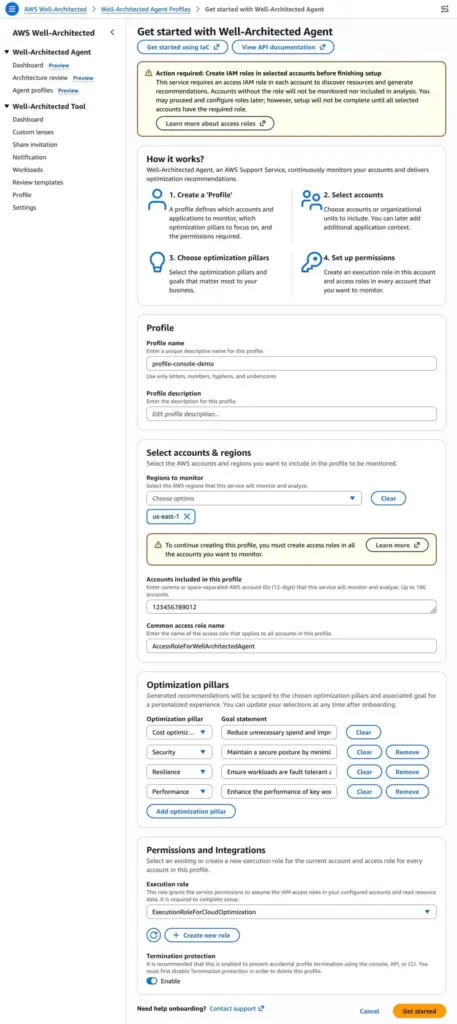
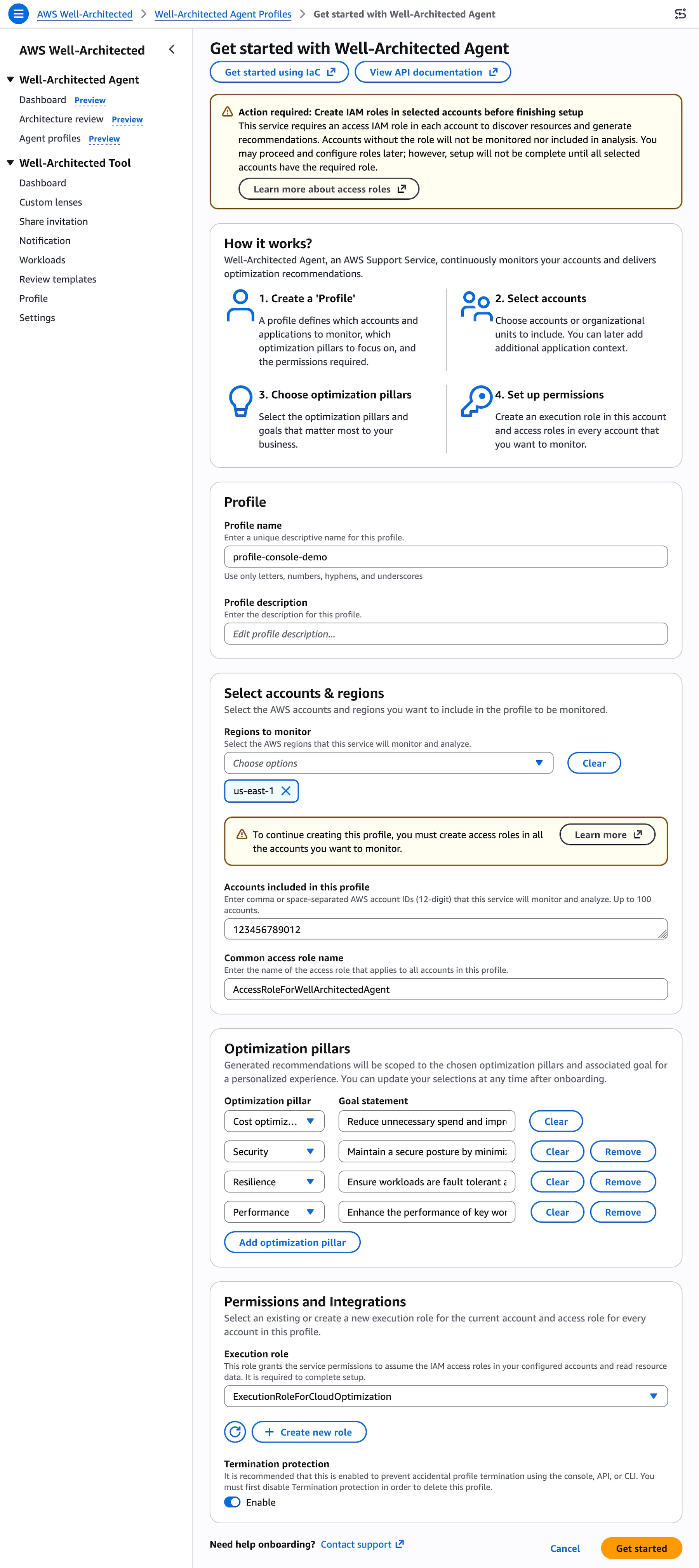
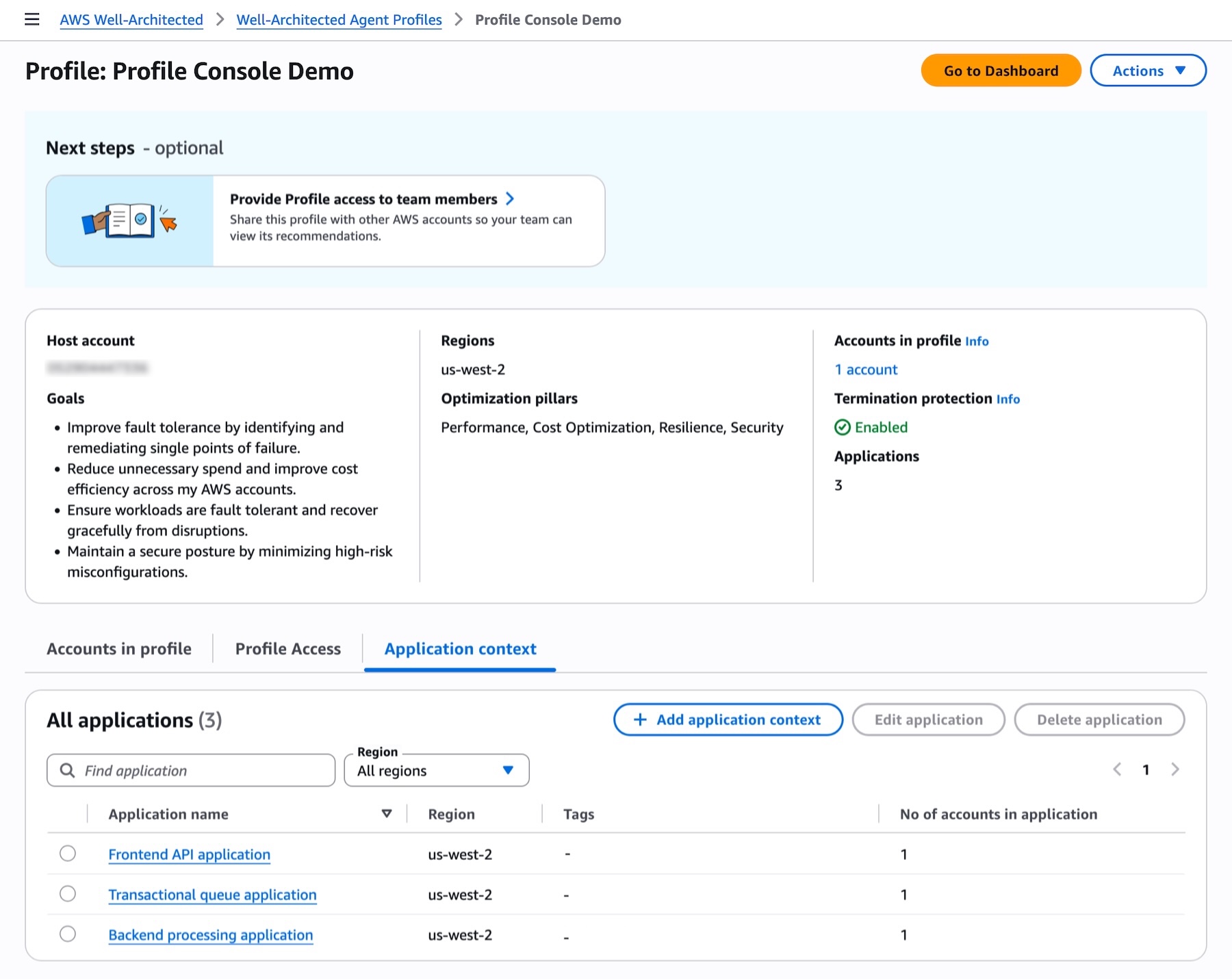
The onboarding process for the new agent has been built with integration into the existing AWS Well-Architected console in mind. To begin, users create an agent profile, a step that allows them to define the boundaries of the analysis. During this phase, users specify which AWS accounts and applications fall under the agent’s purview, which of the optimization pillars they wish to emphasize, and the specific permissions the agent requires to perform its duties. This granular control ensures that the agent operates within the necessary security constraints of an organization’s environment.

To facilitate the agent’s operation, users must provision customer-managed IAM roles. These roles grant the agent the read-only access necessary to inspect resource configurations, analyze utilization data, and map the topology of the applications. Once these permissions are in place and the agent profile is active, the system begins its assessment. Users can typically expect the first set of comprehensive, resource-specific recommendations to appear within 24 hours of the profile being finalized.
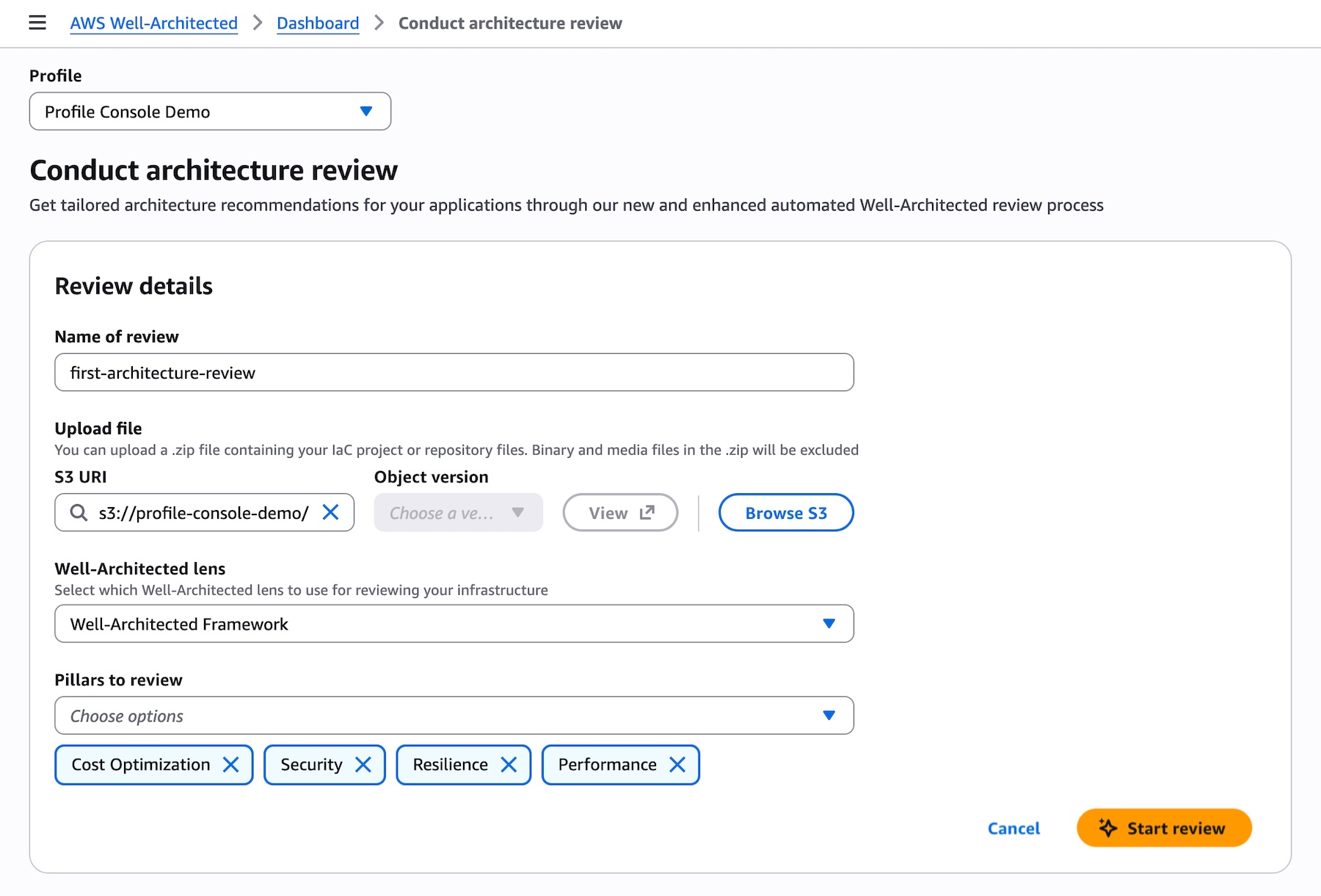
The service also addresses the often-overlooked need for pre-deployment analysis. Many architecture issues are introduced during the development phase, long before code reaches production. To combat this, the Well-Architected Agent allows users to conduct architecture reviews on pre-deployment workloads by uploading Infrastructure-as-Code (IaC) projects. Whether the team is using Terraform, AWS CloudFormation, or the AWS Cloud Development Kit (CDK), they can submit their templates directly to the dashboard. The agent analyzes these files against selected Well-Architected lenses, identifying potential design flaws or deviations from best practices before the infrastructure is even provisioned.
By adding application-specific context—such as the associated AWS accounts, regions, services, and custom tags—users can further refine the relevance of the findings. This contextual layer allows the agent to distinguish between a sandbox environment and a mission-critical production workload, tailoring its severity and priority rankings accordingly.
Prioritizing and Remediating Findings
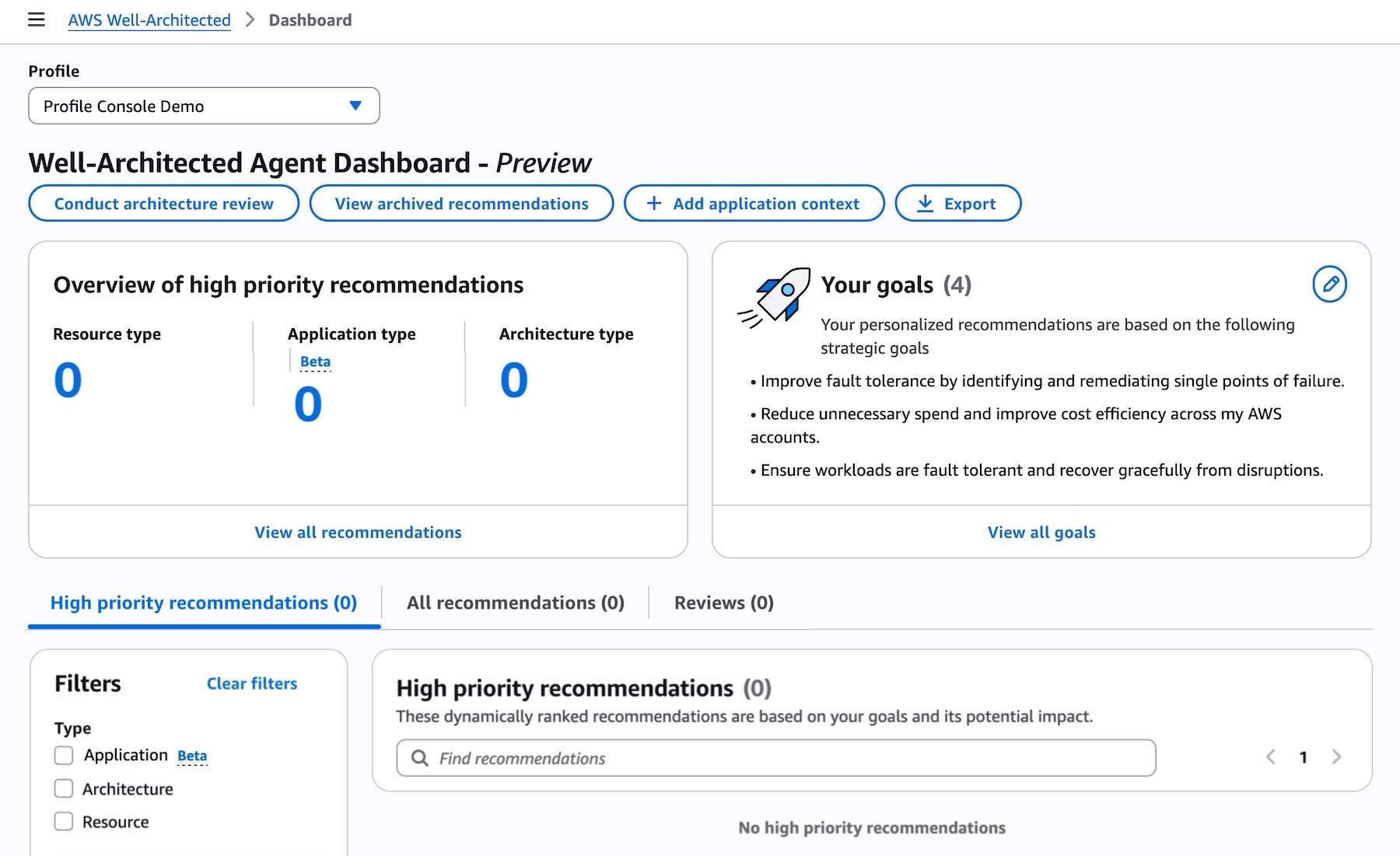
Once the agent has completed its initial analysis, it presents a dashboard of prioritized recommendations. This list is not a static document but an actionable queue. Each recommendation is ranked based on its potential impact and its alignment with the user’s declared business goals. When a user selects a specific finding, the agent provides a detailed breakdown of the issue, the reasoning behind the recommendation, and a clear explanation of any trade-offs involved.
The power of the service lies in its remediation capabilities. When an engineer is ready to act on a finding, they can select the "Start remediation" option. The agent provides several paths for resolution: it can offer specific console-based steps, provide CLI commands to apply the fix, or even generate updated IaC templates. If the recommendation involves a change to an existing CDK or CloudFormation script, the agent provides the actual code snippet that needs to be inserted into the codebase. This drastically reduces the time between identifying an issue and implementing a fix, while also ensuring that the remediation is consistent with the infrastructure’s existing architecture.
For organizations that prefer to manage their operations through automation or existing developer tools, the service includes API access. This allows teams to integrate the agent’s findings directly into their CI/CD pipelines or operations workflows. By utilizing the AWS MCP Server and associated plugins, developers can interact with the agent programmatically, searching documentation or retrieving recommendations without leaving their preferred AI coding environments. This integration capability is intended to make well-architected practices a seamless part of the daily development lifecycle rather than an occasional, siloed task.
A Continued Commitment to Architectural Excellence
While the Well-Architected Agent introduces a new layer of automation, it does not replace the traditional tools already familiar to AWS users. The existing AWS Well-Architected Tool remains fully available for those who prefer to perform manual evaluations or utilize custom lenses that measure workloads against company-specific internal best practices. The new agent acts as a complementary service, augmenting the existing toolkit with automated, real-time intelligence.
Currently, the public preview of the AWS Well-Architected Agent is available for workloads across all commercial AWS regions, with the service itself being delivered by the AWS Support team. Access is currently offered to AWS customers who maintain an active AWS Support plan. By providing this service through the existing support structure, AWS aims to ensure that customers have the guidance they need to make the most of the agent’s findings.
As the industry moves toward increasingly complex and distributed cloud architectures, the ability to maintain a high standard of operation is becoming more challenging. The introduction of the Well-Architected Agent is a clear indication that AWS intends to use artificial intelligence to bridge this gap, helping customers move from a reactive posture—where problems are identified only after they impact performance or cost—to a proactive, automated, and continuous state of optimization. For organizations looking to mature their cloud operations, this new agent offers a compelling way to leverage AWS expertise directly within their own unique, and often intricate, cloud environments.