










In January 2025, job listings on Indeed for a "forward deployed engineer" barely registered. By April 2026, postings for the role had skyrocketed to 5,230% above that baseline—running roughly 729% higher than the same period a year earlier. The hiring surge mirrors massive shifts in capital allocation across the artificial intelligence sector, underscored by heavyweights like OpenAI raising more than $4 billion for a newly formed enterprise company explicitly built around the discipline.
The early signals of this transformation were already hard to ignore. Monthly listings for forward deployed engineers, or FDEs, climbed by more than 800% between January and September 2025, according to a labor market analysis conducted by Indeed and the Financial Times. This explosive growth has taken place against a backdrop where overall software development job postings on Indeed continue to lag well behind pre-pandemic levels, hovering around 74.4 on an index where February 2020 equals 100.
This dramatic divergence invites a pressing question for the labor market: Is the forward deployed engineer a lasting career paradigm, or is it simply a rebranding of traditional consulting riding a temporary hype cycle? Industry experts suggest the reality sits somewhere between the two extremes. As the primary bottleneck in artificial intelligence shifts away from training frontier models and toward deploying them inside complex corporate environments, the FDE has emerged as the defining role bridging that gap. While the specific job title may eventually splinter or fade, the specialized skill set it represents is here to stay.
What a Forward Deployed Engineer Actually Is
At its core, a forward deployed engineer is a software engineer who embeds directly with a customer, working inside that organization’s proprietary systems and data environments to build live production solutions. Unlike traditional tech workers who operate from a central headquarters, an FDE owns an operational outcome rather than a slide deck or a static statement of work.
The framework originated decades ago at Palantir, which pioneered the strategy of sending software engineers "forward" to live alongside its users instead of developing products in isolation. While the model was frequently dismissed in its early days as little more than a customized IT consulting shop wearing software clothing, executives like Palantir head of global commercial Ted Mabrey have argued that the approach provided the company with a crucial multi-decade head start in aligning its software directly with actual customer needs.
The financial performance of that strategy has turned heads across the broader technology landscape. Palantir reported a staggering gross margin of 85% for the second quarter of 2026, up from 81% during the same period a year prior, prompting competitors and enterprise software giants to scramble to replicate the blueprint.
A true forward deployed engineer is ultimately defined by whether insights gathered from working directly with customers actively reshape what the software company builds next. Without that critical feedback loop, the role devolves into standard tech consulting. Nor is it a sales position; an analysis of 1,000 forward deployed engineer job postings by Bloomberry found that precisely zero of the roles carried a sales quota. Unlike traditional solutions or sales engineers whose primary goal is winning a deal through demos and prototypes, FDEs write heavy production code with the explicit design of feeding the core product roadmap.
The Last-Mile Problem and Why Demand Exploded Now
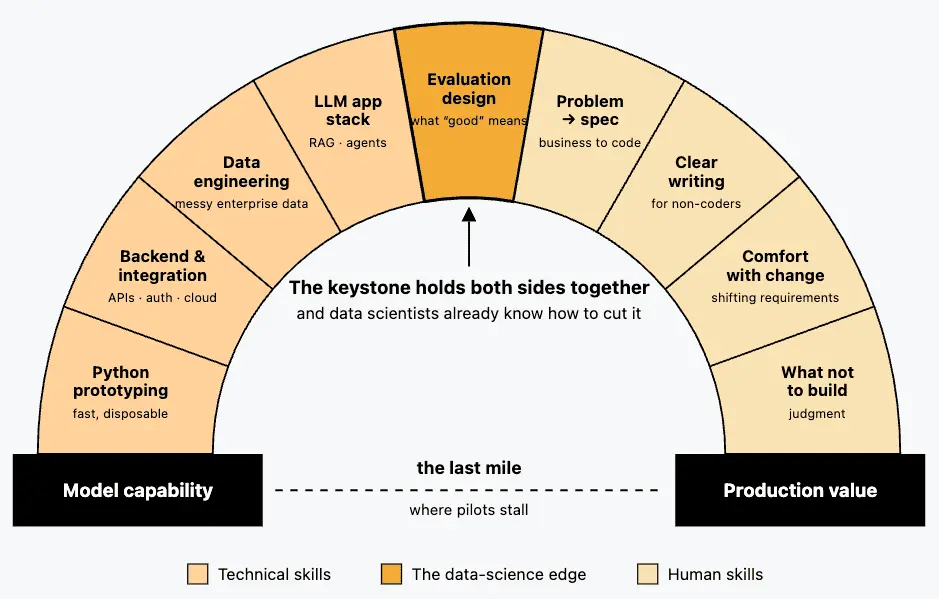
Frontier artificial intelligence models have continued to improve rapidly while simultaneously converging in capability. As multiple labs offer comparable technical performance, market differentiation has shifted toward whoever can successfully operationalize a model inside a real, functioning business. The broader AI industry has officially run into the exact wall that Palantir encountered two decades ago: while the underlying technology is remarkably capable, navigating the final mile into traditional enterprise environments remains exceptionally difficult.
That last mile rarely fails because of limitations in the model itself. Instead, projects stall due to the complex plumbing surrounding them. A promising pilot often breaks down because the necessary data is locked away inside legacy warehouses behind rigid security permissions that no one on the project team can access. Projects also stall when organizations fail to establish a shared consensus on what constitutes a successful output for a specific customer task, leaving stakeholders to judge demonstrations based entirely on subjective criteria.
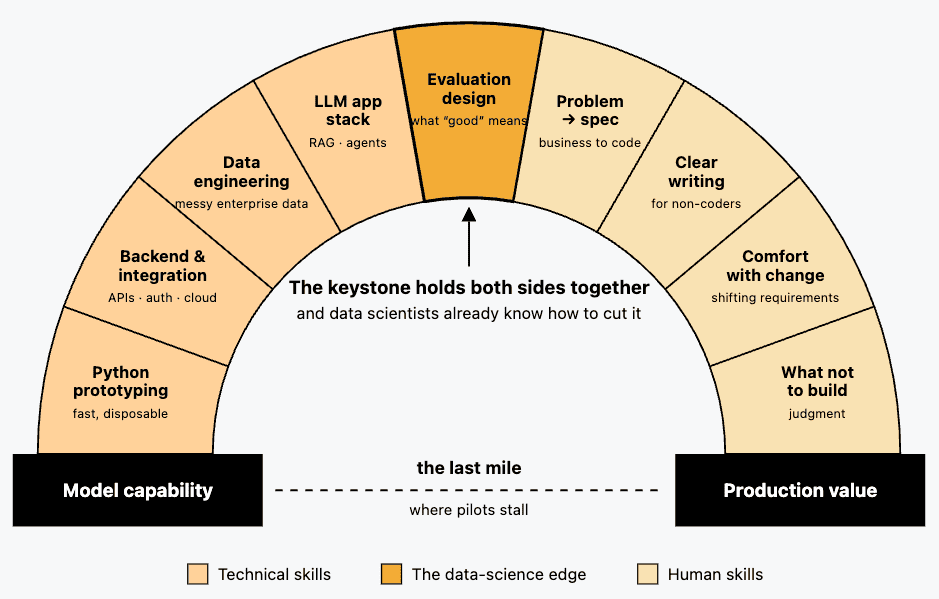
Integration challenges represent another major graveyard for artificial intelligence pilots. A retrieval pipeline that cannot read an enterprise ticketing system, or an autonomous agent whose toolset does not align with internal team workflows, remains technically impressive while staying practically useless. Compounding these hurdles are typical organizational friction points, including unclear project ownership, skeptical department heads, and compliance reviews stuck deep in bureaucratic queues.
Because time-to-value pressures begin the moment a contract is signed rather than when data pipelines are clean, these barriers demand immediate on-site intervention. They are not academic research problems; they are concrete engineering challenges that require someone with deep technical depth and situational context to resolve them directly in the room. As industry guides note, the models already work, but what has been missing is engineering talent embedded deeply enough to wire those capabilities into real enterprise data, systems, and workflows.
The Capital and Frontier Lab Bets Behind the Title
While recruiter enthusiasm can fluctuate, the definitive proof of the trend lies in where major technology companies directed their strategic capital.
On May 11, 2026, OpenAI officially launched the OpenAI Deployment Company, backed by more than $4 billion from 19 institutional investors and structured entirely around forward deployed engineers embedded directly with clients. The initiative was supercharged by the acquisition of consultancy Tomoro, which onboarded roughly 150 FDEs and deployment specialists on day one. OpenAI has also aggressively hired direct FDE talent, with reported base salaries ranging from $220,000 to $280,000 plus equity.
Competitor Anthropic moved swiftly just days prior, announcing a standalone enterprise artificial intelligence services firm in partnership with Blackstone, Hellman & Friedman, and Goldman Sachs. Backed by $1.5 billion in funding, the venture targets mid-sized organizations such as regional health systems and community banks, deploying Anthropic’s applied AI engineers side-by-side with client teams. Major enterprise players have followed suit, with Salesforce committing to a team of 1,000 forward deployed engineers for its Agentforce initiative, alongside dedicated FDE organizational commitments from Amazon Web Services and Microsoft.
Compensation, Skills, and Market Realities
Compensation figures for the role vary depending on seniority and source, but recruitment data highlights a lucrative market. Indeed places the average base salary for the title at roughly $171,911, while Bloomberry’s analysis reports a median base of $173,816, with roughly 70% of analyzed postings including equity compensation packages. At senior and principal levels within frontier AI labs, total compensation packages frequently range from $600,000 to well over $1.2 million.
The technical profile required for these positions is broad rather than narrow, encompassing the modern large language model application stack, including retrieval-augmented generation, autonomous agents, tool use, and context engineering. Surrounding those core skills are enterprise data engineering, API integration, cloud deployment, observability, and rapid prototyping capabilities. Furthermore, the non-technical aptitude required to navigate shifting requirements, translate ambiguous business problems into technical specifications, and communicate effectively with stakeholders often dictates hiring success.
Skeptics of the trend note that rapid growth percentages can sometimes mask a relatively small absolute number of open roles, and warn against companies simply relabeling traditional IT consultants or solutions engineers as FDEs without establishing the necessary product feedback loops. Moreover, the structural demands of the position—including extensive travel, constant context-switching, and high-stakes client accountability—carry a tangible risk of burnout.
Despite these caveats, the fundamental market need remains undeniable. As long as enterprises struggle to translate advanced artificial intelligence capabilities into tangible operational value within messy organizational structures, the demand for deeply embedded engineering talent will persist. Whether the title ultimately endures or evolves into broader applied engineering designations, the core competencies forged in the enterprise trenches have established themselves as an indispensable component of the modern technology landscape.