








Managing containerized applications at scale on Amazon Elastic Container Service (Amazon ECS) has long been a task defined by both power and complexity. While ECS provides the robust backbone for running microservices, platform teams have historically faced a significant operational hurdle: the configuration of ingress networking. For every new service introduced into an environment, teams were required to manually provision and orchestrate a complex web of resources, including Application Load Balancers (ALBs), AWS Certificate Manager (ACM) certificates, AWS WAF web access control lists, and granular security groups. Beyond the initial setup, the ongoing maintenance—ensuring these resources remain synchronized as services scale, undergo updates, or transition through different operational states—often created a persistent bottleneck that hindered deployment velocity and introduced the risk of configuration drift.
To address these challenges, Amazon has today announced the launch of Amazon ECS Gateway, a new account-level resource designed to fundamentally simplify ingress networking for containerized workloads. By shifting the burden of infrastructure management from the platform team to the service itself, ECS Gateway dynamically provisions and manages the necessary networking components directly within a user’s AWS account. This development marks a shift toward a more automated, intent-based approach to managing ingress traffic, allowing teams to focus on application logic rather than the plumbing of network connectivity.
Redefining Responsibilities in Container Orchestration
The introduction of ECS Gateway establishes a clearer, more efficient separation of responsibilities between platform teams and application developers. In a traditional setup, platform engineers often serve as the gatekeepers of infrastructure, manually configuring load balancers and certificates for every new service deployment. With the new gateway model, the platform team defines the guardrails—setting up the gateway and its associated infrastructure roles—while application teams gain the autonomy to hook their services into these pre-configured pathways.

ECS Gateway utilizes host-based routing via ALBs to optimize infrastructure utilization. A single load balancer can now be shared by up to 25 different services, a significant improvement for organizations looking to balance performance with cost-efficiency. Amazon manages the entire lifecycle of this infrastructure; the system intelligently provisions the first ALB when a service connects, dynamically adds additional load balancers as capacity limits are approached, and gracefully removes them when they are no longer required. Each service is provided with a unique DNS hostname immediately upon completion of the provisioning process, ensuring that developers have a ready-to-use endpoint without waiting for manual DNS or load balancer configuration.
Getting Started with ECS Gateway
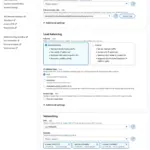
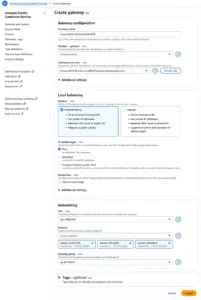
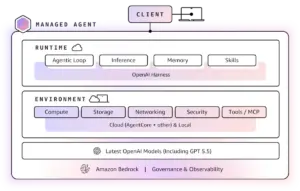
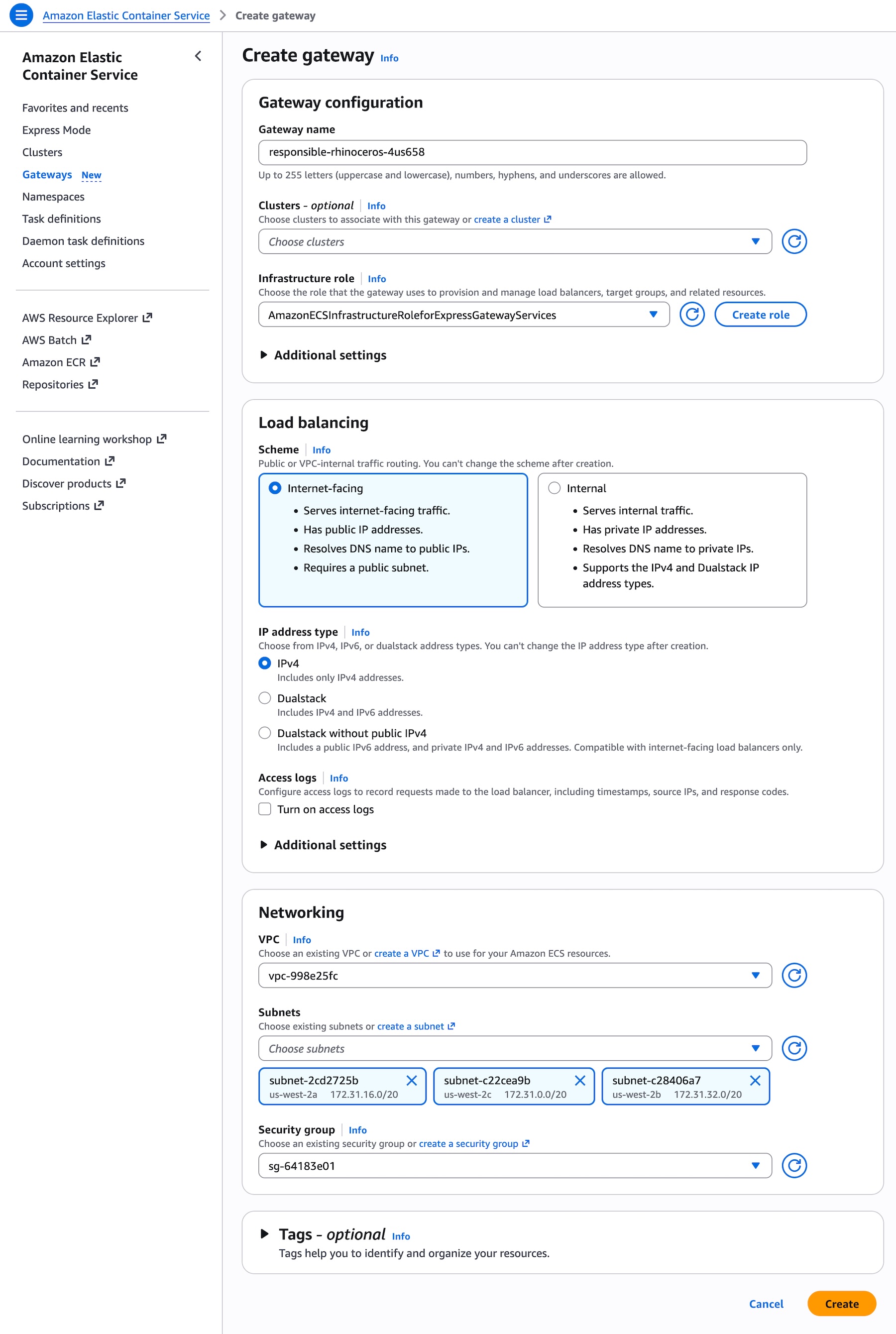
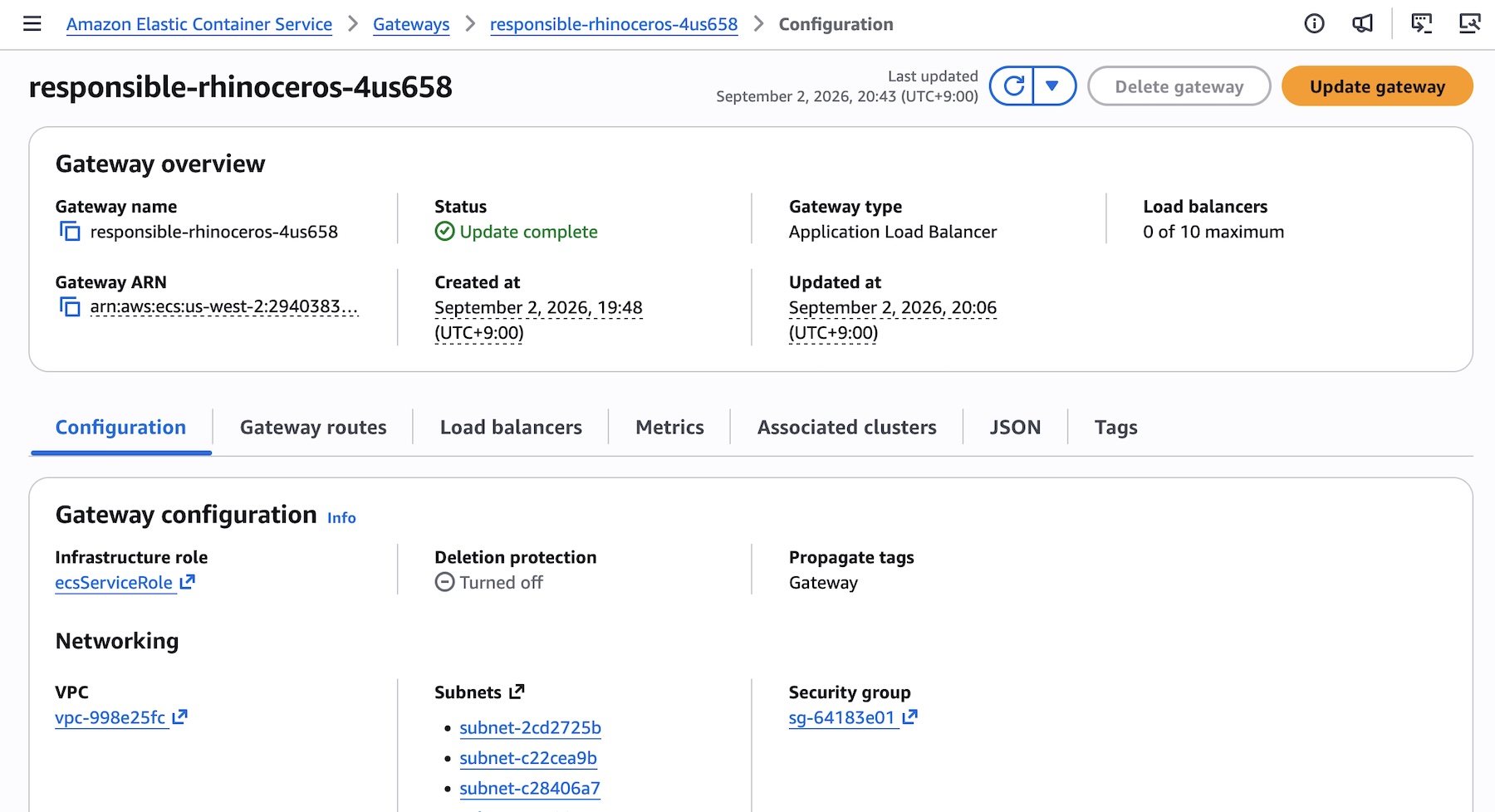
For platform teams, the transition begins within the Amazon ECS console. Creating a gateway involves defining a configuration that dictates how the network behaves. A critical component of this setup is the infrastructure role—an IAM role that grants ECS the permissions necessary to provision and manage resources such as ALBs, security groups, and SSL/TLS certificates on the user’s behalf. During the gateway creation process, administrators specify a name and associate the gateway with one or more ECS clusters.
The configuration also allows for the selection of a load balancing scheme, supporting both public-facing and VPC-internal traffic routing. Under the advanced settings, teams can define listener protocols, ports, and maximum load balancer counts, as well as integrate AWS WAF to bolster security. While certain fundamental parameters, such as the gateway name, scheme, VPC, subnets, and IP address type, are immutable after the initial creation to ensure stability, the overall workflow is designed to be intuitive for those already familiar with the AWS ecosystem.

For teams that prefer infrastructure-as-code or automated workflows, the AWS Command Line Interface (AWS CLI) provides a straightforward method for implementation via the CreateGateway command. By passing a configuration object, teams can define their network requirements programmatically. Notably, no actual infrastructure is provisioned at this stage; the system remains dormant until a service explicitly connects via a gateway connector, ensuring that resources are only consumed when they are actually needed.
Operational Flexibility and Scalability
The architecture of ECS Gateway is built to handle the complexities of large-scale, multi-cluster environments. A single gateway can be associated with up to 10,000 clusters, while a single cluster can support up to five distinct gateway associations. This many-to-many relationship provides platform teams with immense flexibility, enabling them to share a common gateway across disparate environments or, conversely, to assign multiple gateways—such as one for public traffic and another for internal, restricted traffic—to a single cluster.
Access control is maintained through standard AWS mechanisms. Platform teams can restrict which gateways are associated with specific clusters, and by leveraging IAM policies, they can further enforce who is authorized to deploy services to those clusters. This provides a robust framework for multi-tenant environments where security and isolation are paramount.
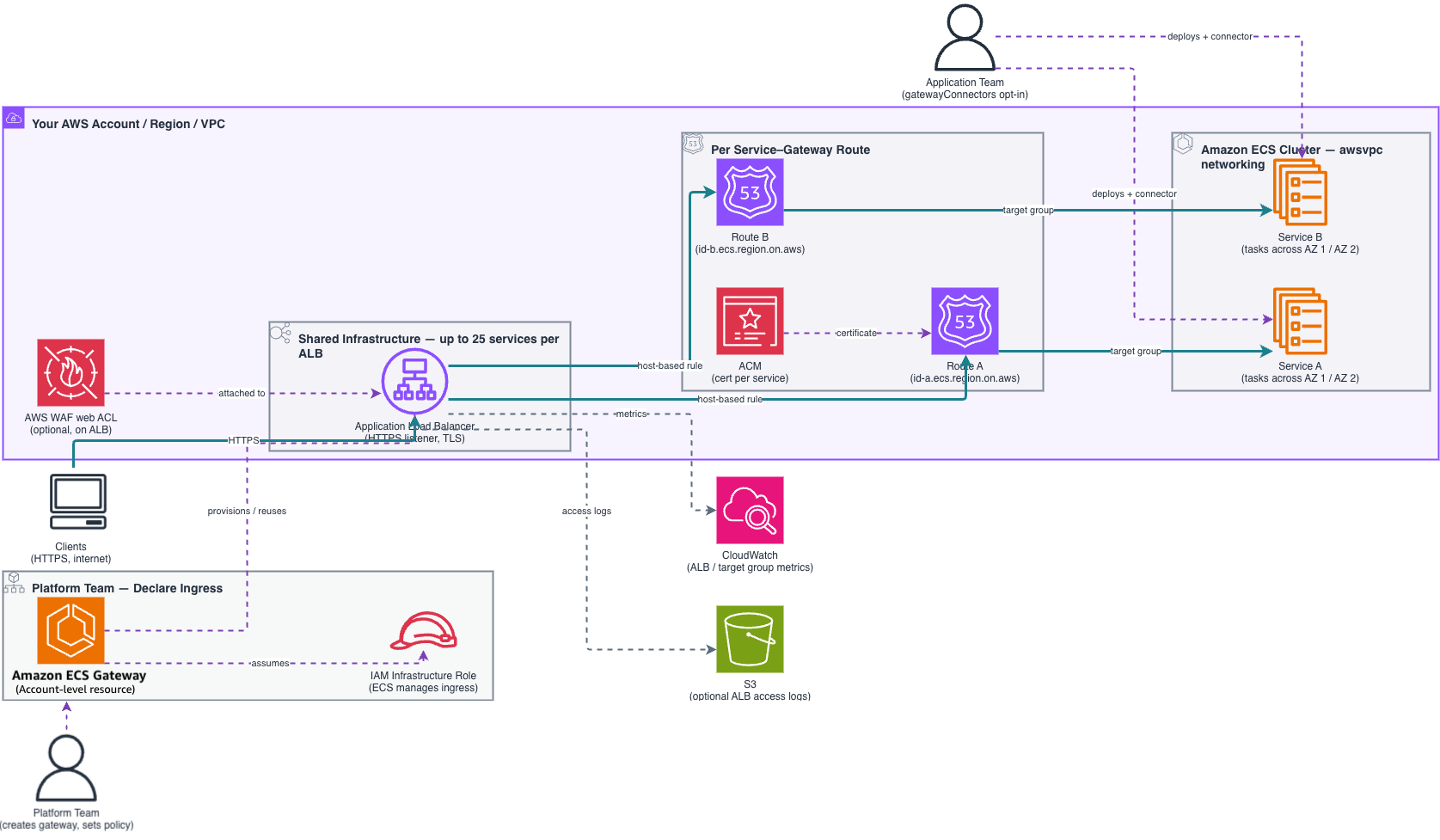
For application teams, integrating with the gateway is a matter of adding a connector to the service definition during the CreateService or UpdateService operations. A significant benefit of this design is the ability to adopt ECS Gateway incrementally. Organizations with existing services that currently manage their own load balancers can transition to the new gateway without downtime. By calling UpdateService to add a gateway connector, both the old and new ingress paths can exist simultaneously. This allows developers to validate the new connection and ensure traffic is flowing correctly before decommissioning the legacy infrastructure.
Under the Hood: Automation and Efficiency
When a deployment is initiated, Amazon ECS performs an evaluation of the gateways associated with the cluster, connecting the service to every gateway that meets the necessary criteria. A gateway is considered compatible if its access type matches the service’s connector filter, if it resides within the same VPC, and if it covers the Availability Zones used by the service’s subnets.
Once compatibility is confirmed, the automation engine takes over. ECS provisions the specific resources required for that service: an ACM certificate, a unique DNS hostname, a listener rule that directs traffic to the appropriate target group, and a security group that restricts inbound traffic solely to the ALB. If an existing load balancer lacks the necessary capacity, ECS automatically triggers the creation of a new one, up to the defined maximum count. Once this process concludes, the gateway route is set to active, and the service URL becomes immediately available for traffic.
This system effectively offloads the most repetitive and error-prone aspects of service management. Common scenarios—such as scaling, certificate renewals, and target group updates—are handled automatically by the platform, reducing the likelihood of human error and minimizing the time spent on routine network maintenance.
Considerations and Availability
While ECS Gateway significantly reduces the operational burden, there are important details for users to consider. Because the system is designed to manage resources dynamically, it is essential to monitor infrastructure limits and ensure that IAM roles are correctly configured with the necessary permissions. The service is now generally available across all commercial AWS Regions where Amazon ECS is supported.
There is no additional charge for using the ECS Gateway service itself; users simply pay for the underlying AWS infrastructure that is provisioned in their account. This includes standard charges for ALBs, data transfer, CloudWatch logs and metrics, and ACM certificates. By aligning the cost model with existing resource consumption, Amazon ensures that teams can adopt the new functionality without hidden fees or complex pricing structures.
As containerized workloads continue to grow in complexity and volume, the need for automated, scalable networking solutions becomes increasingly critical. With the introduction of ECS Gateway, Amazon is addressing a core pain point for platform teams, providing a pathway toward more streamlined deployments and more resilient, manageable infrastructure. For teams looking to modernize their ingress strategy, the new gateway offers a compelling balance of control, automation, and operational efficiency, setting a new standard for service management within the Amazon ECS ecosystem.