







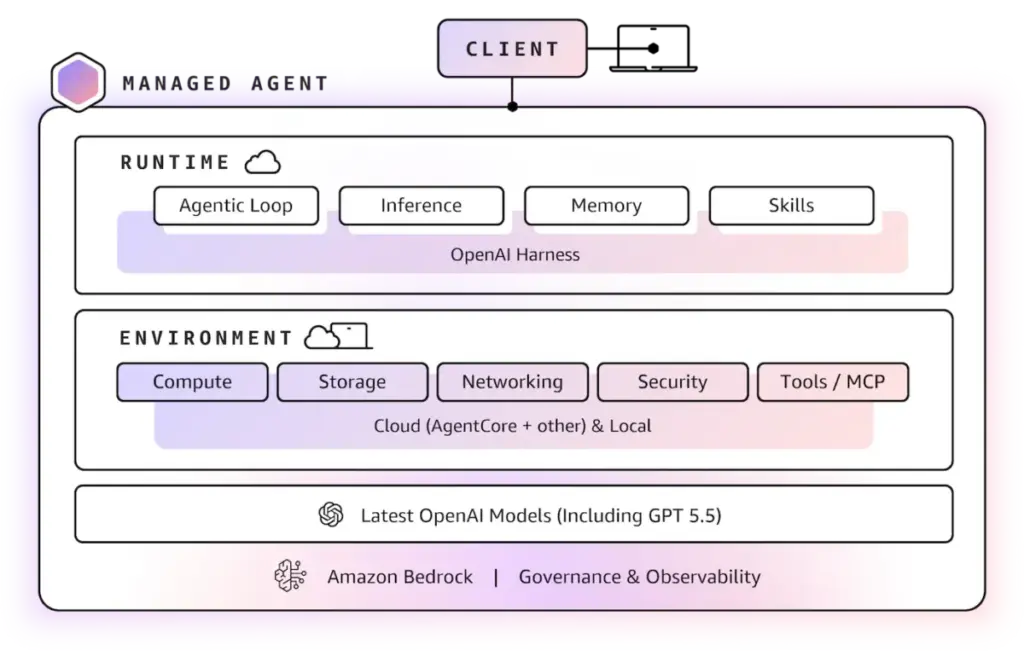
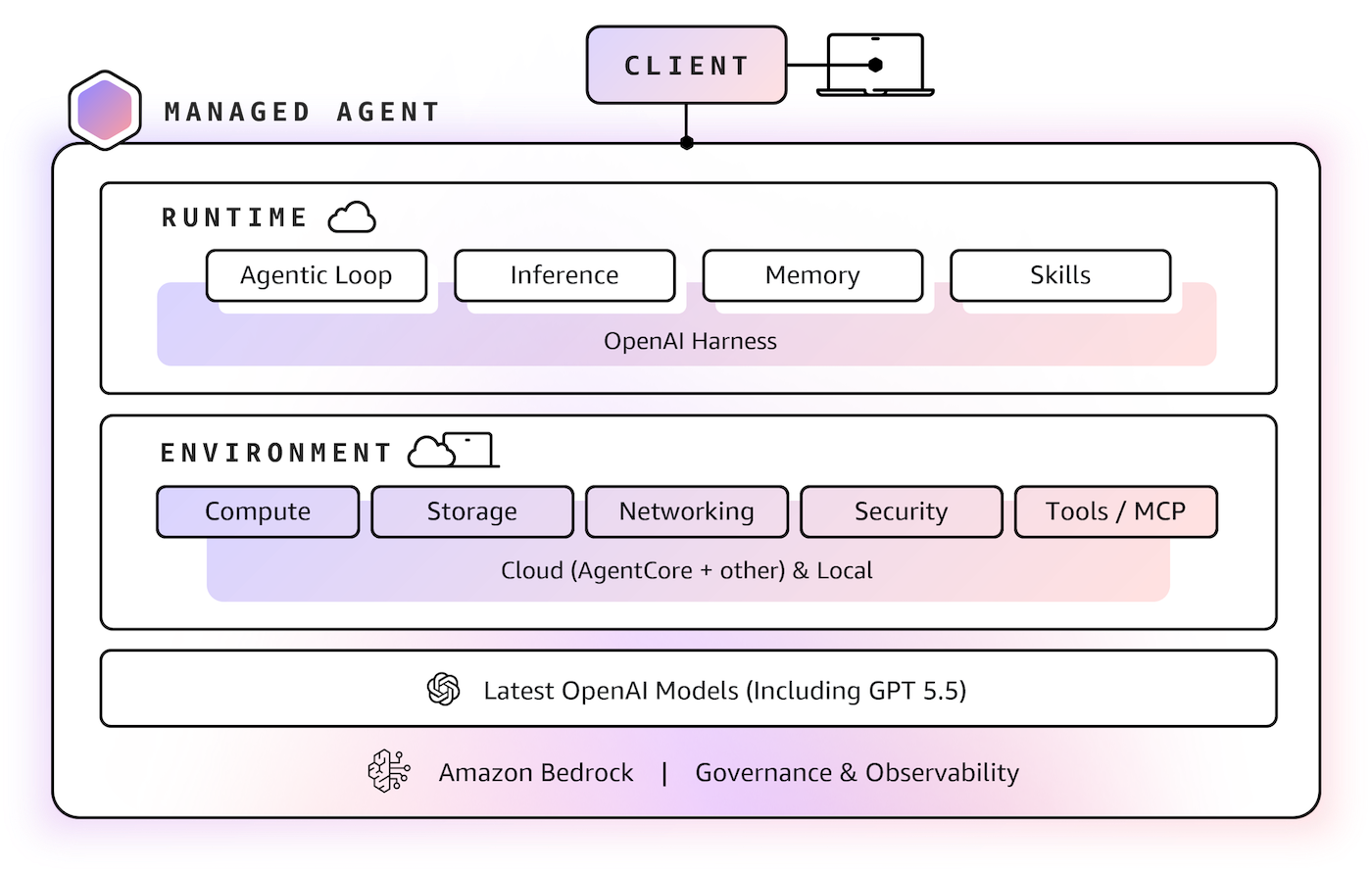
Amazon Web Services (AWS) has officially initiated a public preview of Amazon Bedrock Managed Agents powered by OpenAI. This significant development marks a strategic shift in how organizations can leverage high-performance artificial intelligence models while maintaining the rigorous governance, security, and identity controls inherent to the AWS ecosystem. By utilizing a specialized version of OpenAI’s Agents API—re-engineered to be fully AWS-native—enterprises can now deploy sophisticated AI agents that operate seamlessly within their existing cloud architecture.
The introduction of these managed agents addresses a critical challenge for many organizations: the friction between adopting cutting-edge foundation models and maintaining centralized, secure administrative control. With this integration, developers are no longer forced to choose between the powerful capabilities of OpenAI’s models and the operational benefits of the AWS platform. Instead, they can deploy agents that are inherently integrated with AWS resources, utilizing existing Identity and Access Management (IAM) roles and security protocols. This ensures that the agents operate within the established boundaries of an organization’s cloud environment, providing a more cohesive experience for IT administrators and security teams tasked with overseeing AI adoption.
Flexible Execution Environments for Modern Development
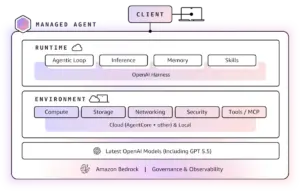
Flexibility sits at the heart of the new Amazon Bedrock Managed Agents. AWS has designed the platform to cater to a diverse array of technical requirements, acknowledging that different development teams operate with varying degrees of infrastructure maturity. Users are provided with multiple options for their execution environment, allowing for a tailored approach to deployment.
For teams that prioritize complete control over their hardware or have existing specialized compute workflows, AWS offers a self-hosted compute option. This allows developers to utilize their current development machines, existing containerized environments, or other established compute infrastructure to run their agent logic. This is particularly advantageous for organizations that have already invested heavily in custom CI/CD pipelines or hybrid cloud configurations, as it minimizes the need for significant architectural refactoring.
Conversely, for those looking to reduce administrative overhead, AWS has introduced the Amazon Bedrock AgentCore Runtime. This managed service simplifies the operational burden by providing managed runtime sessions and configurable storage directly within an organization’s AWS account. By offloading the complexities of session management and storage infrastructure to AWS, developers can focus their efforts on refining the agent’s logic and improving the quality of the interactions, rather than managing the underlying plumbing of the application. The integration with Amazon Bedrock’s broader ecosystem ensures that these agents are not isolated silos but are instead fully connected to the data sources and tools necessary to perform meaningful tasks within an enterprise context.
The Evolution of the Model Landscape on AWS
The announcement of the Managed Agents is accompanied by a broader initiative to expand the catalog of frontier models available through Amazon Bedrock. AWS continues to pursue a strategy of choice and flexibility, recognizing that no single model is ideal for every possible use case. By consistently adding new, high-performance models to the Bedrock platform, AWS enables customers to experiment with the latest advancements in natural language processing, reasoning, and task execution without the need to migrate their entire infrastructure between providers.
This expansion is part of a larger, ongoing effort to ensure that the AWS platform remains the most comprehensive destination for generative AI development. As the industry moves from simple text generation toward complex, agentic workflows that can interact with APIs, databases, and third-party software, the role of managed platforms like Bedrock becomes increasingly vital. The ability to swap models or scale agentic behavior while relying on a consistent set of AWS-native tools provides a level of future-proofing that is highly valued in the rapidly evolving AI sector.
Lifecycle Management and Operational Continuity
Alongside these new feature releases, AWS has provided updated guidance regarding the lifecycle of its existing services. Maintaining a stable, reliable environment is paramount for enterprise operations, and AWS’s commitment to transparency in its product lifecycle is designed to minimize the impact of changes. When a service or feature reaches a point where it is no longer optimal for the platform, AWS initiates a well-defined process to guide customers toward suitable alternatives, ensuring that there is adequate time for migration and planning.

As of September 29, 2026, several updates have been made to the product lifecycle status of various components within the AWS catalog. These updates include transitions to "Maintenance" status, which indicates that while the service remains functional for existing users, it will no longer be accessible to new customers starting October 29, 2026. Other services have entered the "Sunset" phase, or have officially reached "End of Support" status.
AWS emphasizes that while these changes are a natural part of the platform’s evolution—allowing for the reallocation of resources toward newer, more efficient services—the company is dedicated to supporting customers through these transitions. Detailed guidance is available for each affected service, and users are encouraged to review the documentation provided on the AWS Product Lifecycle Changes page. For organizations with complex dependencies or unique configurations, the AWS Support team remains available to provide specific, actionable advice to help navigate these transitions without operational disruption.
Engaging the Builder Community
Beyond the immediate product announcements, AWS continues to foster a vibrant community of developers and builders through its ongoing series of events and professional development initiatives. Whether through in-person gatherings, virtual summits, or specialized sessions focused on the latest in cloud architecture, these platforms provide essential opportunities for knowledge sharing and networking.
Upcoming events, including the highly anticipated AWS re:Invent and the various regional AWS Community Days, serve as critical touchpoints for the ecosystem. These gatherings are not merely promotional; they are functional forums where developers share real-world solutions, discuss architectural challenges, and learn from one another’s experiences. Furthermore, the AWS Builder Center acts as a year-round resource, providing access to a wealth of content, collaborative spaces, and tools designed to support the development lifecycle.
As the industry continues to push the boundaries of what is possible with cloud-native artificial intelligence, the focus remains on providing the infrastructure and the expertise to turn ambitious ideas into reliable, scalable reality. The launch of Amazon Bedrock Managed Agents is a clear indicator of the direction in which AWS is heading: prioritizing enterprise-grade control and security while embracing the velocity of the broader AI innovation ecosystem. For builders, developers, and architects, the path forward involves leveraging these new tools to build more intelligent, more autonomous, and more deeply integrated applications that can drive value across every facet of the modern digital enterprise.
As we look toward the future of cloud computing, it is evident that the synergy between managed, secure infrastructure and cutting-edge intelligence will define the next generation of business technology. AWS remains committed to facilitating this evolution, ensuring that its users have the resources they need to remain competitive in an increasingly AI-driven landscape.