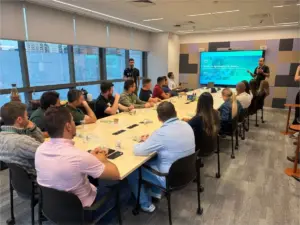










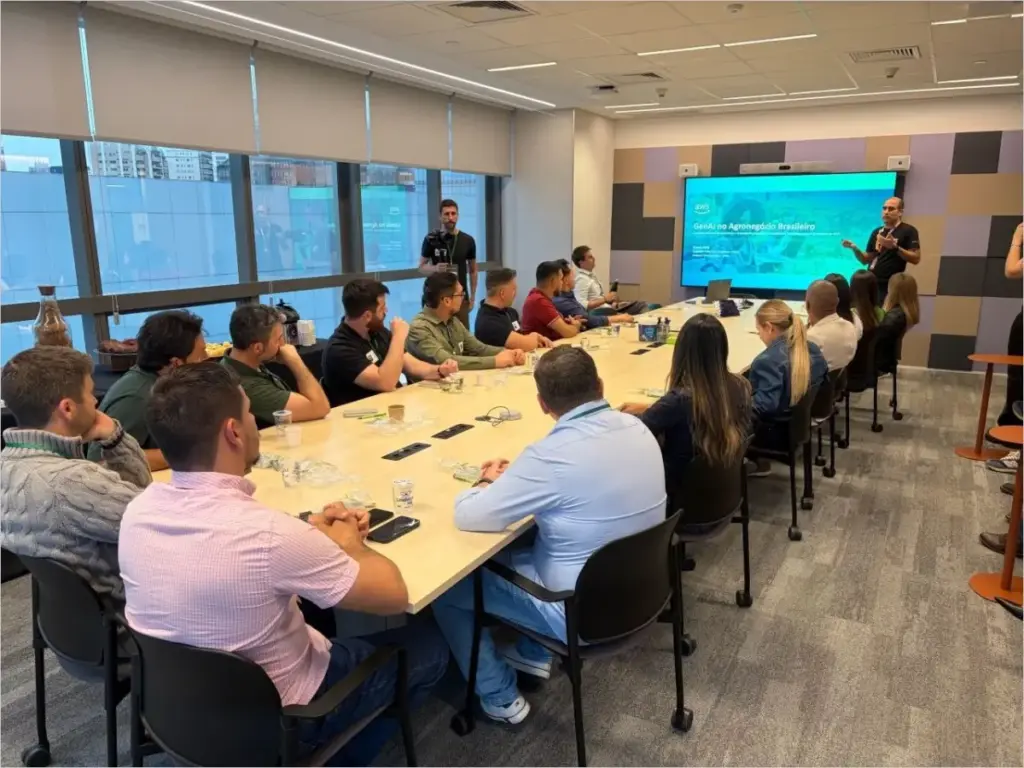
The rapid evolution of generative AI is moving beyond the confines of laboratory environments and into the practical, high-stakes trenches of global industry. A recent engagement with agribusiness leaders in São Paulo, Brazil, served as a stark reminder of this reality. When discussing how generative AI integrates into the complex stages of agricultural operations, the conversation quickly shifted away from the theoretical "if" and toward the pragmatic "how." For these leaders, the priority is delivery: ensuring that actionable insights reach the right stakeholders—often field workers navigating between remote farms—in their local language and via the most accessible interface available. In such demanding environments, where a user’s hands are occupied by a steering wheel, the most effective interface is, invariably, voice.
This specific operational need highlights why the recent update to the Amazon Polly generative engine is so significant. By adding 14 new voices to its catalog, including two specifically tailored for Brazilian Portuguese, AWS is addressing the granular requirement for localized, natural-sounding communication. As AI becomes a foundational layer in industrial workflows, the ability to provide intuitive, voice-based interactions is not just a convenience; it is a critical requirement for maintaining operational momentum in traditional markets that are racing to stay ahead of the technology curve.
A Sharper Focus on Security and Vulnerability Management
While the expansion of voice-based AI demonstrates the creative potential of current technology, the rest of the week’s news cycle brought a much more sobering focus on the security landscape. The industry is currently contending with a reality where the window between the disclosure of a software vulnerability and its active exploitation has effectively vanished. AWS underscored this shift by publishing evidence from its own "honeypot" systems, which track malicious activity in real-time.
To combat this, AWS has officially launched AWS Continuum, a service designed to fundamentally change how organizations approach code vulnerabilities. Historically, vulnerability management has been a reactive, fragmented process characterized by lengthy lists of scanner findings that overwhelm security teams. AWS Continuum shifts this paradigm by treating vulnerability management as an end-to-end lifecycle. By constructing a sophisticated context graph that maps an organization’s repositories against its actual AWS environment, the service assigns evidence levels to findings. Most notably, it attempts to reproduce exploitable findings within an isolated sandbox environment, providing developers with tangible proof-of-concept code rather than abstract severity labels.
The tool prioritizes issues based on the proximity of the attack path to business-critical systems, significantly reducing noise for security teams. Currently, every remediation step requires human approval, ensuring that developers maintain control as the system generates pull requests to fix identified flaws. This approach is rooted in a clear-eyed assessment of modern threats. During the same week, Amazon Threat Intelligence reported that a PHP2Shell exploitation attempt was identified in its MadPot telemetry on October 17—four days before the corresponding CVEs were even publicly disclosed. By the time the disclosure occurred, functional proof-of-concept exploits were already circulating. This reality renders traditional patch windows measured in days obsolete, necessitating a move toward automated, context-aware remediation. AWS Continuum is currently available in the US East (N. Virginia) and US West (Oregon) regions.

Streamlining Architecture with Amazon ECS Gateway
In the realm of cloud infrastructure, AWS is continuing its efforts to simplify the management of microservices. The introduction of the Amazon ECS Gateway represents a strategic attempt to decouple the responsibilities of network management from application development. Under this new model, platform teams define a central gateway that handles essential infrastructure concerns, including network subnets, security groups, TLS certificates, and AWS WAF web access control lists.
Application teams can then opt into this infrastructure by simply adding a gateway connector to their service definition. Upon doing so, Amazon ECS automatically provisions the necessary resources—including ACM certificates, unique DNS hostnames, and listener rules—while restricting traffic to ensure it originates exclusively from the Application Load Balancer. The economic benefits of this architecture are substantial: a single ALB can now support up to 25 services, with the system dynamically provisioning and removing load balancers based on demand. A single gateway can be associated with up to 10,000 clusters, providing a scalable, efficient path for organizations looking to modernize their service deployment without the traditional overhead of manual load balancer configuration.
A Wave of Innovation Across the AWS Ecosystem
Beyond these major releases, a series of targeted updates continue to expand the utility and efficiency of the AWS platform. The Amazon Polly upgrade mentioned earlier is a drop-in enhancement, meaning the expanded catalog of 57 generative voices—which now includes Hindi and Finnish for the first time—is accessible without changing existing code or increasing costs. The new voices, such as "Leo" and "Carolina" for Brazilian Portuguese, offer significantly more natural cadence and expression.
For organizations leveraging high-performance hardware, the introduction of TorchNeuron in public beta marks a significant milestone for PyTorch users. This open-source backend allows developers to deploy models on AWS Trainium instances by simply modifying a configuration, rather than undergoing a complete rewrite of their code. This integration ensures that developers can leverage the efficiency of Trainium2 and Trainium3 hardware while maintaining compatibility with native PyTorch functions.
Similarly, Amazon SageMaker AI has introduced new training session capabilities that allow developers to customize models without the burden of managing GPU clusters. By abstracting the complexities of distributed execution, fault recovery, and checkpoint storage, SageMaker AI allows users to focus on the post-training loop, including the implementation of custom loss functions and reward signals. This service is now available alongside support for advanced models like Muse Glimmer and Qwen 3.8.

In the world of generative AI integration, Amazon Bedrock has added support for structured outputs for Anthropic’s Claude models. By enabling the return of schema-compliant JSON, developers can now automate complex tasks like financial report extraction or clinical note parsing without the need for custom retry logic or fragile post-processing scripts. Meanwhile, those managing data infrastructure will benefit from the new zero-downtime online migration feature for Amazon ElastiCache Serverless for Valkey, which enables seamless transitions from self-managed environments to managed services without interrupting client operations.
Expanding the Horizon: Tools and Migrations
The broader ecosystem also saw updates aimed at developer productivity and operational efficiency. The newly released AWS Agent Registry serves as a centralized, managed catalog for Multi-Agent Collaboration (MCP) servers and agent skills. This allows orchestrators to discover and utilize approved capabilities at runtime, rather than hardcoding them during the build process, which improves the agility of autonomous agents.
Cost management remains a top priority for teams deploying these agents. New open-source tooling for "tokenomics" allows developers to benchmark the cost and quality of various models and hosting strategies on their own codebases. This data-driven approach is essential, as the cost structure for coding agents—which must replay growing transcripts with every turn—differs significantly from standard inference tasks. These tools help teams establish a "cost-and-quality frontier," enabling more informed decisions about which models to deploy for specific tasks.
Large-scale enterprise migrations also continue to demonstrate the power of the AWS cloud. A recent example detailed how U.S. Bank successfully migrated 119 terabytes of data from Oracle Exadata to Amazon RDS for Oracle. By utilizing a pipeline built on Oracle XTTS, AWS DataSync, and Amazon EFS, the bank completed the baseline copy in approximately seven days, with minimal downtime during the cutover process.
As the industry prepares for the annual AWS re:Invent conference, scheduled for November 30 to December 4 in Las Vegas, the sheer volume of these releases highlights the rapid pace of innovation. With over 2,200 sessions planned, the event will serve as a focal point for exploring these new tools in greater detail. Additionally, the regional AWS Community Days, including the upcoming event in Belém on October 31, continue to foster the local expertise necessary to implement these advanced technologies effectively. As these tools mature and integrate into the fabric of global enterprise, the focus remains firmly on making complex technologies both accessible and secure for the builders of today.