










The landscape of the DC Universe is currently defined by shifting tectonic plates. Following the sudden and unexpected ousting of DC Studios’ co-CEOs James Gunn and Peter Safran, the creative trajectory of several high-profile projects has been thrown into disarray. Among the most prominent casualties of this leadership shake-up is the HBO series Lanterns, a show that had only recently captured the cultural zeitgeist with its gritty, grounded take on the iconic Green Lantern mythology. With the future of the series now in a state of suspended animation, fans are left wondering if the intergalactic mystery featuring two mismatched heroes will ever receive a second season.
The uncertainty surrounding Lanterns is particularly striking given the momentum it had built during its inaugural run. Season 1 was widely regarded as a critical success, blending high-concept science fiction with a grounded, character-driven narrative. So promising was the series’ trajectory that co-creator Chris Mundy had already begun the foundational work for a sophomore outing, including the assembly of a writers’ room tasked with mapping out the next chapter of the story. However, in a candid interview earlier this week, Mundy addressed the current status of the production, acknowledging that the likelihood of the series continuing currently sits at a precarious "50/50."
This limbo is a frustrating reality for viewers who invested in the chemistry between the show’s leads, Kyle Chandler as the veteran Hal Jordan and Aaron Pierre as the pragmatic John Stewart. While the industry waits for clarity on the studio’s broader plans, those seeking a similar "odd-couple" dynamic paired with high-stakes mystery need not look far. A perfect, albeit tonally distinct, replacement is readily available in the form of The X-Files. With an expansive library of 218 episodes available to stream, the classic sci-fi mystery series provides an immersive alternative that shares the DNA of the "mismatched partnership" trope while offering a vastly different viewing experience.


A Study in Contrasts: From the Green Lantern Corps to the FBI
Lanterns was marketed as a bold departure from the traditional, operatic space-opera roots of the Green Lantern comics. Instead of cosmic battles on distant moons, the show centered on the tension between two men thrust into an alien mystery within the confines of a small American town. Hal Jordan, portrayed by Kyle Chandler, embodied the archetype of the cocky, instinct-driven hero. As Earth’s first Green Lantern, his tenure was defined by a reliance on the power ring’s near-limitless potential and a tendency to disregard the rigid protocols set forth by the Guardians—the ancient, stoic alien overseers of the Green Lantern Corps.
The introduction of John Stewart, played by Aaron Pierre, served as the narrative’s primary catalyst for conflict. An ex-Marine with a disciplined, by-the-book mentality, Stewart was not merely an addition to the force but a strategic replacement hand-picked by the Guardians to rein in Jordan’s unpredictability. The series thrived on this friction, forcing two polar-opposite individuals to collaborate while investigating a mysterious, potentially catastrophic incident in Rushville, Nebraska.
In many ways, this setup mirrors the quintessential dynamic of The X-Files. The 1990s phenomenon also hinges on a "ruse" of sorts, where the internal politics of an organization—in this case, the FBI—dictate the partnership. Fox Mulder, played by David Duchovny, is the quintessential believer. A former hotshot criminal profiler who became obsessed with the paranormal and the possibility of extraterrestrial life, Mulder represents the intuitive, often reckless pursuit of truth. Recognizing his talents but wary of his fringe theories, the FBI hierarchy pairs him with Dana Scully, portrayed by Gillian Anderson. As a medical doctor rooted in empirical science and skepticism, Scully’s mission is ostensibly to debunk Mulder’s findings and bring a sense of institutional order to the "X-Files" division.

The Evolution of Partnership
The core appeal of both series lies in the slow-burn development of mutual respect. In Lanterns, the narrative arc for Jordan and Stewart was built on the gradual stripping away of initial biases. As the gravity of the mystery in Rushville intensified, the characters were forced to move past their surface-level grievances. Jordan began to respect the tactical precision and integrity of Stewart, while Stewart gained an appreciation for the raw, albeit unconventional, bravery that allowed Jordan to wield the ring effectively.
This process of professional reconciliation is a hallmark of the genre, and The X-Files remains its most enduring exemplar. Throughout its eleven-season run, the dynamic between Mulder and Scully evolved from professional antagonism to a deep, platonic, and eventually romantic bond. The beauty of their arc—and why it remains a blueprint for television writers—is that it was never rushed. Scully’s transition from a skeptical watchdog to an ally who ultimately validated Mulder’s worldview was a earned journey. It allowed the audience to experience the supernatural elements of the show through both lenses: the wonder of the believer and the rigor of the scientist.
Divergent Viewing Experiences
While the thematic overlap is significant, the actual experience of watching The X-Files is a distinct departure from the tight, serialized nature of Lanterns. As a modern streaming-era series, Lanterns focused its eight-episode run on a singular, overarching mystery. Every scene, every beat, and every character interaction was designed to feed into the resolution of that specific narrative arc.

In contrast, The X-Files represents the golden age of the procedural format. While the series maintains a complex, overarching "mythology" regarding the existence of extraterrestrials and government conspiracies, the vast majority of its 218 episodes are self-contained. This "monster of the week" structure allowed the show to explore an incredibly wide array of genres. One week, the audience might be treated to a tense horror story about a rural urban legend; the next, a darkly comedic look at a local mystery.
The range of the series is one of its greatest strengths. It spans the spectrum from dead-serious political thrillers to experimental, genre-bending episodes that pushed the boundaries of what television could accomplish in the 90s. While some episodes, such as those involving recurring supernatural threats, are occasionally uneven, the sheer volume of content provides a deep well of storytelling that Lanterns simply could not achieve in its shorter format. Even the occasional misstep—such as the show’s rare forays into lackluster vampire narratives—serves to highlight how ambitious the series was in its attempt to tackle almost every facet of the speculative fiction genre.
A Mirror Held Up to the Fantastic
Perhaps the most fascinating distinction between the two shows is how they handle the relationship between the mundane and the extraordinary. The X-Files uses the FBI as a grounded, bureaucratic anchor. The horror comes from the fact that these normal, flawed human beings are constantly forced to confront things that defy the laws of physics and biology. The agents are the "real" part of the show, while the world they inhabit is increasingly alien.
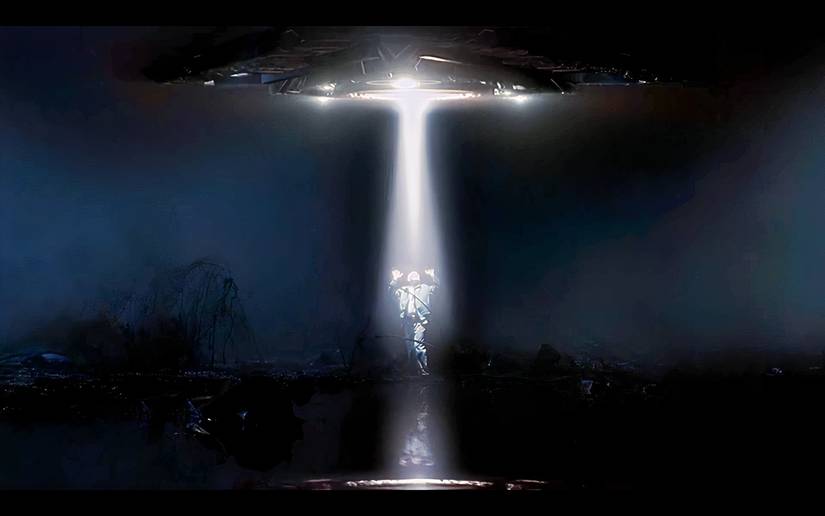
Lanterns effectively inverts this. The Green Lanterns themselves—with their rings capable of manifesting complex constructs out of light—are the most inherently fantastic elements of the series. Yet, the story chooses to place these god-like powers in a grounded, small-town setting. By stripping away the grand, cosmic scope typically associated with the Green Lantern Corps, the show highlights the humanity of the heroes. Even with the introduction of the Manhunters and other extraterrestrial threats, the focus remains on the psychological toll of the job and the internal politics of the organization.
As fans continue to monitor the news for any update on the potential renewal of Lanterns, the return to a series like The X-Files offers more than just a distraction. It provides a reminder of why the "mismatched partners" trope works so well in science fiction. Whether it is through the lens of a glowing power ring or an FBI badge, the core of the story remains the same: two individuals, often at odds, finding the strength to uncover the truth in a world that is far more mysterious than it appears. For those who find themselves missing the atmosphere of Lanterns, the long history of the X-Files awaits on platforms like Pluto TV, Hulu, and Disney Plus.