









For years, the WordPress ecosystem has relied heavily on traditional page builders that, while making web design more accessible to non-coders, often came with frustrating trade-offs. Rigid layout structures, heavy reliance on third-party plugins, bloated DOM outputs, and noticeable performance penalties have long been accepted as the baseline cost of visual website creation. Now, a fresh alternative is entering the landscape. Kirki, a new no-code visual website builder for WordPress, is challenging these conventions by introducing the platform’s first freeform visual builder built around an infinite canvas, promising cleaner performance, full design freedom, and complete independence from third-party add-ons.

Instead of building upon the restricted frameworks of older page builders, Kirki reimagines the website creation experience from the ground up. It merges an integrated content management system with an extensive suite of built-in features, aiming to streamline workflows for creators while producing significantly faster and more efficient websites. Whether targeting designers seeking pixel-perfect control, developers prioritizing clean code output, or business owners looking to bypass unnecessary technical complexity, the platform sets out to remove the historical limitations associated with WordPress design.

A closer look at Kirki reveals a unique positioning within the market. Unlike competitors that lock critical features behind expensive tiers or require a web of supplementary plugins to function correctly, Kirki operates as an all-in-one solution. Notably, the platform offers a powerful free version available directly from the WordPress plugin directory, providing users with access to modern design tools on an infinite canvas without financial barriers. For those looking to scale, the Pro plans offer transparent and competitive pricing, starting with a Starter tier at $59 per year for a single site and extending to a lifetime option for $499. Crucially, these paid tiers do not gatekeeper essential functionality; dynamic content tools, pop-up builders, form builders, submission managers, and a growing template library are included from day one across every plan.


To understand the real-world impact of these architectural differences, performance benchmarks offer telling insights. Recent tests comparing Kirki and Elementor under identical conditions—using clean WordPress installations and the default Twenty Twenty-Five theme—demonstrated a clear divergence in technical efficiency. When subjected to Lighthouse audits measuring load times, responsiveness, and Core Web Vitals, Kirki consistently outperformed traditional frameworks. The secret lies in its code output: Kirki generates a streamlined DOM with significantly fewer nested div elements and wrapper scripts. Elementor, by contrast, produced heavily nested markup and extra scripts even on basic layouts, resulting in dragged-down performance scores. For users prioritizing speed, SEO, and technical hygiene, Kirki’s lightweight output presents a compelling advantage.

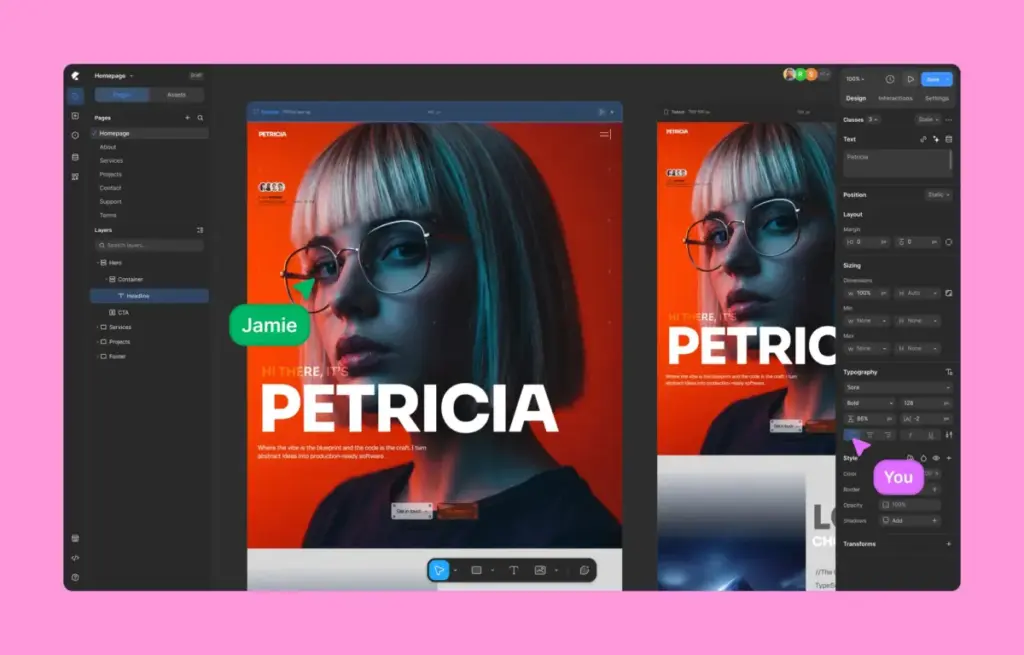
Beyond performance, the builder’s feature set introduces several industry-first concepts to the WordPress environment. Its infinite canvas allows creators to pan freely, zoom in and out, layer backgrounds, and manage complex interactions visually, mirroring workflows found in dedicated design software like Figma and Webflow. Furthermore, Kirki addresses one of the most tedious aspects of responsive design through concurrent editing across all views. Rather than forcing users to switch back and forth between desktop, tablet, and mobile modes, the platform displays all responsive viewports side by side on the same canvas in real time. Cascading design systems ensure that changes made at larger breakpoints flow down naturally, reducing redundant work.

For teams transitioning from design to development, the platform includes a direct Figma-to-Kirki handoff workflow, allowing complex layouts to be imported into functional, responsive WordPress pages without manual rebuilding. Similarly, native dynamic content management eliminates the traditional need for external plugins like Advanced Custom Fields, enabling users to bind custom data sources directly within the visual editor. Styling is handled through an efficient class-based editing system paired with global CSS variables, allowing for scalable design management and custom CSS or JavaScript injection for advanced users.

The platform also introduces sophisticated visual interactions, moving past generic animations with a timeline-based editor that supports scroll-based triggers, hover effects, and text animations broken down by character or word. Centralized management through Kirki Apps further simplifies operations by housing third-party integrations—such as analytics, CRMs, and email marketing tools—directly inside the editor. For collaborative environments, Kirki brings real-time multi-user co-editing to WordPress, letting team members view color-coded cursors and leave pinned canvas comments simultaneously. Finally, a built-in Page Audit tool automatically scans layouts for accessibility issues, missing alt text, and broken links before publication.

Backed by a growing template library featuring full website kits, pre-designed pages, and modular sections, Kirki is shifting perceptions within the community. While simpler site builders may still appeal to users needing a basic five-page site instantaneously, Kirki is carving out a distinct space for professionals who refuse to compromise on speed, design freedom, or long-term scalability. As user feedback increasingly positions the tool as a forward-thinking alternative in the WordPress ecosystem, it demonstrates that building sophisticated websites no longer requires accepting performance bloat or structural rigidity.