







The digital world relies on a foundation of open source software, yet those who maintain this critical infrastructure are increasingly overwhelmed. As automated scanning tools have made it easier and cheaper to generate security reports, maintainers are finding themselves flooded with a deluge of notifications. Many of these reports are duplicates, false positives, or low-quality findings that require significant time and human judgment to parse. For the maintainers of essential open source projects, the sheer volume of these raw, unverified alerts has become a major point of friction, often distracting from the actual work of building and securing software.
In a significant effort to shift the paradigm from mere "finding" to active "fixing," GitHub and Microsoft recently concluded a pilot program dubbed Codename MDASH. The initiative sought to determine whether agentic AI could alleviate the burden on maintainers by providing them with high-quality, actionable, and verified security reports. Rather than simply pointing out potential vulnerabilities, the program aimed to hand maintainers suggested, ready-to-review patches. The results have been promising: across six widely used open source projects, thousands of raw AI-generated findings were refined into 99 high-fidelity, private reports. Within weeks, maintainers had already implemented fixes for more than half of these issues, with several already integrated into production environments.
The Problem: When AI Becomes Noise
The core issue facing modern open source maintainers is that security, in its current automated state, often adds to their workload rather than reducing it. As Christian Grobmeier, a maintainer of the ubiquitous Log4j project, has pointed out, the AI used to defend open source must be significantly better than the AI used to attack it. When a new security model is pointed at an open source project without prior coordination, it frequently results in a flood of unverified reports. This is counterproductive. Maintainers are already under immense pressure; receiving a report that may or may not be a vulnerability—and which lacks a clear path to resolution—only adds to the noise.

GitHub and Microsoft recognized that the current landscape of security scanning is tilted toward discovery rather than remediation. Their pilot, Codename MDASH—an acronym for Microsoft’s multi-model agentic scanning harness—was designed with two clear, non-negotiable goals. First, the system would only transmit findings that truly mattered, cutting through the noise. Second, no maintainer would ever receive an unverified finding. By shifting the focus toward providing solutions, the researchers hoped to demonstrate that AI could act as a force multiplier for security, rather than a bureaucratic hurdle for those responsible for maintaining the world’s most critical code.
A New Workflow for Security
The pilot operated on a clear, researcher-led workflow. By utilizing Microsoft’s MAI Cyber model, the team identified thousands of potential issues across six projects: AutoGPT, Caddy, Express, FastMCP, ImageMagick, and Netty. However, the AI was only the first step in a larger process. Every finding was subjected to rigorous triage and manual verification by a team of seven researchers from the Microsoft FORGE Lab. This human-in-the-loop approach was essential to ensuring that the reports sent to maintainers were accurate and relevant.
Because the process was designed to be as frictionless as possible, all reports and suggested fixes were delivered directly within the GitHub ecosystem, where maintainers already conduct their daily work. This meant that when a maintainer opened a report, they were not looking at a raw, ambiguous scan result; they were looking at a well-scoped patch, ready to be reviewed, adapted, or merged.
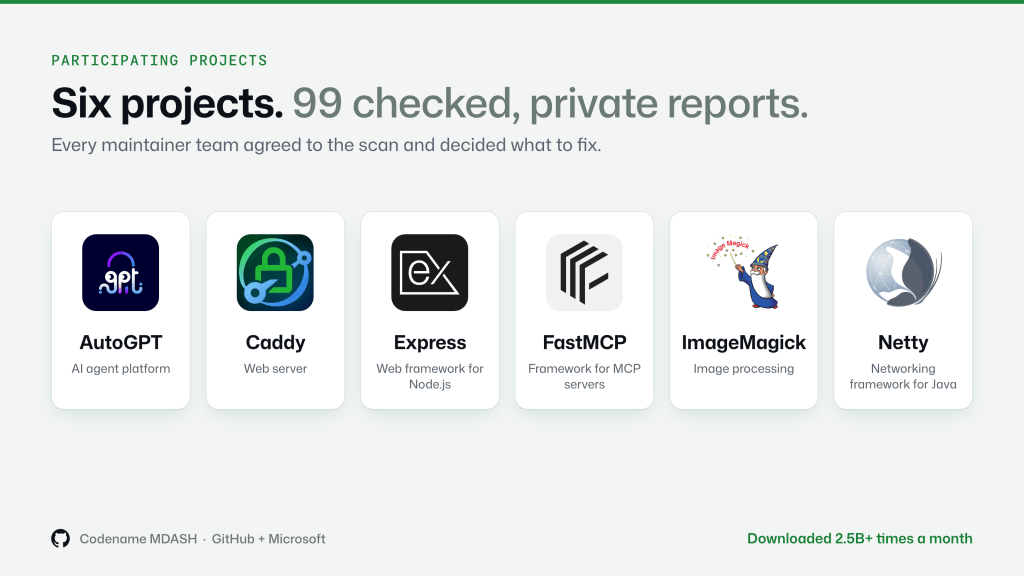
The results validated the strategy. Within a week of the initial scan, the first fixes were already being shipped. For example, the maintainers of Caddy were able to address all 22 reports they received in under seven days. In other instances, such as with AutoGPT, the maintainers took the AI-generated suggestion, refined it further based on their deep knowledge of the project’s codebase, and deployed a robust fix to production in less than a week. This outcome highlights a critical takeaway: when AI provides a high-quality starting point, it accelerates the maintainer’s work rather than dictating it.
Learning from the Frontlines
The pilot provided valuable insights into the limitations and potential of AI in open source security. A primary lesson was that for maintainers, the bottleneck is rarely the identification of a problem—it is the process of fixing it. A Netty maintainer noted that while finding vulnerabilities was once the primary challenge, the real difficulty now lies in the remediation process, which relies entirely on the expertise and time of the maintainer.
The feedback from the six participating projects underscored the value of high-quality, curated reports. The maintainers of Express noted that the MDASH reports effectively cut through the typical noise of security alerts, while the FastMCP team observed that the scan uncovered obscure bugs that had been missed by previous, purely automated scanners. Perhaps most telling was the experience of the two-person team at ImageMagick. They reported that a security advisory which would normally take them up to an hour to read, verify, and remediate was handled in just 15 minutes, thanks to the precision of the MDASH report.
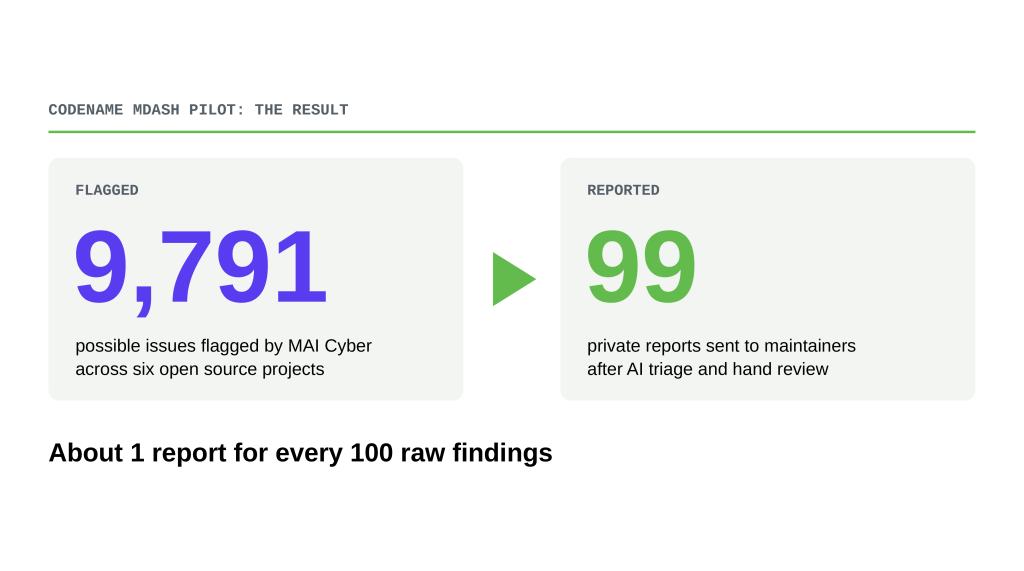
However, the team acknowledged that the current approach does not yet scale universally. The intensive, two-day-per-project manual review process conducted by the FORGE Lab researchers is a significant investment. While it produced excellent results for these six projects, it highlighted that the industry still has a gap to close. For open source projects to truly benefit from this, the ecosystem needs a broader adoption of private vulnerability reporting (PVR) and better infrastructure for running continuous integration tests on private forks. Furthermore, as the arms race between cyber-capable AI models continues, maintainers will increasingly need access to these same tools to verify proofs of concept before and after they implement their own fixes.
Why This Matters for the Digital Supply Chain
The broader implications for the software industry are significant. If the industry can standardize this approach, the cost of security for maintainers could drop dramatically. The fundamental rule for any security researcher or organization using AI to scan open source software should be simple: if you are going to alert a maintainer, you should be prepared to do the heavy lifting of triage and suggest a fix. Maintainers should not be forced to spend their limited time acting as a filter for noisy, low-quality scanner output.
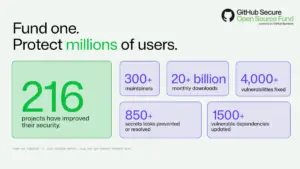
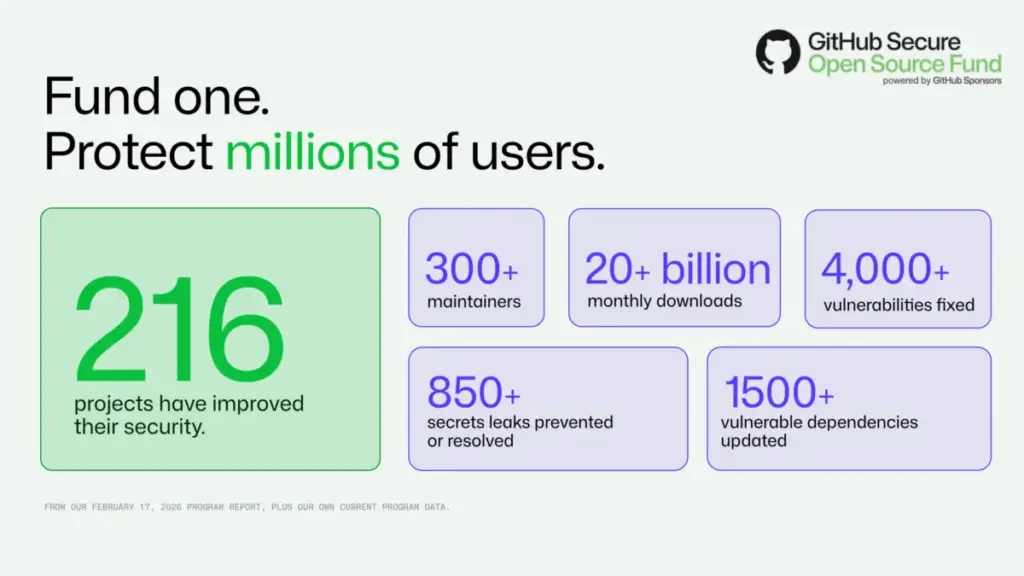
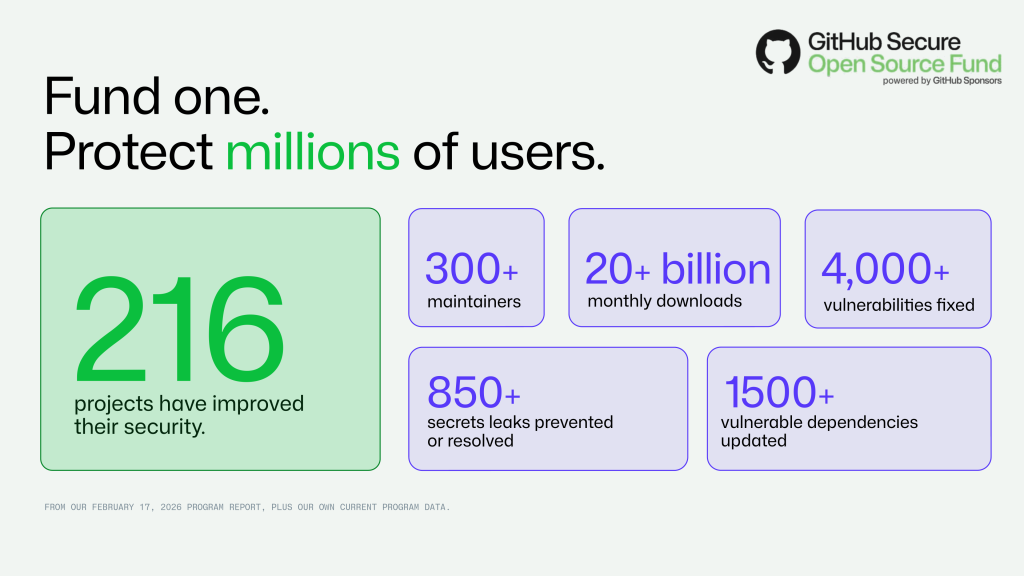
The success of the Codename MDASH pilot is deeply tied to the broader mission of the GitHub Secure Open Source Fund. This fund, which has supported over 200 projects and facilitated thousands of vulnerability fixes, provides not just financial backing but also security training and resources to those who maintain the software that powers the digital economy. The participants in the MDASH pilot—all alumni of this fund—represent a microcosm of the larger open source ecosystem, ranging from foundational programming languages and runtimes to critical infrastructure services and development tools.
As the industry looks to the future, the challenge of securing the software supply chain will likely depend on the collaboration between large organizations and the individuals who volunteer their time to maintain critical projects. The goal is not to replace the human maintainer with AI, but to ensure that the human maintainer is never working alone. By providing the right tools, the right support, and the right level of respect for their time, the tech industry can help build a more secure, resilient, and sustainable foundation for all of the software we rely on every day.
The pilot has set a new standard for how security reports should be handled in the age of AI. It demonstrates that when research, technology, and community-focused support align, the result is not just a cleaner codebase, but a more empowered community of developers capable of rising to the challenges of modern software security. As GitHub and Microsoft continue to refine these processes, the lessons learned from these six projects will likely serve as a blueprint for future efforts to protect the open source ecosystem, ensuring that the software foundation remains strong for the billions of users who depend on it globally.