For the better part of three decades, the professional life of a software engineer has been defined by a familiar, ritualistic setup: a mechanical keyboard, a high-resolution monitor crowded with tabs, a persistent terminal window, and an IDE that served as the command center for the digital world. The tools of the trade have evolved—from the days of rudimentary text editors to the sophisticated integrated development environments of today—but the core relationship between the developer and the machine remained stagnant. We learned the syntax of the language, memorized the arcane keyboard shortcuts of our preferred tools, and meticulously adapted our cognitive processes to suit the limitations of the computer.
Today, that relationship is undergoing a fundamental metamorphosis. This shift is not merely about the convenience of having an AI suggest a snippet of code or auto-complete a function. It is a shift in the very nature of software engineering, moving from the manual execution of commands to the expression of intent. We are entering an era where the system itself possesses the capability to comprehend a repository, evaluate the appropriate model for a specific task, plan a project, execute commands, inspect failures, and iterate—all within carefully defined boundaries established by the developer.
Moving From Command to Intent
The core of this evolution lies in the ability of platforms like GitHub Copilot to act as a partner in the development lifecycle. A developer can now describe a high-level outcome, and the AI agent can parse the repository’s context, analyze complex symbols and dependencies, edit relevant files, execute tests, and refine the implementation. Within the IDE, this manifests as an interactive loop. A coding agent can take a specific issue, move it into an isolated environment powered by GitHub Actions, and return a polished pull request ready for human review.

This is not simply a matter of accelerating the speed at which code is written; it is a fundamental shift in the development workflow. When the mechanics of writing, debugging, and testing are delegated to an agent, the developer’s role transforms. The burden of navigating the minutiae of tool chains is replaced by the necessity of setting clear direction, defining constraints, and reviewing the evidence provided by the machine. In this new landscape, the value of a developer is increasingly tied to their judgment, their understanding of the codebase’s architecture, and their ability to determine what constitutes a high-quality, long-term solution for the end user.
This change does not absolve the developer of responsibility. On the contrary, it makes the developer’s role more critical than ever. An agent can generate three potential implementations for a feature before the human engineer has finished their coffee, but it lacks the nuanced "taste" required to know if a specific abstraction is appropriate, if a migration is truly safe, or if a suite of tests actually validates the right things. The developer remains the final arbiter of quality, accountable for the outcome even as the mechanics of the work are increasingly offloaded to intelligent systems.
Building an Ambient Intelligence
The goal for the future of development is not to place AI alongside the current workflow, but to embed it into the fabric of the process itself. This requires a transition toward what could be described as "ambient intelligence"—a state where the AI understands the developer’s intent without requiring constant, explicit instruction.
Achieving this requires a high degree of portability in how context is shared. Technologies like the Model Context Protocol (MCP) are vital in this regard, as they connect agents to a wide variety of tools and services. Furthermore, repository-specific instructions and coding skills serve to encode organizational conventions, while hooks can be used to enforce policies and validate output. The most effective systems will be those that connect these layers—modality, which captures intent; the harness, which plans and executes; and the control plane, which allows the developer to inspect and approve—without forcing the human to relinquish control.
The Return of Physical Controls
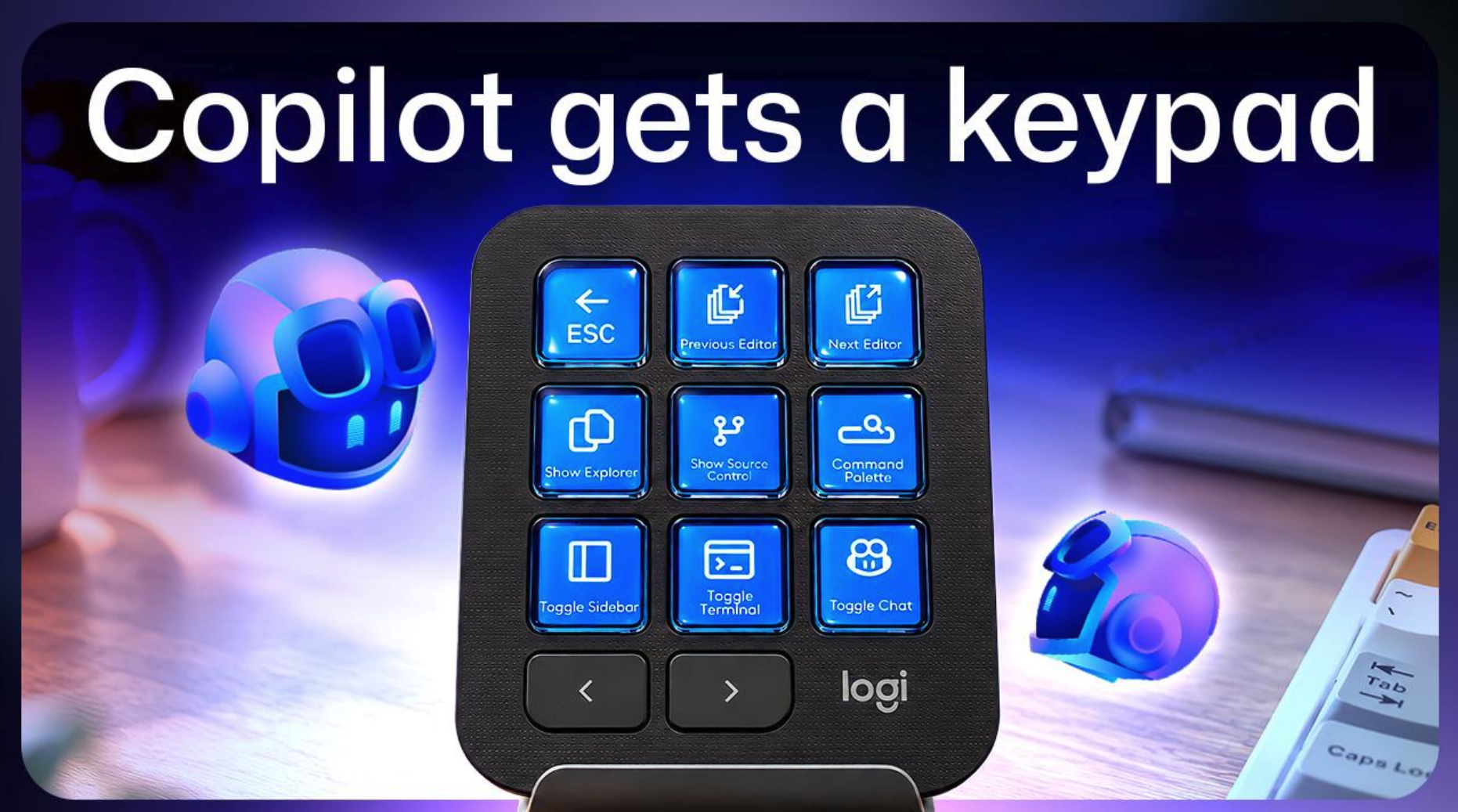
As we move beyond the keyboard and terminal, there is a renewed interest in how physical hardware can facilitate this new way of working. In the maker community, developers have been experimenting with ambient control devices—ranging from repurposed picture frames to custom ESP32-based hardware—to see how alternative interfaces can improve the flow state.
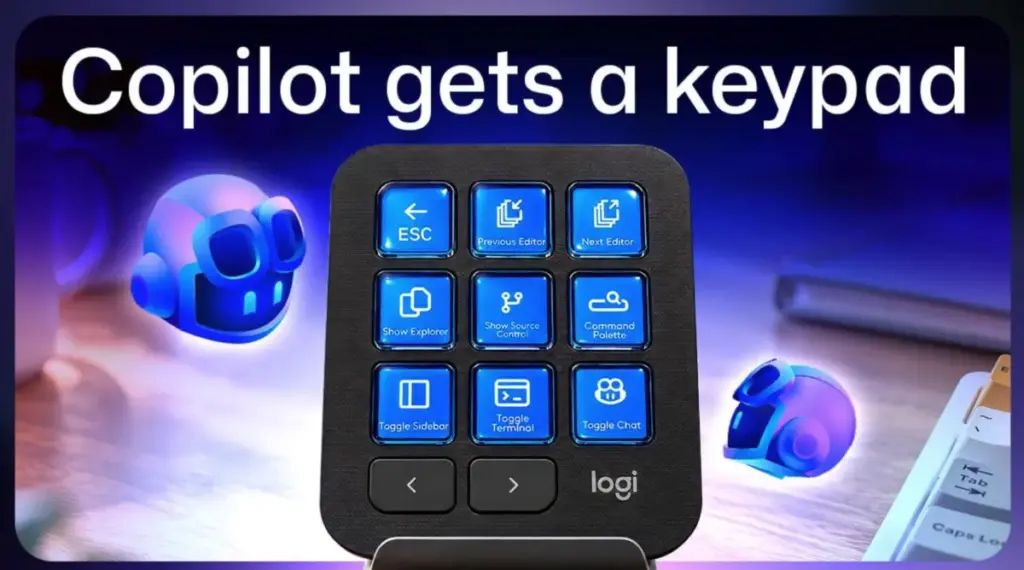
Recognizing the potential to reduce friction, GitHub has collaborated with Logitech to explore how the MX Keypad can be integrated into the developer’s workflow. The objective is to turn repeated, granular actions into programmable inputs that are contextually aware of the work being performed. Within the GitHub Copilot app, a single keypress can trigger a parameterized prompt, resume a stalled session, invoke a complex IDE command, or execute a multi-step sequence that would otherwise require navigating multiple menus or typing repetitive instructions.
The value of this hardware is not universal; not every developer requires another device on their desk, and not every task justifies a dedicated button. However, for the actions that repeat constantly throughout the day, the ability to trigger a command without breaking one’s focus is a significant productivity gain. By allowing the developer to decide which actions earn a physical shortcut, we allow them to curate their own environment, choosing between voice, the command palette, or a physical key based on the specific context of their work.
The Future of the Interface
The history of software development is a history of interface innovation. Graphical User Interfaces made software visual; the mouse made navigation intuitive; the web made it collaborative; and mobile made it tactile. The era of the agent introduces "intent" as a primary interface, and the inclusion of ambient, physical control is the next logical step in this progression.
GitHub’s work with Logitech to integrate the GitHub Copilot app directly into the MX Keypad experience is a direct attempt to explore this frontier. By allowing developers to run agentic workflows while maintaining granular control, the partnership seeks to solve a fundamental problem: how to steer and resume automated work without losing the flow of thought.
We are currently in the early stages of this transition, and the most important questions remaining are engineering-centric. How much context should an agent retain? How do we safely manage secrets, credentials, and network access within an automated agentic framework? How can multiple agents coordinate their work without creating conflicts? These are the challenges that will define the next phase of the industry.
For decades, the mark of a skilled developer was the ability to "speak computer"—to master the syntax, APIs, and arcane incantations required to coax a machine into doing what was asked. Today, computers are finally getting better at meeting us halfway. The most successful interfaces of the future will not be the ones with the most buttons or the most sophisticated AI panels. They will be the ones that understand enough context to be useful, preserve enough control to be reliable, and get out of the way so that engineers can focus on building software that actually matters. The goal is not to remove the developer from the work, but to remove the friction that keeps them from realizing their vision. For those interested in exploring this shift, the combination of the MX Keypad and GitHub Copilot Pro+ offers a practical, hands-on experiment in what the future of focus might look like.