








In a landmark decision that marks a historic turning point for both telecommunications and space exploration, the Federal Communications Commission (FCC) has officially granted the first authorization in United States history for a massive constellation of data centers stationed directly in space.
Announced as part of a major regulatory clearance, the federal agency has cleared SpaceX to deploy up to 1 million "Starmind" artificial intelligence satellites into orbit. According to the regulatory body, this ambitious, unprecedented deployment plan successfully meets all of the agency’s strict orbital debris guidelines, paving the way for a new era of space-based computing infrastructure designed to support escalating computational demands back on Earth.
This regulatory approval arrives at a pivotal moment in the domestic and global development of artificial intelligence and super intelligence capabilities. As terrestrial power grids, land resources, and environmental constraints increasingly strain under the immense energy and cooling requirements of modern data processing, the prospect of shifting heavy computation into the vacuum of space has shifted from theoretical science fiction to tangible reality.


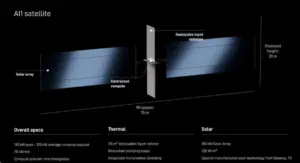
Under the newly approved framework, SpaceX is authorized to launch and operate a staggering one million orbital compute modules. These specialized satellites are engineered to process massive, unprecedented quantities of data in orbit, functioning essentially as decentralized, extraterrestrial data centers. The processed data will then be transmitted back down to Earth, providing a scalable and technologically advanced alternative to traditional, land-bound server farms.
Beyond the immediate technological and infrastructure benefits, regulators and industry stakeholders note that the deployment carries profound long-term implications for humanity’s technological evolution. Proponents of the initiative argue that establishing orbital computing networks brings the human race an important step closer to achieving a Kardashev II civilization—a theoretical milestone in which a civilization is capable of harnessing and consuming the entire energy output of its host star. By placing energy-hungry AI computation infrastructure directly in space, where solar power is continuous, unobstructed by weather, and infinitely more abundant, humanity takes a foundational structural step toward mastering stellar-scale energy management.
Crucially, the regulatory approval was contingent upon rigorous scrutiny regarding space sustainability. With Earth’s lower orbits growing increasingly crowded with commercial constellations, the question of space junk and orbital debris has become a central focus for international regulators. The FCC explicitly held that SpaceX’s deployment plan complies fully with its established orbital debris rules, ensuring that the million-node constellation includes adequate provisions for end-of-life de-orbiting, collision avoidance, and orbital stewardship.
This ruling does not exist in a regulatory vacuum. Following this historic first authorization, the FCC has confirmed that it is actively continuing to review additional orbital data center proposals submitted by various commercial entities. The agency has stated its intention to issue formal decisions on each pending proposal expeditiously, adhering strictly to its established administrative and technical procedures. As the commercial space race shifts from broadband connectivity to orbital processing power, the FCC’s handling of these subsequent applications will likely set the global standard for how governments regulate the commercialization of outer space.

The decision underscores a dramatic acceleration in the intersection of aerospace engineering and artificial intelligence. While technical challenges remain immense—ranging from radiation hardening of advanced silicon chips to high-speed laser crosslinks between millions of moving nodes—today’s FCC authorization provides the green light for SpaceX to begin translating this futuristic vision into operational reality.
Further details regarding the technical specifications, deployment timelines, and regulatory conditions of the authorization can be found in the official press release issued by the Federal Communications Commission.