











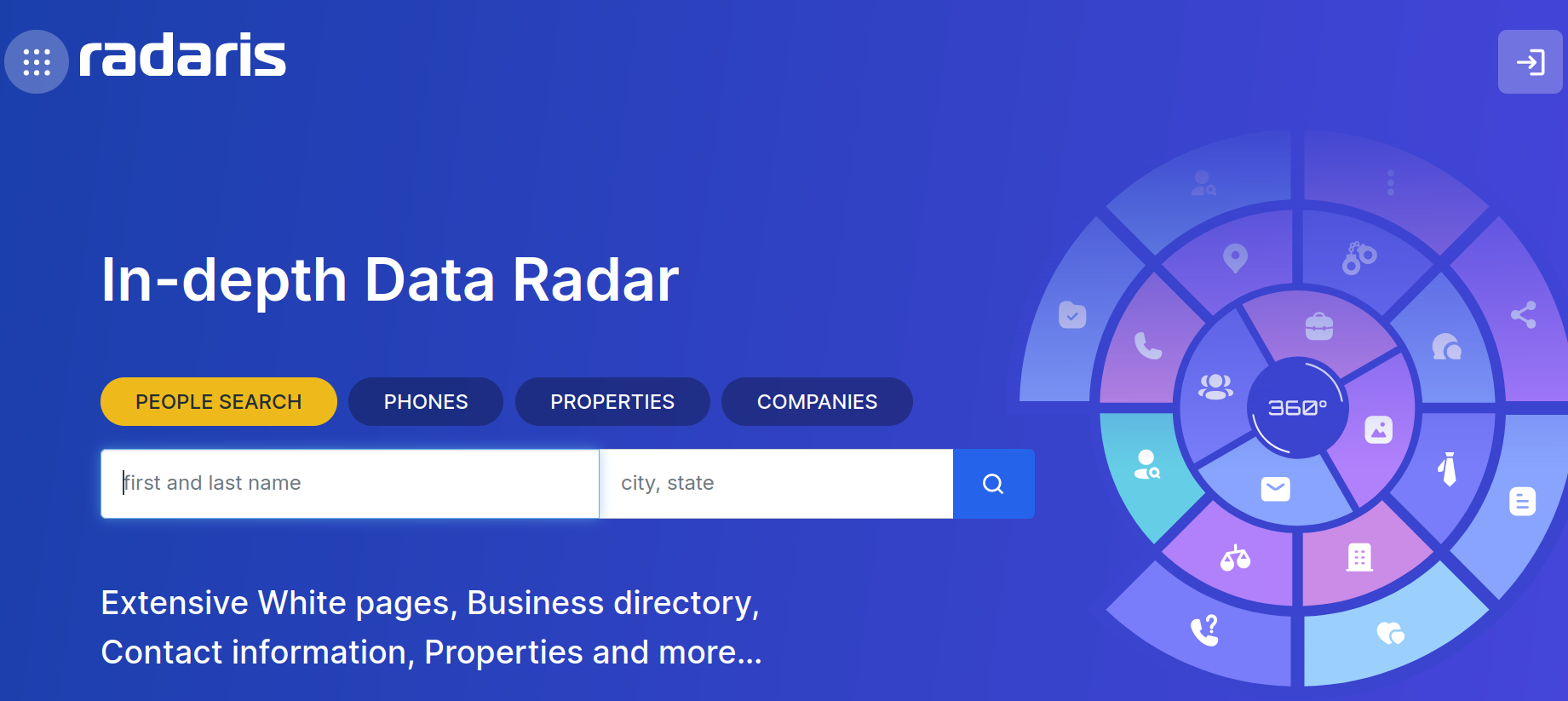
The digital landscape for consumer data brokers has been shaken by a landmark judicial decision involving the notorious people-search platform Radaris.com. Known for its aggressive data scraping and a stubborn refusal to honor requests for the removal of personal information, Radaris has finally faced severe legal consequences. A judge has ordered the transfer of Radaris.com and over a dozen associated domains to Atlas Data Privacy Corp, a firm currently spearheading litigation against data brokers for violating a critical New Jersey privacy statute known as Daniel’s Law.
This development marks a significant turning point in a long-standing battle between data privacy advocates and an industry often criticized for operating in the shadows. For years, Radaris maintained a reputation for stonewalling individuals who sought to reclaim their personal data. However, the company’s habitual prevarication and complex legal maneuvers ultimately failed to protect it from the reach of the New Jersey judicial system.
The Reach of Daniel’s Law
The litigation centers on Daniel’s Law, a protective statute enacted in New Jersey to safeguard the privacy of law enforcement officers, judges, government personnel, and their families. The law was born from a tragic incident involving the family of a federal judge, serving as a legislative response to the dangers posed by the unchecked publication of sensitive information. Under the statute, designated public officials have the right to demand the total removal of their personal data from commercial databases. Non-compliance carries significant weight, with the law providing for fines of $1,000 per violation for companies that ignore valid removal requests.
Atlas Data Privacy Corp, the plaintiff in the case, filed suit against Radaris in February 2024. The lawsuit alleged that Radaris systematically disregarded these removal requests, thereby endangering the very individuals the law was designed to protect. As the legal pressure mounted, the true nature of the Radaris operation—and the individuals behind it—began to emerge through meticulous investigation and court-mandated discovery.
Unmasking the Operators
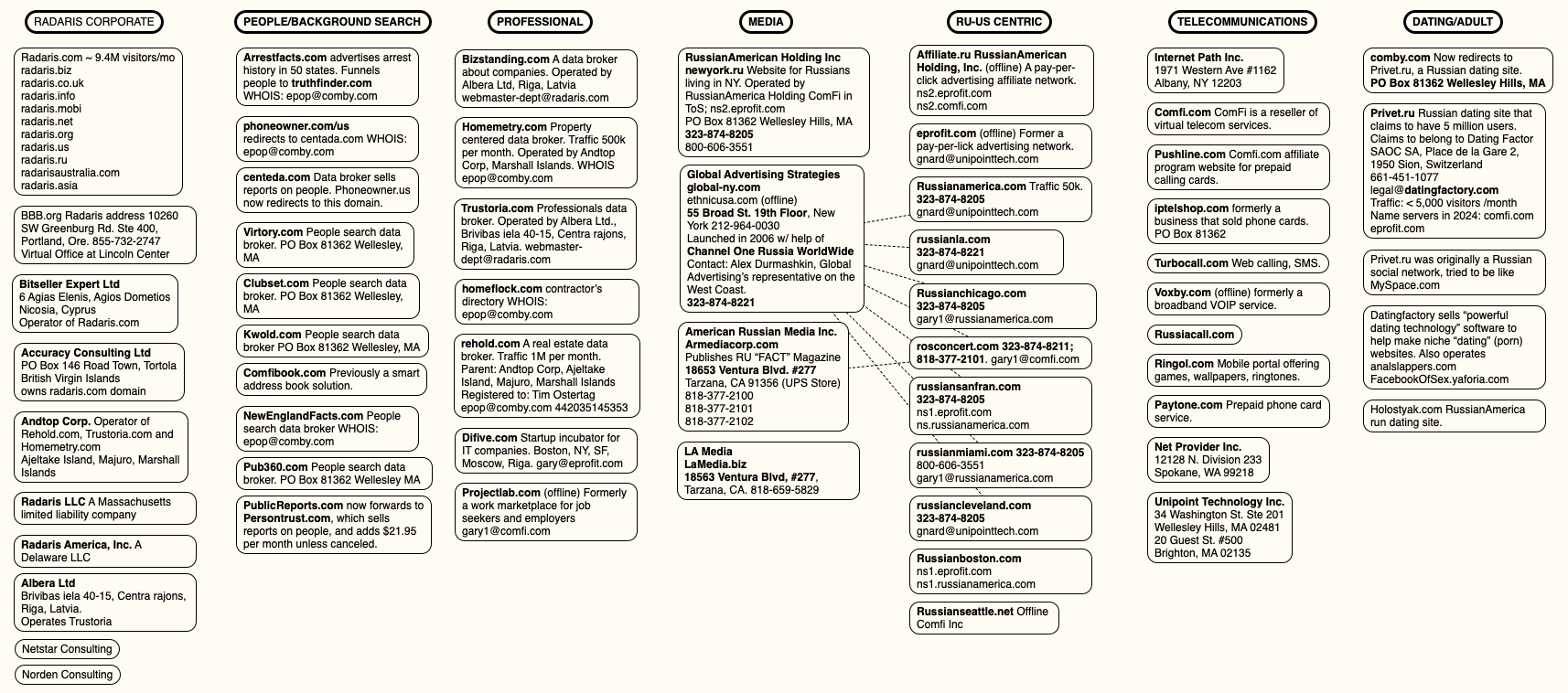
The investigation into Radaris revealed a complex, interconnected web of entities managed by Russian-born brothers Igor and Dmitry (also known as "Dan") Lubarsky. Based in Massachusetts, the brothers have long operated a sprawling network of people-search companies, Russian-language dating services, and various affiliate marketing programs.
When KrebsOnSecurity first published a detailed exposé on the Lubarsky brothers in March 2024, the reaction from their legal counsel was swift and aggressive. Attorneys representing the brothers threatened a defamation lawsuit, claiming the reporting was "wildly inaccurate" and asserting that the true owners of the platforms were, in fact, Ukrainians residing in Ukraine.
However, subsequent reporting demonstrated that the Lubarsky brothers utilized a fictitious persona, "Gary Norden," to serve as the face of their organization. Radaris attorneys eventually admitted in court that the CEO was a fabrication, a pseudonym used in press releases to court investors and provide a veneer of corporate legitimacy. This revelation of a "fake CEO" highlighted the broader, deceptive practices employed by the Radaris family of companies to obscure their true ownership and avoid accountability.
The "Island-Hopping" Strategy
As the litigation progressed, Radaris and its affiliates employed a defensive strategy characterized by constant obfuscation and shifting corporate identities. Matt Adkisson, CEO of Atlas, described this tactic as an "island-hopping phase." Throughout the proceedings, the defendants frequently updated their terms of service, shifting administrative control to entities located in jurisdictions such as the Marshall Islands, the British Virgin Islands, and the Seychelles.
This shell game was designed to frustrate plaintiffs and confuse the courts. When legal action neared, the defendants would often claim that the specific entity named in the lawsuit was no longer the responsible party, pointing instead to a new, offshore shell company. In one instance, after Radaris updated its terms to claim management by a Marshall Islands-based entity, Atlas hired a local investigator, only to discover that the company in question did not even exist.
This pattern of attrition was a hallmark of their defense. By creating new corporate shells and discarding old ones, the operators hoped that plaintiffs would eventually tire of the procedural hurdles and abandon their claims. For nearly a decade, this strategy proved effective, allowing the network to continue its data-brokering activities while avoiding substantial financial penalties.

The Judicial Intervention
The recent ruling in New Jersey represents the first time this strategy has fundamentally collapsed. Following a history of missed court appearances and procedural delays, the presiding judge found that the defendants had been granted ample opportunity to contest the claims against them. Because they failed to do so effectively, the court issued a default judgment, resulting in the transfer of the Radaris.com domain to Atlas.
Val Gurvits, the attorney who has represented Radaris in various legal battles, including a 2017 class-action lawsuit, has moved to vacate the default judgment. Mr. Gurvits and his co-counsel, Victor Worms, argue that the transfer is invalid because "Radaris.com" is not a legal entity capable of being sued. They further contend that the transfer violates constitutional principles of due process. Despite these protests, the domain transfer has been executed, and the site now displays a notice from Atlas regarding the litigation.
Evidence of a Unified Operation
The litigation has provided unprecedented insight into the inner workings of the Radaris network. Through the discovery process, Atlas obtained over 10,000 emails and internal documents that confirm the true scale of the operation. These records demonstrate that seemingly independent companies—such as Radaris America, Bitseller Expert Limited, and Veripages—are, in fact, centralized operations.
The internal correspondence confirms that these entities share the same administrative staff, financial payment systems, and virtual office locations. Furthermore, the evidence shows that these websites rely on a shared set of mail domains for their technical and financial functions. Estimates derived from these documents suggest that Radaris.com and Veripages.com generate significant monthly revenues, bolstered by partnerships with marketing firms like the Lifetime Value Company.
Perhaps most notably, the documents reveal a symbiotic, albeit controversial, relationship with data privacy services like Onerep. The files indicate that the Radaris network earns significant monthly revenue through partnerships with Onerep, a company that ostensibly helps individuals remove their information from the very sites the Lubarsky brothers operate. This "selling the cure" model mirrors revelations regarding other industry players, such as the Belarusian founder of Onerep, who has been linked to the operation of various people-search sites.
The Broader Legal and Privacy Landscape
While the transfer of the Radaris.com domain is a significant victory for Atlas, the broader fight over Daniel’s Law continues. Approximately 150 other data broker firms are currently facing lawsuits, and many have collectively challenged the constitutionality of the New Jersey statute. These companies argue that the law is overly broad and infringes upon First Amendment protections.
The constitutional question is expected to reach the U.S. Supreme Court, as lower courts have provided conflicting rulings. For instance, while New Jersey’s statute faces intense scrutiny, other states have followed suit, passing similar legislation. Conversely, a federal district court in West Virginia recently ruled their version of "Daniel’s Law" to be facially unconstitutional.
Privacy expert Justin Sherman, author of the forthcoming book The Middlemen, emphasizes that the data broker industry is shielded by the lack of comprehensive federal privacy legislation. Most state-level privacy laws include broad exemptions for "public" or "government" records, which include everything from property filings and marriage certificates to criminal and motor vehicle records. As a result, even if Daniel’s Law succeeds in shielding certain public officials, the general public remains highly vulnerable.
The lack of federal oversight is particularly concerning given the rise of sophisticated data scraping and the recent breaches of massive datasets, such as the incident at IDScan.net. Without a federal framework to regulate how these companies collect, store, and share data, the cycle of privacy erosion is likely to continue.
"The average person can look at Daniel’s Law and have a perfectly normal reaction, which is that everyone should be covered, not just police and judges," Sherman noted. He argues that the recurring "wake-up calls" regarding data privacy—from massive breaches to the unchecked sale of personal information—have yet to catalyze the legislative action necessary for the 21st century. Until Congress moves beyond the influence of intense lobbying from tech, social media, and data-driven industries, the burden of protecting personal privacy will continue to fall on private litigation and the incremental, state-by-state pursuit of statutes like Daniel’s Law.