



The Fedora Design Team has proven that open source tools can provide a robust and effective foundation for hosting virtual conferences. In January 2023, the team successfully launched the inaugural Creative Freedom Summit, bringing together open source contributors, designers, and creatives from around the world. The event served as a real-world test of a completely open source-powered virtual conference stack, showcasing how modern decentralized technologies can manage live video streams, interactive chat, and community coordination without relying entirely on proprietary platforms.
Organized as a response to an overwhelming number of talk submissions for Flock, the annual Fedora users and contributors conference, the Creative Freedom Summit filled a crucial gap in the community. Marie Nordin, who reviewed submissions for the August 2022 Flock event, noted that she received far more proposals centered on design and creativity in open source than could possibly fit into the schedule. Recognizing the high demand for a dedicated space, she brought the idea of a separate creativity-focused conference to the Fedora Design Team in the fall of 2022. Planning began immediately for the event, which took place from January 17 to 19, 2023. Given the compressed timeline and the novelty of the format, organizers relied on invited speakers drawn from previous Flock submissions and personal networks, resulting in an exceptionally strong lineup.
Navigating the Challenges of Open Source Event Infrastructure
For communities dedicated to open source principles, choosing the technology stack to run a major conference is rarely straightforward. Since the onset of the COVID-19 pandemic lockdowns, Fedora’s primary event, Flock, has been hosted virtually using Hopin. While Hopin is a proprietary platform, it has historically offered strong integration capabilities for open source events, providing a polished professional feel with dedicated sponsor booths, multi-track support, hallway chat rooms, and built-in moderation tools. Because the Creative Freedom Summit was affiliated with Fedora, organizers had access to the existing Hopin infrastructure, presenting an easy fallback option.


However, relying on proprietary software to host an event celebrating open source creativity presented a philosophical dilemma for long-term contributors. At the same time, building and maintaining an integrated, reliable conference system entirely from open source components remains a complex and resource-intensive undertaking. Organizers had to weigh multiple factors, including a zero-dollar budget, the availability of volunteer hours, and existing supported infrastructure like the Fedora Matrix server and a hosted WordPress environment. Ultimately, the team’s passion for experimenting with a fully open source stack, combined with a willingness to embrace minor technical rough edges for a single-track, informal event, drove the decision to build an independent, open source-powered conference ecosystem.
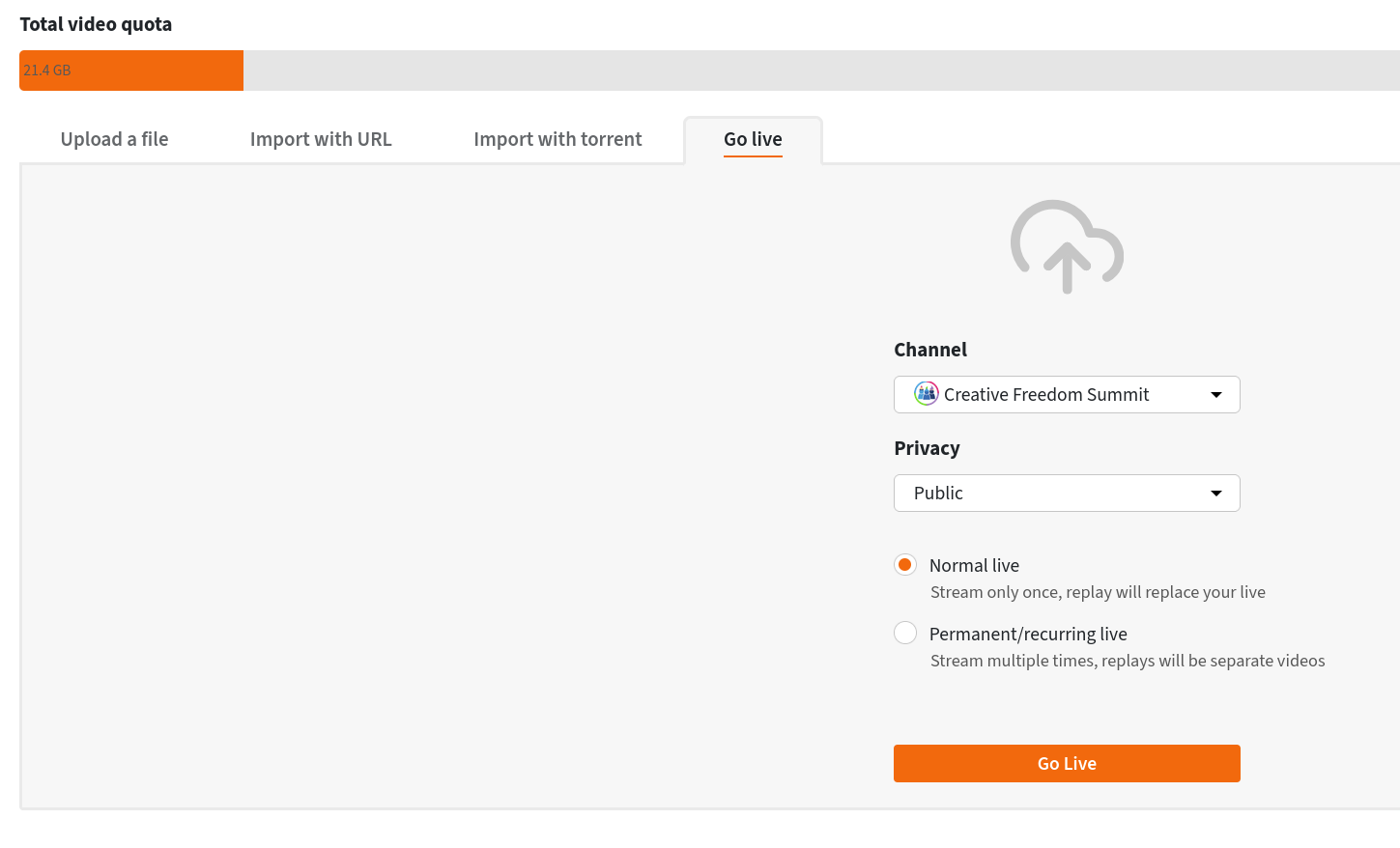
Building an Open Source Conference Stack
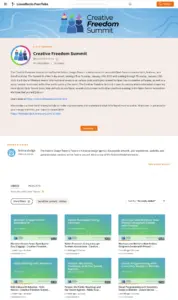
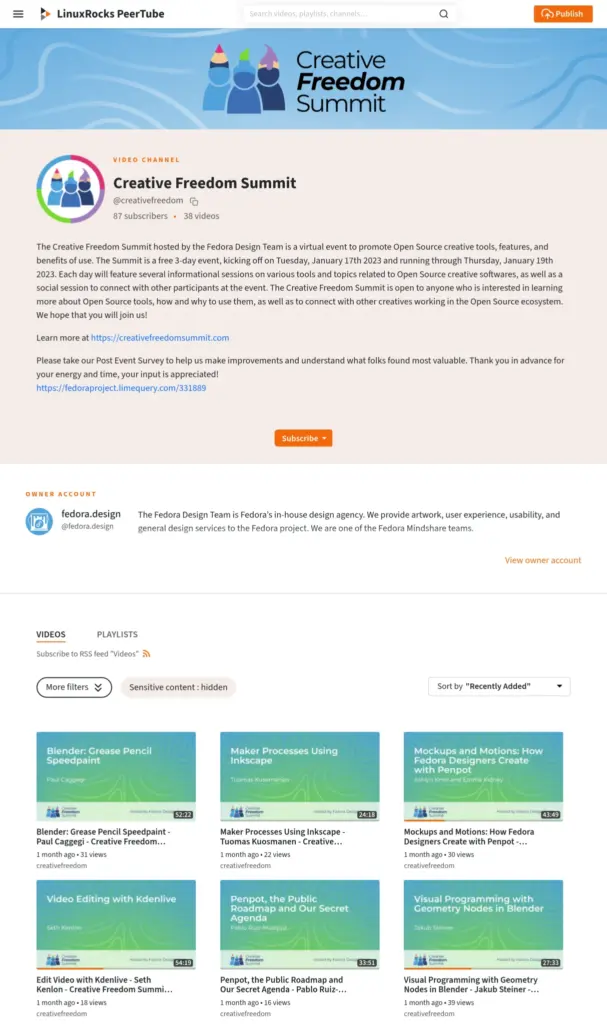
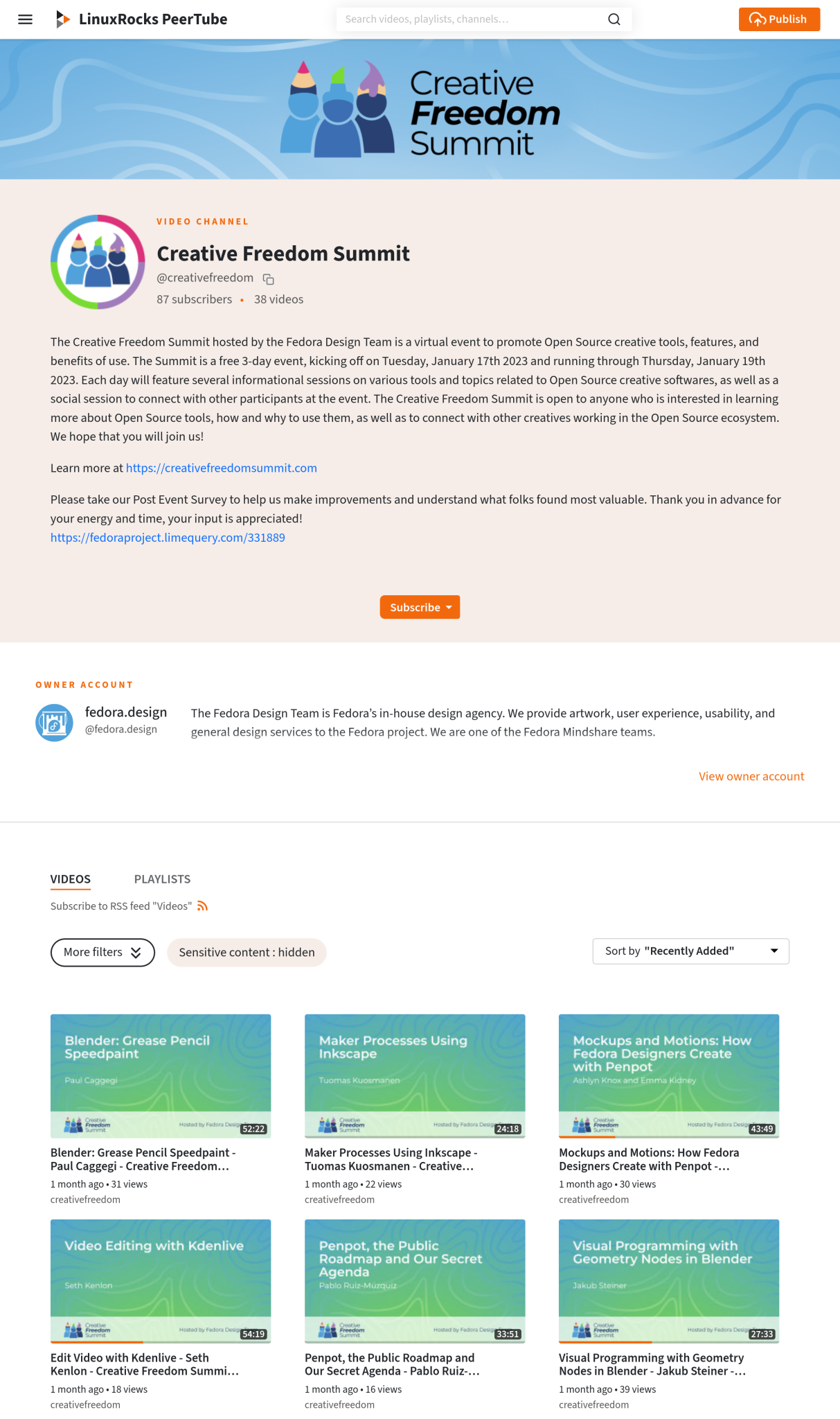
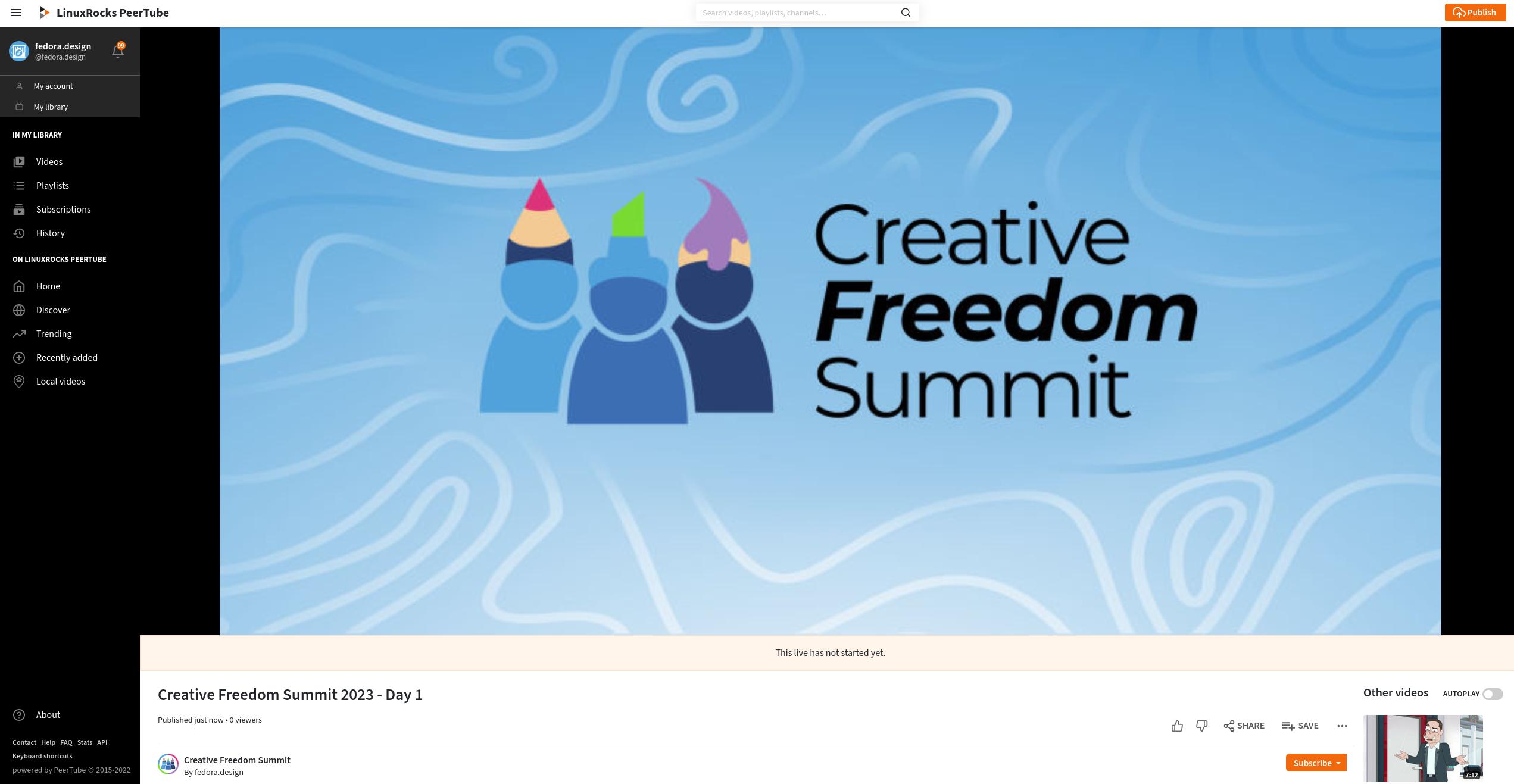
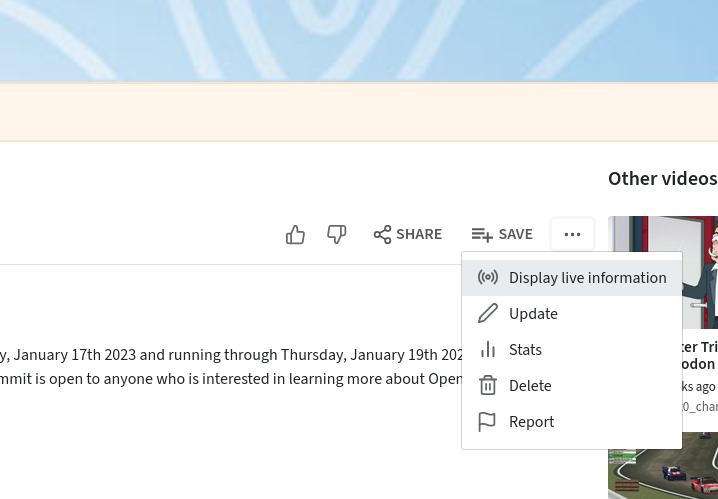
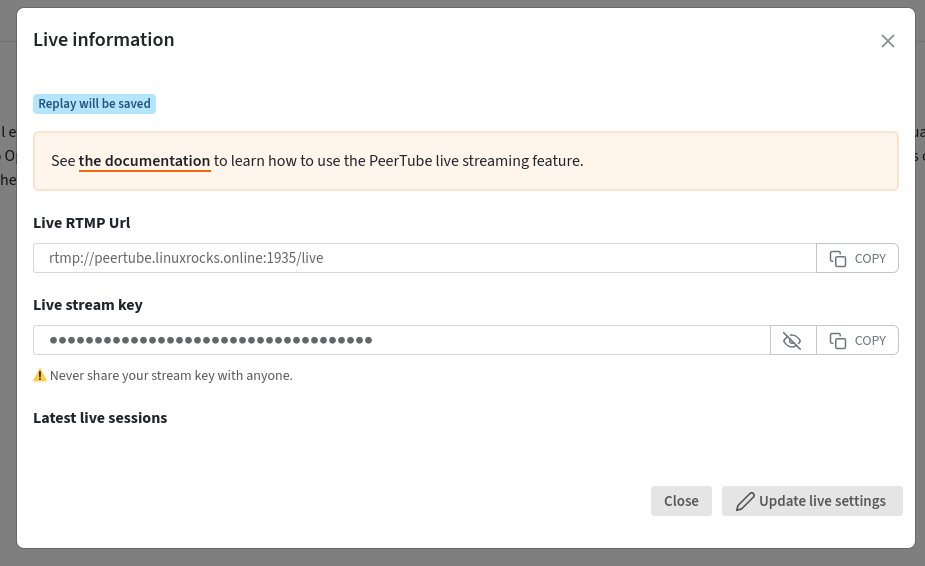
The technical architecture of the Creative Freedom Summit relied on a carefully curated combination of live and post-event open source components. For the live broadcast, the team utilized the LinuxRocks PeerTube platform, a decentralized and federated video hosting service generously provided by LinuxRocks.online. PeerTube proved to be invaluable due to its automated recording feature, which instantly generated replay files upon the conclusion of each livestream without requiring manual intervention from the volunteer organizing team.
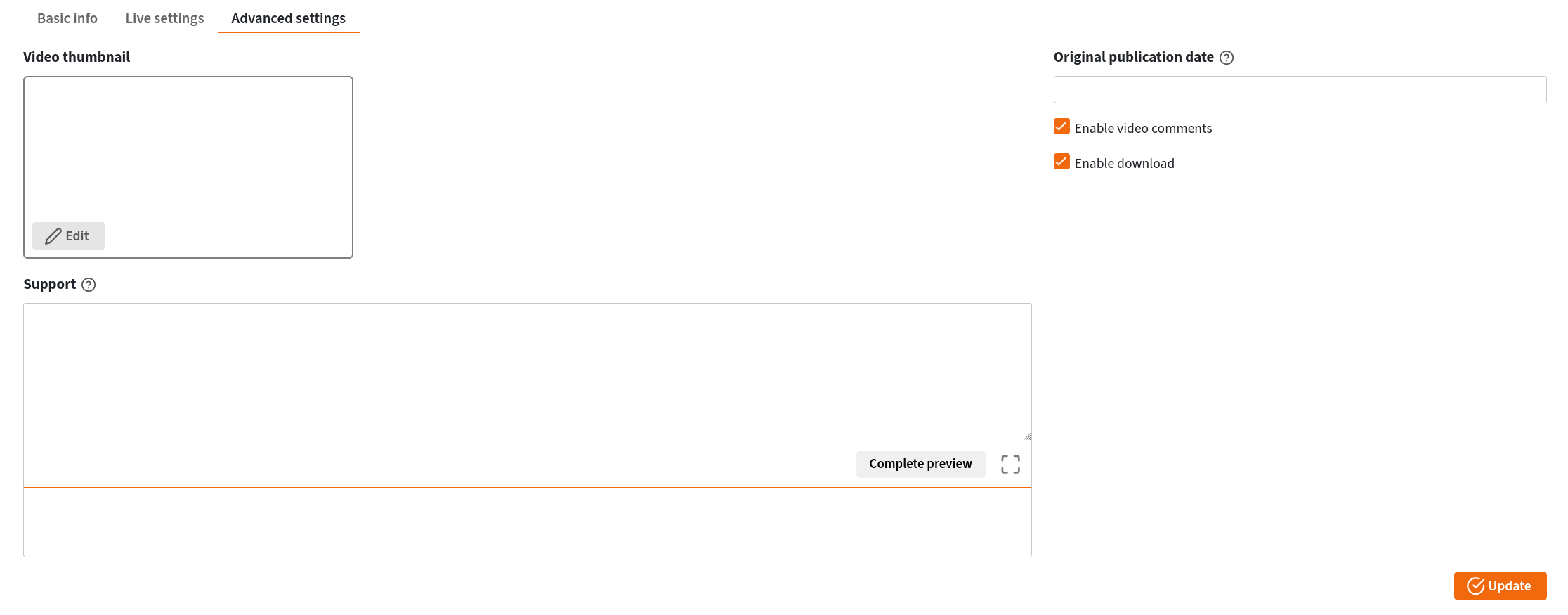
To manage the virtual stage where speakers and hosts interacted, the team used Jitsi Meet, a free and open source video conferencing platform. By creating a custom Jitsi meeting room configured with a waiting lobby, organizers ensured that speakers could enter quietly before their presentations without disrupting ongoing sessions. The live video feed from Jitsi was then broadcast directly to the PeerTube channel using standard RTMP streaming integration.
Backstage coordination and attendee communication were handled through Matrix, utilizing Fedora’s Element server infrastructure. The main Element channel served as the central hub for the conference, featuring an innovative widget system that embedded the PeerTube livestream directly alongside collaborative Etherpad and HackMD notes containing schedules, announcements, and live question-and-answer sections. This centralized integration allowed participants to watch presentations, submit questions, and engage in real-time community discussions within a single interface. Meanwhile, a separate invite-only Backstage chat room enabled organizers and speakers to manage schedule transitions, test audio connections, and handle last-minute adjustments smoothly.
Post-Event Collaboration and Community-Driven Video Editing
Once the virtual event concluded, the work of organizing and refining the conference assets transitioned to a dedicated group of volunteers. Because the initial livestream recordings occasionally captured multiple talks in a single file or required cleanup, the organizing team established a structured workflow using GitLab epics and custom labels to coordinate video editing efforts. Volunteers downloaded the raw recordings from the main PeerTube channel, edited the files using open source tools such as Kdenlive, and uploaded the polished versions to a shared repository for final review and publication.
The post-event phase also highlighted areas for future technological improvement. Feedback from attendees via LimeSurvey indicated a strong desire for live captioning to enhance event accessibility. While the initial conference stack did not feature automated real-time captioning, organizers identified promising open source pathways for future events, including automated speech-to-text subtitle generation tools built into Kdenlive and community-driven broadcasting setups.
By demonstrating that an ambitious virtual conference can be successfully orchestrated using decentralized, community-managed infrastructure, the Fedora Design Team has provided a practical blueprint for other open source communities. Organizers continue to meet regularly to evaluate their workflows and refine the toolset ahead of the next summit, inviting feedback and collaboration from across the broader open source ecosystem.